

Justin Razooky trains over 200 players every week in a 2,000-square-foot gym using basketball training software that actually works. He’s hosted NBA players, top high school prospects, and trained alongside Jimmy Butler. The space is tight, sessions run back-to-back with zero buffer time, and somehow it all flows seamlessly.
The secret isn’t just great coaching—it’s the basketball training software running behind the scenes. In this episode of the CoachIQ Podcast, Justin breaks down how he and his brother Ryan built The Hoop House into a three-facility operation, why they ditched spreadsheets for real software, and the business lessons every trainer needs to hear.
In This Episode
- Why Justin went from Google spreadsheets to CoachIQ (and never looked back)
- The credit-based model that increased revenue and client flexibility
- How to design high-energy sessions in small spaces
- The real difference between trainers who grind and trainers who build businesses
- Why chasing pros might be the worst move for your training career
From Spreadsheet Chaos to Real Basketball Training Software
Before CoachIQ, The Hoop House ran on a Google spreadsheet. Every new client meant manually adding names, tracking which days they’d committed to, and color-coding whether payments came through.
“We had a kid, say the kid’s name is Daniel, we go ‘All right Daniel, you want to come twice a week? Mondays, Wednesdays? Cool, you’re going to come Mondays and Wednesdays,'” Justin explains. “So imagine just having to write down all these kids manually. We’re highlighting them if they’re not going to come, bolding their names. Highlighting them in red if they weren’t showing up, green if their payment went through.”
At 200 players a week, that system becomes pure chaos. Trainers become secretaries instead of coaches—the same breaking point Jeff Schmidt hit when he was spending 5-6 hours every Sunday managing schedules via text.
The Hoop House tried building their own software. The payment processing didn’t align with their needs. Then they found CoachIQ.
“CoachIQ is probably the greatest app that I’ve personally used as far as organization,” Justin says. “Having a branded app that integrates—we have the Hoop House app on iPhone and Android—is the greatest lifesaver.”
The switch enabled them to move from a rigid session model to a credit-based scheduling system where clients purchase credits and book whenever availability opens up. Similar to how Pilates studios operate—flexible for the client, more efficient for the business. It’s the same shift toward optimizing revenue per hour that’s helping trainers across the industry maximize their earning potential.
“We figured out that we were able to actually make more with less, just maximizing,” Justin says. “We’ve had so many players just come back to The Hoop House because of our new schedule, because it was more flexible.”
Designing Basketball Training Sessions in Small Spaces
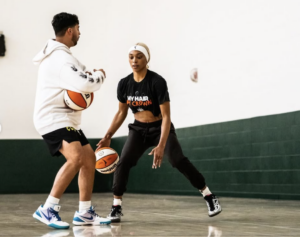
The Hoop House isn’t a massive facility. The actual gym space is just under 2,000 square feet with three hoops. But Justin runs 12 to 14 kids at a time, sessions stacked hour after hour with no breaks between.
The key is knowing every player who walks through the door.
“I already know all their skill sets and what they need to work on,” Justin explains. “In five seconds, I’m like, ‘Okay, this kid needs to work on this. This kid really needs a shot. He’s a little too weak for that finish.’ I’m already orchestrating in my head.”
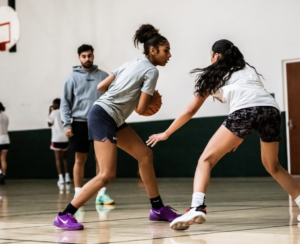
For younger players (12 and under), Justin prioritizes conditioning and competition. Layup races. Push-ups for the losing team. High energy.
“A lot of parents like to see that their kid is walking out of those sessions like, ‘That was a good workout,'” he says. “At the end of the day, it is a workout. It is a sport. You got to keep it fun.”
For older players, the approach shifts to detail and game-realistic scenarios. Partner drills. Situational training. Defense on the hip, contact finishes, help-side reads. No standing in lines.
“We hate lines,” Justin says. “Kids start throwing the ball at each other. They start messing around. They lose motivation. So we get these kids going and their hour really feels like 20 minutes just because it’s going by so fast.”
Their scheduling reflects this intensity. Sessions don’t run 3:00 to 4:00, then 4:30 to 5:30. It’s 3:00 to 4:00, 4:00 to 5:00, 5:00 to 6:00—minute increments with no wasted time.
That precision requires systems. Without basketball training software that offers centralized client tracking, running that tight an operation would be impossible.
The Difference Between Basketball Trainers and Business Owners
Justin started training at 15 when his brother Ryan sent him to Mexico to run a camp by himself. No Spanish. Forty kids. Local news showed up.
“I was really thrown in the fire,” Justin laughs. “After that, I kind of told my mom and my brother, ‘I think I can do something here.'”
That sink-or-swim start taught him something most trainers miss: understanding what your time is worth.
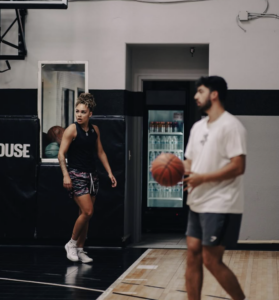
“There’s a lot of Instagram trainers who are only in it for the pros,” Justin says. “They trade so much of their time and don’t get a dollar just to kind of get in certain rooms. They’re just a cone or a rebounder. They’re not progressing.”
A real business requires different thinking—what Russell Reeder calls the foundation of the $100K blueprint.
“Get the sixth man on the AAU team, get him to be a starter. Now get him to be the best player,” Justin explains. “Every other parent has seen you develop this kid and now you potentially have 12 to 15 more clients.”
The room for growth with middle school players is enormous. A kid might just need to make consistent left-hand layups or develop a reliable mid-range shot. Three to five sessions later, they’re noticeably better. Parents see the results. Referrals follow.
That approach—combined with the right basketball training software and a professional website that converts visitors into clients—built The Hoop House to three facilities and a nine-person staff without relying on professional athletes.
Why Chasing Pros Can Hurt Your Training Business
Justin has worked with pros. He spent a summer training with Jimmy Butler. High-level high school players like Mikey Williams have come through The Hoop House.
But his advice to young trainers is clear: don’t build your business around professional players.
“Pros require more work. They want the prime time. They want the 4:30 PM and they might not show up till 6:00,” Justin says. “Now you just wasted an hour and a half of your life.”
The economics rarely make sense unless you’re at the very top of the industry.
“We have three facilities, nine staff members, and we’re able to take care of all that without a single professional basketball player,” Justin explains—a multi-location playbook similar to what Coleman Ayers built with By Any Means Basketball. “The bread and butter cannot be the pros unless obviously you are Drew Hanlen or DJ Sackmann.”
Even elite trainers diversify. DJ Sackmann has an app. The most successful trainers build systems that don’t depend on any single client showing up.
Justin’s formula: treat it like a real business. Clock in, clock out. Keep your Instagram professional—it’s your resume. And focus on developing the players who actually need you.
The Right Basketball Training Software Changes Everything
The Hoop House didn’t scale to three locations by working harder. They scaled by building systems—the same approach that helped Tyler Leclerc grow from a seven-day grind to two facilities.
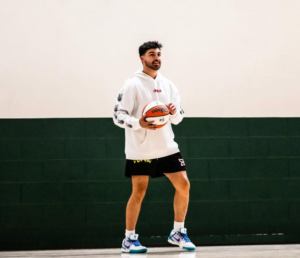
Automated payment processing eliminated awkward conversations about money. The credit-based model meant clients could book flexibly without constant back-and-forth. In-app messaging that keeps parent texts off your personal phone gave Justin his life back.
“They’re able to text in the app and we can reach back out in the app,” Justin says. “That is an amazing tool.”
Without those systems, trainers become full-time administrators. The basketball takes a backseat to logistics.
“Obviously you could just work all day long,” Justin acknowledges. “But at the end of the day, this isn’t really a career that provides a 401k and medical benefits. You’re on your own and you got to figure it out.”
Figuring it out means recognizing when manual processes break. It means investing in basketball training software that actually understands how training businesses work—not generic scheduling tools built for nail salons and yoga studios.
The Bottom Line
Justin Razooky started with nothing but basketball knowledge and a willingness to get thrown in the fire. Today, The Hoop House operates three facilities, serves hundreds of players, and runs with the precision of a well-oiled machine.
The difference between trainers who burn out and trainers who scale comes down to systems. Basketball training software that handles scheduling, payments, and communication.
“Find your why and the reason why you’re doing it,” Justin says. “If you’re doing it because you love the game, then do it the right way. It’ll pay respect back to you.”
Ready to stop managing spreadsheets and start scaling your training business? See how CoachIQ can help →
Connect with Justin Razooky:
Instagram: @jrazooky
The Hoop House: @the_hoop_house
Full Episode Transcript
The following is a lightly edited transcript of the episode above.
▶ Click to expand full transcript
Russell: All right, welcome back to the Coach IQ podcast. My name is Mitchell Kersh and I’m here with pro trainer Justin Rzuki from the hoop house.
Brandon: How are you Justin?
Russell: I’m amazing. How are you
Brandon: Doing? Well, thank you for coming on. Appreciate you taking the time. I’m really excited for this convo because I think you have one of the most unique gyms maybe in the world.
Russell: Yeah. Yeah, definitely. Small space about actual like fac like actual gym space is probably close to 2,000 square feet. A little bit less, but we’re able to train 200 players every single week. I’ve had some of the best high school players in the world come in here and train. And we’ve had groups where we had have had like seven to eight pros in the gym at the same time. And space could obviously be a little bit troublesome for some people, but we we make it work, man. We we definitely make it work. Sometimes we have 12 to 14 kids in here at a time and everything is fast-paced. Everything goes super smoothly.
Brandon: I love it. I want to dig into the specifics on that a little bit later, but I think most people listening there’s there’s a good chance they’ve seen the gym on social media, We see the clips. Was it Mikey Williams? as a high schooler getting up there, ripping rims down.
Russell: That really took off on the social media scene. Also during just overall COVID when everybody else was closed down, we were able to open up the gym for a couple big YouTubers, couple big celebrities, and we have a very iconic like mural. you can see it like right over there. It’s more colorful obviously in the actual gym, but we have a pretty iconic mural to where everybody is whoa, like that’s amazing detail. So things like that.
Brandon: Absolutely. No, that’s definitely a showstopper. This is like the the least important question, but out of curiosity, how did you get that mural? Who’ you guys have make that mural?
Russell: Man, it was a local artist out here in San Diego. He would come in here at like because we would end our workouts at like 10 or 11 sometimes and he would come in here at 11 and stay here overnight and we’ll come and like bring him food and we had a big forklift and he had this projector. He just like didn’t want to be distracted. So I was like, “All right, the only way to not be distracted is you got to come here almost overnight.” And he ripped it out and it’s it’s beautiful. It hasn’t it’s it’s the greatest probably piece of art I’ve ever witnessed someone hand paint. That’s a beautiful story. I feel like there’s going to be this theme throughout of you guys going through and doing the dirty work day by day, showing up. let’s dive right into it. You started the the hoop house, but before that, was there a dream? Was there a vision? What were the years preceding to what you have now?
Brandon: My brother started coaching me because I started playing at the YMCA. That was his first ever job. He started coaching me. Then I went on to go play some AU basketball and my first ever coach was Jordan Lai. I don’t know if you have heard of him, but
Russell: I worked for Jordan for for about a year out in
Brandon: Yeah, that was my first ever AAU coach. So when I tell people that they’re like, “What? No way.” I’m like, “Yeah.” Like I remember he was fresh out of college and every practice was a training session. we’re ripping through drills and no threeman weaves. It was we’re learning skills. my brother Ryan got to really like learn and just learn the game of training and learn how to develop kids. And of course, he was helping me out. And then Jordan went on to go start his training business up in like Caramel Valley area in San Diego. And my brother just had to slowly like take over. Started coaching teams at like 16 or 17. Started training some of the teammates. And then once that organization fell fell apart, he started just training more, training while he was in high school, training while he was in college. And then ultimately had the opportunity to get this facility. Previous trainer was selling it. I hopped in very quickly when I was 16 and 17. I started helping him out with some classes after my own high school practice. He I was forced to run my first camp. I didn’t know anything about training. And I had to go over to Mexico where I do not speak the language at all and run a camp with about 40 kids, had the news pop out, had all these other had the whole like city of Mexico City really pop out at this camp that I just like I taught everything that I was taught. So like everything that Jaylaw was taught. I don’t know if you’re familiar with like Ganon Baker
Russell: And like Devin Williams 10,000 hours, but like I I used to learn from all those guys. I just like did a bunch of drills that they did and that was really my first time really diving into the train training space was like I was really thrown in the fire. Like I was sent to Mexico by myself as like a 15 16 year old kid with no idea how to speak the language but like escally it and I just ran like a three-day camp and then after that I told my mom and my brother I was like I think I can do something here and then started helping out Ryan and we’re we’re here now. we have three facilities and I I think that I I wouldn’t like it any any any different than how it panned out.
Brandon: Absolutely. Just jumping right in and you got you got to figure it out
Russell: Along the way. I think there are a lot of people out there and I think there are the like the Ganon Bakers of the world made it possible for skills trainers to become an industry and a full-time job. Absolutely.
Brandon: And it’s it’s starting to grow.
Russell: But I also think there’s there’s a difference between good trainers that they have it a part of what they do. They help players get better. Maybe some of them are basketball coaches, AIU coaches, or it’s not their main thing. And then there are full-on operators where being a skills trainer is the entire business and they operate. What do you see as the biggest difference between those two types of people? And how could one person potentially go from having skills be a part-time thing to a full-time thing like you do now? But I think ultimately it’s just about learning like the actual business and seeing like what your time was worth. So before I was training all these like like Ryan would give me all like the a bunch of like highle middle school kids and show me like all right like here’s what you’re going to do. let’s say the kid paid $500 for 10 sessions like I would keep 300 of it. ? Just so I learn a little bit about like money and just overall like how to value it and stuff like that. so he’s like, “All right, like I’m gonna do this for you.” I learned a little bit of what like the value of money was as far as like what my time was worth also. I feel like just learning like the business side of things and knowing what your time is worth, like there’s a lot of like Tik Tok and ? Like I don’t like to say it, but like Instagram trainers who are like only in it for like the pros and they go and like they go and like trade so much of their time and don’t get a dollar, just to get in certain rooms and just say that they’re with NBA guys or say that with pros, but they’re really not like progressing because their pros aren’t gonna those pros aren’t going to do anything for them. they’re they’re just a cone or they’re just a rebounder. as a professional, I’m not going to give this guy all the flowers, ? Versus like a businessman is going to understand, okay, how do I scale this and how do I do a really good job at what I’m doing? Well, I was taught at very young okay, get get the six man on the AU team, get him to be a starter. Now, get him to be the best player. Now you have developed, every other parent has seen you develop this kid and now you potentially have 12 to 15 more clients. All you have to do is just network from there. So I would say I really like loved the idea of being in obviously I still do now but it’s a little bit different now. Now I’m more on the back end. A little bit of training here and there but before it was like 10 hour days of straight being in the gym and then I’m going to watch my players game. I’m really in the field, really understanding the business side of things, how to market myself by networking like in person and things like that. I would say that’s the biggest difference of someone who is just doing this as a side hustle is just training for fun and someone who wants to turn this into an actual business.
Brandon: I love it. Yeah. I think you demonstrate there’s a time and a place to be boots on the ground grinding, but you also have to have that longer term vision and the systems and that outlook so that you can build towards something that can continue with you removed a little bit more.
Russell: Absolutely. because obviously you could just work all day long but at the end of the day this isn’t really a career that like provides like a 401k and medical and health benefits it’s just like you’re on your own and you got to figure it out. I come from a very business-minded family. they instilled that to me, very very young and just like my dad always tells me like whatever you’re good at, just get so good at, stick to what you know. he taught me that at a very young age. sticking to what I know and that’s how to run a business. Yeah. How to run a business and apply basketball to it. So,
Brandon: It is working out. And on top of that, the nature of this business is it’s physically demanding. And you might not be on the court playing defense. Eventually, you can hire out or you do groups. it might not be you moving like you’re playing real basketball, but even just being in the gym, you’re running for basketball as you’re grabbing a rebound. It’s demanding on the body when you pack on 10-hour days,
Russell: Six days a week for a few years. That isn’t as sustainable. And that’s a lot of times what happens and and trainers do burn out. And so a huge motivation for me in this podcast is shedding light on the business side of things. And how can we make this more sustainable for trainers so that more kids can benefit from high quality work? Because if as trainers we can get our time back and we don’t have to worry about chasing payments or or the business stuff and that gets a little bit more efficient. we can spend more time becoming better trainers and deploying those pieces of advice on our staff. So ultimately it all trickles down to the kids get better faster and at the end of the day that’s that’s really at the center of it. And like you mentioned with with making that sixth man a starter then a best player. That’s some of the easiest marketing you can get.
Brandon: Hey, I just want to take a quick break. My name’s Russell. I’m one of the founders of Coach IQ. We put on this podcast here. Our goal is to interview top coaches and business owners in the youth sports space across the United States and give you guys insight on the ground floor. How are they running their business? What do they think about the current ecosystem? And what are their thoughts on where things are going? we’re super excited to bring this to you guys. If you don’t know about us, we are an all-in-one sports management platform. We run a lot of the businesses that we have on the podcast and we’re fortunate enough now to work with about a thousand sports coaches across the United States. And it’s our goal to make your life as easy as possible in running the business itself. Website, scheduling, payment management, everything handled seamlessly on our platform. And really what separates us is we are built specifically for sports. We’re not powering nail salons. We’re not powering Pilates studios. Every second of the day, we focus on you. if that’s something you need where you’re looking to get your time back or you’re looking to grow your business, Coach IQ is really the only platform thinking about you every single day, interviewing and working with the top coaches in the industry specific to sports. if that’s something we can help you with, we would love to connect with you. You can visit our website, coachiq.com, schedule a free demo there. The demos are awesome. It’s really less about selling and much more about just walking through what we’ve learned and providing value on what other coaches are doing. And if it’s a match, it’s a match. absolute no-brainer. Go schedule a demo. worth the time. And thank you guys for tuning in. Thank you guys for watching. Thank you for customers who are working with us. It allows us to do all this make better product and the main goal help athletes all across the United States and the world get a phenomenal experience from you guys the coaches.
Russell: And it’s easy to do it especially when they’re at that like fifth to like seventh grade where like maybe the only reason why they’re not a starter is because they can’t make a midtering shot or like they can’t use their left hand. okay, let’s get in the gym for like three to five sessions and let’s work on what you need to work on. You’re automatically so much better. Like the room for growth for that middle school age is so like so grand that like it’s inevitable. They just need to they just need to play. They just need a hoop. They just need to play. They just need to train.
Brandon: Absolutely. And I think you guys have a very unique space for that. I want to get into the specifics of how you design sessions and you talked about it earlier, but could you paint a very clear picture? You step into the gym, what do you see? How much space do you have? What are you working with as a trainer?
Russell: Okay, so I know every kid that walks into the gym. I already know all their skill sets and what they need to work on. in like five seconds, I’m like, “Okay, this kid’s not this kid like needs to work on this. This kid needs to work on that. this kid really needs a shot. He’s a little too weak for that finish.” so I’m already orchestrating in my head, okay, this is the level of talent that’s in the gym, so this is how I need to play it. let’s say there’s like six to 10 kids. We have three hoops, but I like to just use two, especially if it’s a if they’re like 12 and up, I’ll only use two. If they’re like 12 and below, sometimes I’ll use three. they don’t need to really get out in the three-point line because we don’t have a top of the key on one of the hoops, but I go by like like a mental rubric of what the kids need to work on. first thing as we do is we always start off with like seven to eight minutes of ball handling. And in that seven to eight minutes of ball handling is when I’m really focused on what I’m going to teach the class. Like I I wing everything. I’ll be honest, I am not a good planner. I’m not a writer. I don’t write down my drills. Even when pros come in the gym, like we worked out with Jimmy Butler all last summer. I come in the gym and I’m just that’s what I’m going to do. Okay, cool. I’m going do it. with with the kids classes, can they make left right-hand layups? Absolutely. Consistently. After that, now we’re going reverse layups. All right. After the reverse layup, let’s teach them a pickup. Maybe just for the young kids, maybe just a tuck. Maybe for the older kids, go high, go low, pass fake, get a little bit more complicated. Now, with the older kids, the really only thing that I change is that I apply a little bit more defense or like a helpside aspect. let’s say they make one to two moves at the top of the key or at the free throw line or maybe at the wing. When they finish, they got to either like shield with the hand and for the finish, they got to get into a contact finish. They got to spin euro, things like that. with the younger kids is more about get them conditioned, get them to compete, make keep it fun. as many layoffs as you can make in two minutes and we got the whole gym yelling of you won two, ? Of course, once they get to like six and seven, that that whole thing, gosh, it’s so annoying, but you got to love it. they’re all screaming, and then, once I make them, obviously, the losing team does a little bit of push-ups. Like all the kids are just yelling at the other ones, like counting their push-ups and keeping it fun, keeping it engaged, getting them tired, because a lot of parents like to see that their kid are walking out of those sessions like, “That was a good workout.” ? Because at the end of the day, it is a workout. It is a sport. You got to keep it fun. So that’s the difference between like working with the younger kids and working with the older kids is keep it a workout for the younger kids and keep it a little bit more detail oriented for the older kids. Making sure that we’re working on the skill. Like I’ll have a like a sophomore in high school and be like, “Hey, what does your coach want for you this year?” He’s like, “Well, he says that I need to get better at shooting.” I really imply like a little bit more shooting into that session just because one kid said that, yeah, it’s a little bit difficult sometimes to cater one session to every kid. But at the end of the day, you’re never going to get worse getting up more shots or getting up more finishes or just competing. Now, when I have like a 10 to 12 kids is when it gets a little bit even more fun because I get to compete right away. I’ve learned to do a lot of like partner drills and like situational training. I don’t you guys have worked with by any means basketball Coleman I before
Brandon: And I love his stuff. Like he does a lot of situational training. So,
Russell: I’ll start them off with partners if especially if it’s like 10 to 12.
Brandon: All right, everyone get in a partner. We’re starting off defense on your hip. You got one dribble bump into a finish. Now we got everybody moving at the same time because we have two groups of six and four and we have full circuit. All right, cool. Now we’re going to bump once the defender cuts him off. Now we’re going to euro step. Defense tries their best to obviously steal the euro.
Russell: Yeah.
Brandon: So that def so that the offensive player has to either go high, low, or tuck the euro. They can’t just have the defense swipe it. So do a lot of situational training when we have the older kids and a majority of them just because we hate lions.
Russell: Like we hate it when the kids are in lines because they start like
Brandon: Throwing the ball at each other. They just start like messing around. They start dozing off. They lose motivation. So we get these kids going and their hour really feels like to us it feels like 20 minutes just because it’s it’s going by so fast.
Russell: ? to them they’re super tired. So,
Brandon: Right,
Russell: It’s beneficial for everyone.
Brandon: Yeah, you guys are you’re maxing out your resources and
Russell: Yeah,
Brandon: You’re seeing what you have there and then
Russell: Design from there.
Brandon: Yeah, because our scheduling is not like 3 to 4 then 4:30 to 5:30. It’s 3 to 4, 4 to 5, 5 to 6, 6 to 7. it’s it’s minute increments to where we get these kids out the gym and we have a whole new set coming back in. we can’t really waste any time,
Russell: You know? It’s not like we’re we’re not ending our session at like
Brandon: 557. We’re ending it at 6:00 and we have the next group coming in at 6:00, you know?
Russell: Right. You look on your website and it is impressive how much you guys fit into time blocks.
Russell: And I know from operating that requires a lot of backend organization. So I want to shift a little bit more to the the business side of things. What tools are you guys using to enable that organization, the different age groups, skills, and you’re running all week? how are you making sure that all flows nicely?
Brandon: Coach IQ is probably the greatest app that I’ve personally used as far as organization. I feel like Coach IQ just does a really good job keeping things organized. I love how we like to know all of our players. we take a picture of everybody and thankfully Coach IQ has that option to upload the picture, see the people’s profile, see the kids profile. having an app that integrates into Coach IQ because we have the Hoop House app on iPhone and Android is the greatest lifesaver because how we used to run our system, we was we had a Google spreadsheet. I kid you not. We had a Google spreadsheet and when we had a kid, say the kid’s name is Daniel, we go, “All right, Daniel, you want to come twice a week? Do you want to come Mondays, Wednesdays, Thursdays, Fridays? When do you want to come?” “All right, Mondays, Wednesdays.” “All right, cool. You’re going to come Mondays and Wednesdays.” that gives you eight sessions a month. It’s 180 for twice a week, but you have to come Mondays and Wednesdays. You can’t call and reschedu. There’s no rescheduling. you have to come Mondays and Wednesdays. imagine just like having to write down all these kids manually and we’re like highlighting them if they’re not going to come to the session. We’re like bolding their names. oh my god,
Russell: You said you’re doing you’re dealing with 200 kids a week. That yes, that scale that’s that’s pure chaos.
Brandon: Terrible. like would have to put like bullet points on some kids of the names, like highlight them in red if they weren’t showing up, like highlight them in like green if their payment went through. Like it was it was all bad. it was just so hard to manage a full like Google spreadsheet. And then we tried to build our own software where the payment processing just didn’t align with how we wanted it. We wanted to build like an all-in-one. it was going to be a full schedule, a coach IQ and a stripe allin-one. Didn’t work out. Then we then Brandon obviously told us about Coach IQ. We jumped right in and we were able to switch our whole system from sessions to credits. we are now credit based where we give you credits instead of like sessions. Like so if you want to come like twice a week, you don’t tell us what days you’re coming. You just book it and you come nine times a month and every credit is like a session. like a Pilates studio, how they do it. So we do that model. We figured out that we were able to make more with less, just maximizing. And we we’ve had so many players just come back to the hoop house because of our new schedule, because it was more flexible. because they were able to come on their own time and coach IQ does a great job reaching out to the players beforehand and also it gives them a gives the parents an option to text us without texting us. so we don’t like to give our phone number out like I have a a text now app that I do things on but they’re able to text in the app and we can reach back out in the app. I think that is a an amazing tool that Coach IQ has helped us with that we were able to obviously grow.
Russell: I think you touched on a lot of the inefficiencies in how many trainers operate like they might have a spreadsheet for client management. They might be texting from their personal phone all their different clients and scheduling via text or Instagram DM or a bunch of different options depending on the parent or the player you’re dealing with. sometimes you are dealing with the parent, sometimes you’re dealing with the player directly, chasing payments from Venmo, Cash App, Zel, like there are a million different things that can really complicate things. And once you get to a certain scale, you become more of a secretary than a basketball player. And it’s it’s just it’s a brutal existence if you want to make it a full-time thing. I think you you nicely showcase how Coach IQ and my own experiences is very similar, can help get your time back and improve the experience for your players where they’re they’re able to be in the gym with you more, which is ultimately what is going to help your business the most is they’re going to get better faster. I think that’s great. Now, you’re still a young trainer, but you’ve learned so many things in your process, and I think you’ve gotten to a point that many trainers aspire to get to. If you could reflect back on your journey and give a piece of advice to a young trainer who wants to eventually own their own facility and do this full-time, what would that advice be?
Brandon: Don’t go for the pros. If you want to be on an NBA staff, that’s a little bit different. You need to be the greatest connector ever. you need to go to a whole lot of like just try to put yourself in the right rooms. but ultimately your Instagram is your resume. So make sure that you’re always at least somewhat active. You don’t need to be the most content guru. Like I I’m not I’m personally not. I I wish I was to capitalize on the business, but your Instagram is your resume. So make sure that you look you act professional. And then treat it like a real business. Do not treat it like a side hustle. Clock into work. clock out. Yeah, I would say just don’t go for the pros. Don’t look at all these social media trainers where they’re working with some of these guys because we have three facilities. we have nine staff members and we’re able to take care of all that and that’s without a single professional basketball player. yes, we’ve worked with handful amount of them, but ultimately, the bread and butter cannot be the pros unless obviously you are Drew Hanlin, DJ Sackman, but even DJ Sackman has like an app. just work your way up,
Russell: Train all these kids, get little Billy, and get all Little Billy’s friends and start start from there. it’s very rewarding. also, you got to love it. I I’m big on like finding your why. just find your why and the reason why you’re doing it. If you’re doing it for the money, then I I don’t think that you’re going to be doing it out of out of pure heart and joy. When you see a player get better, if you are doing it because you love the game, then do it the right way. It’ll pay respect back to you. So,
Brandon: It’s great advice. Yeah,
Russell: I think the dream and and the social media and you see trainers working with pros, that becomes a lot easier once you’ve built a foundation where you’re not reliant upon those pros.
Brandon: Absolutely. And I I’ve talked to quite a few trainers now, guys that have built out their in-person business, work with pros, some that work with pros solely.
Russell: And there are a few that have been able to be successful and run a really, really nice business
Brandon: At the pro level. The majority of people I talk to tend to have a better lifestyle when about 90% of their income is coming from youth in high school.
Brandon: And then that 10% is the additional from these pros. And I think that’s that’s a breakdown that not a lot of people think about, but because I’ve had the the access to so many coaches coming on the podcast, talking to them, getting into the details of the business, that’s about the the split that I’ve seen that makes the most sense.
Russell: I believe it. the pros require more work. They want the prime time. They want the 4:30 p.m. and they might not show up till 6. Now you just wasted an hour and a half of your life. absolutely. I completely agree. They and they don’t want to pay. yeah.
Brandon: Yeah.
Russell: Make sure Yeah. I I you got to make sure that you’re you’re with guys you trust and that have good values. I think in my own journey, I’ve been super lucky to work with really high level guys and high level people at that pro level. it’s there are success stories certainly. Yeah, absolutely. I’ve heard more more horror stories than not.
Brandon: Yeah, definitely. It’s funny because I I I’m always like saying like, “Oh, don’t work with pros. Don’t work with pros.” But the four or five pros that I have worked with came from like one guy that’s referred me, but he’s like a diamond in the rough. like I’ve personally not had too many pro like bad encounters to make me be like, “Oh yeah, I’m never doing this again.” It’s more about the co some division one college kids are even worse just because now the NIL factor they are too cool to be in school. ? Realistically that they’re making great money so they should invest in their future. But I’ve heard a fair share and dealt with people who have dealt with a a fair share of bad pro stories, including I’ve had maybe like one or two and Ryan’s had a couple as well, but with the high level players, it’s just not as rewarding for sure. Good for maybe the resume built up, but not really.
Russell: Absolutely. Especially you got if you got the leverage of you already have a fully functioning business. You don’t
Brandon: Yeah. require a pro to have some validity or or income. Now, I’m gonna end with one question. You’ve worked with pros. You said Jimmy Butler was a guy. I know you’ve worked with a lot of high high level players, but you’ve also worked with highlevel middle school and high school players. Are there any things that you see as differences between those two groups and maybe some commonalities between the two? I think ultimately if a kid like loves basketball, like lives dreams and like eats basketball, like that’s some that’s sometimes I’ll get a kid and I’ll be like, “Oh, wow.” Like I think he can really do something with the sport because he loves it like a pro does. Because if you’re a pro, you got to love basketball like a different type of way. cuz you’re out in like a random country for 10 months eating food you’re not familiar with away from family. Like you got to love the sport to be able to do that. Especially after college when you probably have a degree so you could just go home and get your degree or get whatever job that you want, you know? so if you’re in a random country doing what you love and you have this kid who just like trains all day and just hoops at 24, I would say like the love of basketball is pretty common. But I would say just like not too much anymore. before like I had a lot of people who like or even when I was growing up playing like there were just a lot of like people who just love to play like there wasn’t this like personal trainer that everybody has and I feel like that’s also like hurt the development because a lot of people have all these skills but that when they get into the game they don’t have the IQ for it or they don’t have like the subconscious like playmaking ability and I feel like that comes with obviously playing more. So I think players just need to hoop more honestly. I feel like the gap from a pro and a high school kid is really big now versus maybe before you can maybe get a high school kid that could maybe play pro. but now I feel like that gap has has increased just because we don’t have a lot of like hooper hoopers anymore. It’s more about just skills skills skills when no you got to play like you got to really play. but I would say the love of the game, is one similarity. I feel like some of these kids really love basketball and they just want to play like five, six hours a day. U, and that is a commonality between like an actual pro.
Russell: Love it. Yeah, that that love is is certainly true. And I think that’s why most people start playing basketball. And the ones that stick through the hard times are the ones that typically maybe have that why in basketball like you talked about earlier.
Brandon: Well, Justin, I appreciate you coming on and giving us the wisdom from things about the tactical, the technical, the business side of things. I think we covered a lot. What you’re doing out in California is awesome. if there’s a parent out there that wants to get in contact with you about training or another coach, what’s the best way to get in contact with you?
Russell: Email info@ hoophouse san diego.com is our email. you can email us. DM us on the hoop house page. But yeah, that’s the best way to contact us. we work with all players from six to 17 to pros to young even younger with privates, all types of kids. co-ed. Seven days a week we’re open. Only days we’re not open is on Christmas Day and Easter Day. But but yeah, we we’re we’re the best of the best. So not not a lot of other trainers that it’s just like me and Ryan. we have a partner for the Marrietta gym, but have built three facilities and probably able to be building more in the future. So yeah,
Brandon: I love it. And that’s a a sneaky tip that you just gave. When when someone asks you how to contact you, email is definitely the highest success rate because a lot of people aren’t willing to go and write an email, but if you do write it, it’s a serious inquiry. So
Russell: Yeah, even dropping dropping tips at the very end. So thank you so much, Justin, and definitely have to have you again.
Brandon: Be a part of this again and help out Coach IQ just like they helped us out. Thank you. Really appreciate it. and hope to stay in contact.
Russell: Absolutely. All right, until next time.
