

Running a private training business in a small space might sound limiting—until you hear how Michelle Toy turned a 10-foot-wide strip of turf into a thriving youth sports coaching software success story in one of the most expensive markets in the country.
Michelle is the founder of Toy Soldier Training in San Jose, California, where she trains youth athletes ages 6-18 with a focus on speed mechanics and foundational movement. She’s also the first woman in California to win state strength and conditioning coach of the year at the high school level. In this episode of the CoachIQ Podcast, Michelle shares how she transitioned from over a decade in high school athletics to running her own business—and the systems that made it possible.
In This Episode
- Why California’s zoning laws forced a creative small-space training solution
- The transition from high school strength coach to full-time private trainer
- How switching to automated scheduling saved hours of daily admin work
- Managing groups of 8-10 athletes in limited space with role-based engagement
- Building transparent cancellation policies that protect your income without damaging relationships
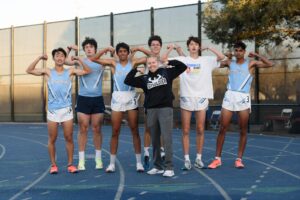
From Parks to Private Space: The Reality of Training in Expensive Markets
Michelle didn’t plan to train athletes in a compact private space. Like many trainers, she started at local parks—and experienced every frustration that comes with it. Soccer balls flying through sessions. Other people claiming her spot. Rain cancellations that cost her income.
“I really wanted to be able to have a spot where no matter what the weather was, I could still train,” Michelle explains. “It wouldn’t be the determining factor whether I could go or not.”
Her solution? A 45-yard strip of turf, 10 feet wide, with 20 yards of tent coverage for rain and sun protection. In San Jose, where industrial zoning laws actually prohibit fitness centers in warehouse spaces, this small-space setup became her competitive advantage rather than a limitation.
For coaches in high-cost markets, Michelle’s story offers an important lesson: the facility you dream of might not be the facility you need to build a successful business. What matters is having a consistent, weatherproof location where you control the environment. (For coaches ready to make the leap to their own space, Tyler Leclerc’s facility journey offers a roadmap.)
The Youth Sports Coaching Software That Changed Everything
Michelle launched Toy Soldier Training in January 2024. Within her first week, she signed up for CoachIQ—a youth sports coaching software platform—but admits she didn’t use it to its full potential for the first year and a half.
“At first, I didn’t use the scheduling side and all the offerings to its full ability,” she says. “I wanted to have a place that was professional, that if people asked ‘who’s that girl in the corner,’ I could give them a business card that actually came to a professional coaching website that looked good.”
The turning point came in September 2024, when Michelle finally switched to CoachIQ’s scheduling automation and client portal. The difference was immediate.
“I would spend an hour every morning just being able to say to everybody, ‘Hey, reminder, we’re at this time today at this field. Are you coming?'” Michelle recalls. “When I finally went over to that, it was a game changer.”
Before the switch, she had no way to fill cancelled slots. If a session was full and someone dropped out last-second, other families couldn’t check availability and grab the spot. Now, parents manage their own bookings through a centralized client portal, and Michelle’s mornings are free for what matters—training athletes, not managing text threads.
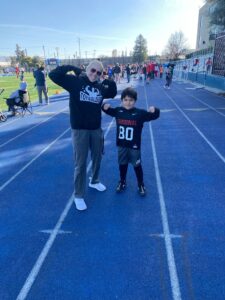
Making Small Spaces Work: Youth Sports Coaching Software in Action
One of the most practical insights from Michelle’s episode is how she maximizes training quality in a constrained space. With only 10 feet of width and 45 yards of length, she’s developed systems that keep athletes engaged even when lines form.
Her secret? Give kids roles.
“With my resistance training, I have a T Apex that I use in my space. That means there’s constantly a line while kids go,” Michelle explains. “So I try to have kids go twice in a row, then I try to wait at least three minutes before they go again. They’ll have to go to the iPad to run the tablet. They’ll be the one that cheers them on. They hold the box because today’s a heavy day.”
For littles (ages 6-10), she caps sessions at 8 athletes. For middle school and high school kids, she can manage 10-12 with two lines running constantly. The key is minimizing wait time and maximizing engagement: get in, get out, get in, get out.
This approach aligns with what other successful trainers have shared about group training economics—running efficient groups isn’t just about revenue, it’s about keeping athletes focused and developing through competition and peer interaction.
Transparent Policies That Protect Your Business
One of the hardest parts of running a private training business? Enforcing cancellation policies without damaging client relationships.
Michelle struggled with this early on. Last-minute cancellations meant lost income with no way to fill the slot—a pain point Jeff Schmidt also experienced before switching to automated systems. But confronting parents about charges felt uncomfortable—especially when she needed every client she could get.
Her solution combines youth sports coaching software with transparency. Using CoachIQ’s automated reminders, she sends morning texts to families with sessions that day: “Hey, reminder. If you need to switch or cancel your session, just do it before four hours. Otherwise, you forfeit that credit.”
“I’m not over here trying to sneak in like, ‘Hey, if you can’t get it within four hours, sorry,'” Michelle says. “It’s more like, here’s the transparency. This is the policy. I’m going to be a grown-up about this.”
The first time someone misses the window? She gives them grace. After that, she enforces the policy consistently. Clients respect the clarity, and Michelle protects her income without awkward conversations.
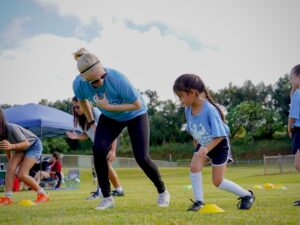
The Impact That Keeps You Going
Beyond the business systems, Michelle shared a story that captures why coaches do this work in the first place.
One of her former athletes, Austin Ajiake, now plays linebacker for the Indianapolis Colts. Michelle was his strength and conditioning teacher in high school—technically she couldn’t train the football team directly, but she had him in her weight training class.
From Weight Room to NFL: Michelle’s former student Austin Ajiake is now on the Colts’ 53-man roster—proof that the relationships coaches build matter far beyond the training floor.
“Training aside, I always put training aside because X’s and O’s, that’s not where the impact I make,” Michelle reflects. “What matters to me is like, do coaches respect you? Are you coachable? Do you have a great attitude? Can you bounce back from adversity?”
She took Austin on immersion trips to build houses in Tijuana, helped him through injury rehab during his senior year, and watched him navigate financial challenges as a teenager. Now she sees him doing service at hospitals and planning camps back in the Bay Area.
For coaches building their own businesses, Michelle’s story is a reminder: the systems you implement—automated session booking, seamless payment collection, your own coaching website—aren’t just about efficiency. They’re about creating the time and mental space to make the kind of impact that lasts decades.
What’s Next for Toy Soldier Training
Michelle’s 2026 goals include finding a dedicated facility, hiring her first staff member, and building out a video homework portal so athletes can continue their development between sessions. She’s also committed to giving back—sponsoring youth athletes in Hawaii who can’t afford registration fees for their sports.
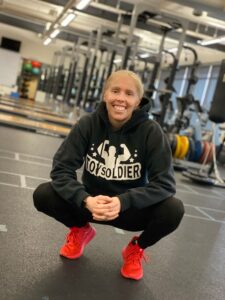
Ready to eliminate scheduling chaos and focus on what matters—training athletes? See how CoachIQ’s scheduling and client management tools can give you hours back every week.
Connect with Michelle:
- Instagram: @toysoldiertraining
- Website: www.toysoldiertraining.com
- Email: toysoldiertraining@gmail.com
Full Episode Transcript
The following is a lightly edited transcript of the episode above.
▶ Click to expand full transcript
Russell: Welcome back to another episode of the Coach IQ podcast. We have Michelle Toy here. First off, I love the name of your business, Toy Soldier Training.
Michelle: I think that’s very, very cool. we will talk about how you came up with that and where that came from. Of course, it’s your last name, but I’m I love that. it’s awesome. I’m gonna do a super quick intro about myself. This is podcast not about me, but my name is Brandon Evans. This is the first time you guys are seeing me as the host. I am also a client of Coach IQ. I own a basketball training gym in Fort Wayne, Indiana, and I’ve been lucky enough to scale it to the point where I have a lot of extra free time. and I joined on with coach IQ’s team and I’m trying to help other coaches do the same and just help and support them. I love coach IQ and what they do so I’m excited to be on board. But enough about me. Let’s talk about Michelle. Let’s talk about your journey. Let’s start with where you’re at right now. So what’s your current current place? What’s your elevator pitch? Like if I walked up to you and said, “Hey, what do you do?” Where are you at right now?
Russell: Yeah. No, thank you. And it’s great to be on. Thank you for coach IQ for for offering me to to be on this. right now I currently work out of my house and it’s my facility. I train youth athletes from the ages of 6 years old up to about 17 18 years old. Most of them being in that 8 to 12 range. And I mostly focus on speed mechanics, helping young young kids get a good foundation starting out in their sports journey, no matter what sport they play. and then starting to dabble a little bit more into strength as well as, introducing them to strength.
Michelle: I’ve been doing strength, but introducing them to strength.
Russell: Because a lot of parents have that, that that conception that, oh, they’re too young for strength. And so really, it’s just movement and understanding movement and and can you do it efficiently? I I love it. Absolutely love it.
Michelle: Very cool. you your house is your facility.
Russell: It’s his. Don’t tell.
Michelle: That’s nice. You only have one rent to pay.
Russell: Yeah. No, if I could get an actual facility. I’m in San Jose, California.
Michelle: And just saying California, you guys already know the issue. Price. Yes. And in our area, in San Jose, the hardest thing about getting a facility is going to be zoning. Yeah, price is an issue, but at the end of the day, where a lot of other coaches can have these warehouses and things like that in San Jose, zoning is light industrial. they don’t allow fitness centers to be in, industrial parks and things like that. that really really limits the ability to really expand in my area, but doesn’t mean it won’t happen. So,
Russell: Yeah, that’s that’s so interesting because I’m currently sitting in my gym, which is an industrial warehouse.
Michelle: There you go.
Russell: Rents very cheap for anybody who’s looking for a facility. Look at industrial warehouses if you can. It’s very interesting. How is that? How is that? because I’m sure there’s somebody else in the platform that might be in the same boat as you. How is running that out of your house your home?
Michelle: There’s always this pros and cons, The pros are that I never have to spend money on gas. I show up 15 minutes before my sessions, Just by going downstairs.
Russell: The cons are ob obviously, you’re limited by how many people you can have. You can’t block traffic noise wise. I can’t be the the loud energetic coach that I am. if I had my own facility, I could be. And then space, I have, a strip of turf that’s 10 feet wide and about 45 yards long, which is rare, which is which is nice. But, the pro is is that I’m able to still run my business. I’m not at, I started out at parks. I started out with a lot of different parks. Got soccer balls kicked right through our thing. Kids run right through our sessions. sometimes other people showed up earlier to that spot, so then I didn’t get the same spot. rain, not as much in in California, we have gorgeous weather, but occasionally we have these these ballots of rain that, if you’re outside at a park, you have to cancel. And I really wanted to be able to have a spot where no matter what the weather was, I could still train. It wouldn’t be the, determining factor whether I could go or not. And in my yard, I put up 20 yards of tent. And on days where it rains, on days where it’s super hot, I, I can, we can still be under the tent and do acceleration.
Michelle: I think there’s something to be said about a coach being able to run their business and be creative within a small space. Like you said, you have what, 45 yards by what you say?
Russell: 10 feet.
Michelle: 10 feet. Okay. It’s even smaller.
Russell: I think there’s something to be said about that. How could you talk a little bit about how you effectively run? Like do you how many kids can you fit in that space? Because I I spent some time with Ryan Rzuki out in California too, San Diego, and he has a basketball gym and it’s it’s tiny. Like if anybody knows how big a basketball court is, like it went from the baseline to not even the full three-point line. Like it was just a small space. But he runs a great business. And the key to that was designing everything in a way where everything would flow. how do you handle how do you handle running your business in such a small space? do you only do are you only able to have a couple kids? Are you able to fit eight to 10 in and still get them all a good workout? Like what’s your what’s your process like for that?
Michelle: Yeah, you nailed it with the second one. Eight to 10. if I could have four and and have a solid business, I think having a smaller group is more ideal
Russell: Because there’s and more of that is just coach to to athlete interaction, but up to littles. littles I consider like the six to 10 year old range. eight is the max. Anything more than that, you get a lot of distractions or kids that aren’t as focused because they’re waiting in line too long. And then with the older kids, middle school, high school kids, 10 to 12. U mostly try to cap it at 10 just because of my space, but two lines here and there, constantly organized, having space to to know what you want to do. there are times with lines and with lines, I try to give kids roles. And so with my resistance training, I have a T apex that I use in my yard. But that means that there’s constantly a line while kids go. So I try to have kids go twice in a row. So they get the max and then I try to wait at least three minutes before they go again. And so they’ll have to go to the iPad to run the tablet. They’ll then be the one that cheers them on or whatever it is. So they have like these different roles. Oh, can you hold the box because today’s a heavy day so they don’t drag the box with them, So the the idea is that give them some roles or try to minimize minimize how long they’re in a line. So get in, get out, get in, get out.
Michelle: Very good idea. The rolls, I might steal that from you. the rolls is a great idea to keep kids engaged because that’s one of the first things that that I learned when I started specifically the training is when lines form, focus goes fast. Especially with with younger ones, focus is gone right away. so that’s that’s a very very nice little tip there that I’m going to steal from you. hope you don’t mind.
Russell: No, please do.
Michelle: Very cool. Very cool. let’s take it way back. I see that you were born in Hawaii.
Michelle: And you started playing sports around four. What sports did you play? What really caught your eye? How did you get from Hawaii to California? What was that? What was that all like?
Russell: Yeah. growing up grew up on the island of Kauaii. My family I was born in Texas in Dallas, Texas. But my family moved roadtripped out to Hawaii when I was three years old. So not born there but raised there on the island of Kauaii and played soccer. That was the main sport growing up. But in the yard, I have two siblings. So I have a sister and a brother and we were constantly active, So football in the yard, rollerblading, frisbee, whatever, whatever you name it, basketball, we did it. Golf, broke a few clubs. Don’t trust me with a a brand new nine iron. I will probably break it. but my mom, yeah, my dad does construction and my mom is a was a nurse growing up. And so I have this family base of of creativity and we we’d build forts out of boxes and things like that. So the entrepreneur mindset was hey, you guys want to go to a soccer tournament on another island? You have to raise the money for it. And so we my sister and I would get on our bikes and go sell chocolates or or pizza, chicken, like you name it, we had tickets, car wash tickets, constantly sold things in the neighborhood. So that’s where my entrepreneurial mindset came from.
Michelle: But my love for sports just came from the fact that we were always an active family,
Michelle: And when I got to college, I majored in kinesiology. I went to the University of Hawaii at Monoa. And then I also fell in love with because my mom was the nursing side, I fell in love with the injury sides of sports. And so I got a master’s degree got certified as a as an athletic trainer. And my first gig can’t come to California. So in Hawaii, I think at the time you could get a like a high school position because there’s just really not many levels above that in Hawaii. probably starting pay was was low 30s, low 30k, like 30,000. And I was like, “Okay, well you can’t survive in Hawaii on that. let me go to the Bay Area where there’s a lot more sports.” I had an internship at Stanford so I took that and that was just with their general sports. So not football but any of the other sports and that’s where I really fell in love with strength and conditioning. I had my dual certification
Russell: But I really really enjoyed the performance side of sports. And so after my internship I had a couple part-time jobs. One as an athletic trainer at Santa Clara University and one as a strength conditioning coach at a high school. And I fell in love with the high school level. I always think used to think that growing up, if you didn’t make it to the pros, you didn’t really make it. My elevator pitch, I said, I trained high school athletes. I, man, I failed. How did I get to high school only? what h what went wrong? I thought I was smart. But no, it’s just it’s it’s what did my personality vibe with? What did it match with? And high schoolers all day. I spent a decade 11 12 years at the high school level being a strength and conditioning coach. Absolutely loved it. my last few years at the high school level, I was asked to be the sprint coach, one of the sprint coaches for the track team. And then that’s where I realized or when COVID hit, you had to do everything outside. You now had to realize that, okay, all we can really do is speed or body weight exercises.
Michelle: Shoot, I don’t know anything about speed. I really knew nothing about speed. Like schools didn’t didn’t really teach us or college didn’t really teach me about mechanics, you know? I didn’t hadn’t run track as as a kid myself. And so that’s where I ran into Les Felman, just via social media following him and and guys at Sports Academy and I, because it was COVID, they did an online program for for women only and less and CeCe did an amazing job being able to just give me foundation as well as the other ladies that were on the call, but just a foundation of speed. And that’s where it was oo, science meets my energy level. Oh, I’m taking off. So it it took off from there. I still to this day, six years later, have a great great relationship with them and and credit them for for the success that I’ve had. So,
Russell: Very cool. Very cool. I saw on there that you were the first woman in California to win state coach of the year.
Michelle: Yeah. For strength and conditioning at the high school level.
Russell: That’s still very cool.
Michelle: Yeah. Yeah.
Russell: What what was that process like? like what did you what did you do to earn that and and what did that what was that process all like?
Michelle: Yeah. Do I still think I earned it? I don’t know. There’s so many great coaches out there.
Russell: And I know that there’s several that could have come before me, but the process was being nominated by another coach was at a rival high school and it was awesome because I didn’t see it coming at all. And so once you were nominated, then you at least had to then, give them a spiel about who you are and a few letters of recommendation. I didn’t have to do much myself other than just show a little bit of what I do. But I think what really got me that award was was just the people around me with killer letters of recommendation. Absolutely killers. And it and it came from the president of the high school I was working at as well as the a long-standing member one of the coaches and faculty members who’d been there for over 20 years. and just prided it on or focused on not necessarily, the knowledge base of strength and conditioning, but more so how I interacted with kids, how I made it as the weight room, which was their first weight room they had built at the school. I was the first hired strength coach at their school. And how I just opened it up to every every student around. Everybody felt welcome. Whether you were a kid that was a robotics kid or whether you’re a faculty member who, hadn’t stepped foot in a weight room for a decade.
Michelle: Opening
Russell: Opening the gym up for everybody. having this just this mentality of everybody belongs up here. We’re going to have a great time, Music was always playing. It was always bright. but at the same time too, I was very, I’m very analytical and and detailed. And so I try to teach as I coach
Michelle: Just like I do nowadays I guess. So yeah, I guess all of that was compiled into their letters of recommendation and
Russell: Yeah, go figure. I won an award which is awesome. I was stoked about it, don’t get me wrong. I celebrated.
Michelle: Yeah, you’re be you’re being very humble about it. It sounds like you you’re doing a lot of great work over there.
Russell: Yeah, but I I my my biggest thing is that I’m never at the finish line. And when there’s award along the way, but I haven’t finished.
Michelle: I don’t know if I’ll ever be finished. I don’t think we ever will.
Russell: Probably not.
Michelle: Yeah, I don’t think I’ll ever fully think that I deserve an award, but celebrate. Yeah, absolutely. I’ll celebrate it.
Russell: Yeah, of course. Why not?
Michelle: Awesome. That that’s very very cool. I had to ask you about that because I was I was curious about what all went into that. Let’s dive in a little bit about your business specifically. how coach IQ you’ve been a very long tenur customer of Coach IQ from what I see. So what does like a typical week look like for you? like you’re running group sessions I see on your website group sessions, private camps online. How do you manage all that yourself? Because I sure can’t. Even with Coach IQ and all of the the features they have is a lot even for me. Like I have a a manager and a staff now. are what does it look like for you in a week?
Russell: Yeah, I I juggle I taught myself how to juggle a lot.
Michelle: I respect that.
Russell: Yeah, so I started my business in January of 2024. So I just hit two years and I think maybe I was in my business for a week and that’s when I got Coach IQ. I was looking for a a platform to have a website and before that I only knew about Shopify which or or Wix and things that were more for sales and I was like ah it’s not quite it. Luckily just a a football coach colleague who had had done side u programming and stuff had a coach IQ website. I was like oh give me that how do I get onto that because that’s what I need.
Michelle: And at first the first year and a half I didn’t use the the website and all the offerings to its full potential which I am doing still I I I still am not using it to to the full ability that I could be because of the fact that I have to juggle a lot. But I started out with scheduling everything myself, but I wanted to have a place that was professional that if people were like, “Yo, who’s that girl in the corner?” If I gave him a business card, it came to something that looked good.
Russell: And I I’m really someone who who likes to control things. If I want to edit something or post a camp, I didn’t want to constantly have to be going through a web designer for that because having middlemen, there’s just always that time component. You always have to wait. And so the fact that Coach IQ you could design your own thing, edit it as you go, post pictures, put the design, color, everything to your own customization, I was like, “Yeah, sign me up. I like that.” And so it wasn’t until September of last year that so about a year and a half in my business that I started using the scheduling side and the portal side. So where actual athletes or parents I guess for that matter could come onto my website, purchase a package, book, have a login, and then they schedule everything. They can see the schedule themselves. And so when I finally went over to that, it was a game changer because I would spend an hour every morning. In the summer, I would have camps in the morning and my sessions in the evening. And so just being able to say to everybody like, “Hey, reminder, we’re at this time today at this field. We’re this.
Michelle: Are you coming?”
Russell: Even just, “Are you coming?” Because if I had a session that was full, it wasn’t like someone could go on and check if there was a session or excuse me, a slot available. And so constantly I’d have kids cancel last second, for good reasons, They’re sick or they got hurt or whatever it may be.
Michelle: And it just I didn’t have the ability to get someone else in that slot. And so I was like, “All right, I got to change to what the actual portal offers. Let’s do that.” And so it was a bit of a, it took me a few days to really get the hang of it, but now it’s all right,
Russell: What did you use before? What were you using? Like Google Sheets or anything? That’s what I used.
Michelle: Oh, yeah. Excel spreadsheet. Oh, all day. Yeah. Oh, yeah. Yeah. Still still have it just for the purpose of like looking back at where I started. Yep. Same.
Russell: But it was The cool thing is that it started in in January of 2024. I I didn’t even need a spreadsheet. I had three athletes. Like I had one one hour a week at a park. I could fit anywhere I wanted. I could fit on a sidewalk, Like I didn’t have athletes. And so,
Michelle: It wasn’t until probably, April or May where I started needing to organize where kids are on what day, at what session, because now I had like three sessions a week.
Russell: Yeah.
Michelle: Right. It was a slow start. So nowadays, I have about 12 to 14 sessions a week, depending on the the flow of seasons. I run a lot of mini camps and I have all the signups, the the forms filled out, waivers signed, signups, parents can automatically go onto the portal, sign up, schedule, book something. Yeah, I I think the only thing I still want to do is have a backend on the portal that has videos for kids to do for homework, programs for kids to follow on their own. I really want to be able to support them more. I just haven’t had time to really dive into that because there’s a little bit of a learning curve for me to to figure out how to do that and a lot of filming. I got to film all the videos. I’m just making excuses at this point. I, I I if I really really want to get it done, I can get it done. challenge me. I’ll get it done.
Russell: Okay. We’ll hold you to that. There is the the programs feature. I when I first started, I I was the same. I’ve been with Coach for since one athlete. When I first started, I luckily did all my filming, did all my programs when I had all the extra time. And the programs feature is really cool, like being able to time release stuff like, “Hey, you have to do this Monday. It’ll send a notification.” I haven’t yet implemented like weekly homework. But that’s that’s something that I think is massive when it comes to being able to offer like a membership at my gym, at your program, is yes, you get these one or two or three inerson sessions, however much you come, however you structure it, but you also have to do this at home. and I think it’s important too for for kids when it comes to an athlete development perspective, which is why we all do this, for them to be able to also be self-sufficient and be able to understand on their own how like I have to work this hard. I have to work as hard as I did in class. I this is how I think about things on my own. Of course, because we’re not going to be with them, on the field on on the court. I think that is a a huge asset to families and specifically if anybody has a a private sports coaching business. something that’s very valuable for for to add. I think everybody should to some degree. But, but yeah, that’s awesome points there. You talked about a lot of a lot of what you do. What aside from, managing managing everything on your own, what what do you feel has been the hardest part? Has it been because I I mentioned to you, I have a good friend that’s in the sports performance field. Has it been educating parents about why they need your service, why it’s important? Has it been like the weekly upkeep? What has running that business? What has been the hardest or most challenging part that you think besides of course jud juggling everything?
Michelle: Hey, I just want to take a quick break. My name’s Russell. I’m one of the founders of Coach IQ. We put on this podcast here. Our goal is to interview top coaches and business owners in the youth sports space across the United States and give you guys insight on the ground floor. How are they running their business? What do they think about the current ecosystem? And what are their thoughts on where things are going? we’re super excited to bring this to you guys. If you don’t know about us, we are an all-in-one sports management platform. We run a lot of the businesses that we have on the podcast and we’re fortunate enough now to work with about a thousand sports coaches across the United States and it’s our goal to make your life as easy as possible in running the business itself. Website, scheduling, payment management, everything handled seamlessly on our platform. And really what separates us is we are built specifically for sports. We’re not powering nail salons. We’re not powering Pilates studios. every second of the day, we focus on you. if that’s something you need where you’re looking to get your time back or you’re looking to grow your business, Coach IQ is really the only platform thinking about you every single day, interviewing and working with the top coaches in the industry specific to sports. if that’s something we can help you with, we would love to connect with you. You can visit our website, coachiq.com, schedule a free demo there. The demos are awesome. It’s really less about selling and much more about just walking through what we’ve learned and providing value on what other coaches are doing. And if it’s a match, it’s a match. absolute no-brainer. Go schedule a demo. worth the time. And thank you guys for tuning in. Thank you guys for watching. Thank you for customers who are working with us. It allows us to do all this make better product and the main goal help athletes all across the United States and the world get a phenomenal experience from you guys the coaches.
Russell: That is a solid question. I would say that it has changed. you asked me last month, I’ll tell you there’s probably a different challenge than this month. And at first, I think when I was first starting out, I think it was keeping my emotions even keel. And luckily, I have a really good support system in my family that helped me do that. when somebody would cancel last second and I didn’t quite have a, a very structured cancellation policy, It was more all right, you doing it within 30 minutes of the sessions, that’s that’s cruel. That’s cruel. It is. any private trainer out there. but being able to to really dive in and put customer service first. And that was a challenge for me at first because I wanted to make money. I needed to make money. I was on my own, living in California
Michelle: Starting my business out, There’s there’s there’s these bills. There’s things that I want to invest in to have more equipment or whatever it is.
Russell: And so when people cancel on you last second, don’t just, blow up. And instead it’s like, “Okay, what would you say? How would you handle this?” Or or or what would you do? And they’re like, “Okay, well, beautiful. Well, now that I’ve established a really good rapport with parents and they understand that if they cancel last, I gave them up to four hours to cancel. That way, I could still have, someone potentially check in last second to take that slot, which is nice because that’s now happened since September when I when I jumped on the portal.” I would say now it’s just I don’t know. I, I do really well with with obstacles because I I find them to be fun. I I like to use this analogy. I play basketball. I played this morning. And
Michelle: It it would stink if someone just let you always have a free leg. It just it’s not fun when Okay. Yeah. Just go ahead and score. Just go ahead and score. Like I want to earn this layup,
Russell: And so whenever there’s a challenge or whenever there’s things that like making reels on social media, like I’m my own social media marketer, a scheduler, person that tries to reach out to other coaches to see for camps or having to give proposals to people who reach out to me. and being able to do all that, just started with homeschool kids, Opening up my schedule during the day to now have somewhat of a little bit of a sporadic schedule, but nonetheless, I love what I do. and just being able to go at it with a level of professionalism, but also making sure that I, am I growing in the direction I want to grow. And so the the biggest challenge for me now is making sure that the image that I create, the brand that I create is what I want to grow into and what keeps attracting people to my business. So standing up for myself for for parts of of my business and and who I represent and what I do and and then also at the same time too constantly learning things where I realize there’s a gap in maybe my education here and there. How do I best create a complete program so people don’t necessarily have to go somewhere else for X Y and Z. I can offer X Y and Z. So,
Michelle: Right, 100%. That that point you mentioned about, standing up for yourself. I think that’s one of the harder things to do for, newer trainers, newer coaches in the field. And I know for me, touching on a coach IQ feature here that helped me a lot with that was their the cancellation feature like with their credits and everything. Do you use that? Is that what you use?
Russell: I do.
Michelle: Yes. That helped me a lot just overcome that like instead of getting a text and saying, “Hey, can we cancel?” And me being like, “Yeah, but I’m still charging you.” they just would understand. I I noticed a lot more parents would just be like, “Oh, I didn’t make it. I understand.” And then just move on. I think being able to overcome that hurdle, which was one of the more daunting things when I first started, I don’t know about you, you mentioned it, but that was huge. that was a big thing that I wanted to touch on with for newer trainers, because, I’m sure there’s plenty out there that are just starting out. Speaking of newer trainers, what what have you figured out now that you wish you knew when you first started? Like if you had to tell yourself when you first started this private training business, what what would that be that number one thing?
Russell: Yeah, get the website up sooner or not the website. The website was up, but get the scheduling sooner. That hands down would have made a big difference. Like I was using the I would get these text messages where it’s like, “Hey, we have to cancel.” And I’m like,
Michelle: “Okay, first one’s on you. the next one it’s like okay I how did I tell somebody that it was like all right at what point is it not okay to cancel last second right
Russell: And so being able to to have in one a I don’t know if there’s anything out else out there like coach IQ where you have this whole scheduling thing where people cancel last second but it’s geared around private coaches and it’s just phenomenal what anything I think of is like hey can I do this and and it’s like yeah you can Russ Russell was like yeah you can you can do this exactly or they give me hey here’s a whole back end on the tutorial of how to do that. So for newer coaches getting a schedule having it be automated having emails be automated reminders be automated saves you a ton of time also makes you look professional. I would highly recommend doing that. I wish I did that sooner. I’m really glad I do it now but I would highly recommend doing that sooner. Yeah. other other than customer service, So customer service always comes number one being transparent right. in my automated text messages to families every, if they sign up for a booking, I set up an automated text message that morning that’ll go out that said, “Hey, reminder. If you need to switch or cancel your session, just do it before hours, otherwise you forfeit that credit.” I’m not over here trying to sneak in like, “Hey, if you can’t get it within four hours, sorry.” It’s more like, “Here’s the transparency. This is the policy. I’m gonna be a grown-up about this. Here’s the policy. I’m not hiding it. I’m going to enforce it. Maybe the first time you’re one minute like like, “Oh my gosh, I meant to cancel. I forgot. I’m 15 minutes behind the thing. Is there any way I can still do that?” Of course. The first time, again, customer service comes first, Understanding that parents are also all over the place. the first time, yes, absolutely. I’ll switch it. Next time, just try to get it before hours. I got you, and that also builds the rapport and the trust. advice for young people that I did well would definitely be putting customers first and but also to having that honest conversation and that policy in place where yeah, that first time might slide, but after that, here’s the policy and being very stern on that has Yeah. I wish I just I’m glad I did part of it. I wish I did the other part sooner.
Michelle: Yeah. Yeah. Those the automated texts and reminders, emails, however you send them out is massive because there’s no excuse, There’s no like I forgot to send you a reminder. There’s no like me having to say, “Oh, just so I have to text every parent.” it’s just they get it and they get the automation every single time. everything is clear, everything is transparent. like you said, that that first time you can always you can always throw them a bone, say it’s okay, and they appreciate that. But after that, you got to be strict on it. and it’s that transparency is huge. But yeah, those are some awesome points. I just have a couple more questions I want to ask you before we get off here is have some awesome points here. So over a hundred of your athletes have wanted to play college sports, Like you love the high school scene. What is I know I have my stories that I love from kids. What is a story that has has stuck with you? Because we coach, for the kids, Like of course we have to run our business, make a living, but ultimately it’s it’s for kids to to build them up to either take them to college or just give them confidence. What is a story off the top of your head that that sticks with you about a certain kid that went on to play college or just in general?
Russell: Yeah. number one person that comes to mind, his name is Austin Ajake and he currently plays for the Indianapolis Colts. He’s an NFL player. Yeah. he’s he’s on the 53man roster. This is his first year where he signed to the 53man roster. He was on the practice squad all last year. He bounced around teams the year before that. college-wise, he played at UNLV. But, so when I was in when I was at the high school level, I was his his strength and conditioning coach. correction, I was not his strength and conditioning coach. I was made very clear that I’m the strength conditioning coach of the school, but football I couldn’t touch.
Michelle: And Okay.
Russell: Yeah, that’s another that’s another story. But either way,
Michelle: I can imagine
Russell: Luckily luckily I had him in my weight training class and so he took weight training and obviously it was during season so there was he was still doing the football trainings with their coach and for me we would dive in on things that more rehab based stuff because he played quarterback, running back, linebacker. He never came out like this kid never came out. He was a beast.
Michelle: And one of the things I think I that I’ll remember the most is that I got to take him and his younger brother. I led immersion trips to Tijuana Tijana.
Russell: Tijuana.
Michelle: Okay. So to build houses and so to be able to to get an athlete that not only trusts you in the weight room but also like hey I was with you as you experienced this entirely worldchanging view and perception of poverty andor also how can you help, And then fast forward to now him being in the in the NFL where he gets to go out and do service. I’ve seen him at multiple hospitals posting how he’s helping kids. he’s coming back to the Bay Area and doing a camp this summer and being able to instill that in him at a younger age like hey service is going to be a powerful thing if you if you can make it to the next level it’s going to be powerful. so training aside, I always put training aside because X’s and O’s,
Russell: That’s not what I that’s not where the impact I make, I I I can make a a mediocre program. We can do it consistently. You might get to the next level. Great. Right. What’s going to be what matters to me is do coaches respect you? Are you coachable? Do you have a great attitude? Can you bounce back from adversity? Yeah. he had gotten injured in in high school, helped him out with some rehab stuff when as he was going through his senior year. his senior night, he gave me his jersey, which I know pissed a few people off. I think that was hilarious. I was like, “Me? Okay, I’m down.”
Michelle: They’re like, “How do her? You shouldn’t be in the weight room with her.” I was like,
Russell: “Oh, sorry.
Michelle: I’m a teacher. Too bad.” anyway, but just being able to watch him in college, stay supportive. I can’t wait to still go to a game yet for him being in in his his 53man roster. didn’t catch it this year. I definitely definitely will next year.
Russell: But just watching him grow and and and even too coming from the the family background that he had, There’s days where it was hey, you didn’t have gas money. Hey, there’s days where you didn’t have lunch money, And it was how can I help, as a teacher, as a as a supporter, with any kid for that matter, but not, break any rules, how can I be supportive and and help you see, okay, how can you help yourself, So teaching kids how they can be their own little entrepreneurs, So my parents taught me,
Michelle: If you’re trying to go to a tournament, you better sell as many cookies as you can. Oh, by the way, you have to bake them. Oh, by the way, out of your profit comes what it costs to bake them. I’m not paying for it. being able to also help kids and athletes understand about their finances early on or just the structure of professional development early on, the mental mindset of things. that’s probably what’s what’s, just coaches and coaches and coaches. Yes, we’ve gotten them to the next level, but at the end of the day, what happens between ear and ear and and and what you think of yourself and the confidence and what other people think of you and and are you coachable and and that’s how you get to the next level. very proud of his story. super proud of his story. He’s father of two now and happily happily married. So,
Russell: It’s it’s a beautiful thing to see.
Michelle: That’s very cool. you’re going to have to send me his name. I live I’m in Indiana, so I’m right near the Colts.
Russell: There you go. Yeah. Number 58. He’s a linebacker.
Michelle: Okay. I’m gonna have to check him out. That’s that’s very cool. And I think I think that is where the role of, the private trainer and why I believe, so much and why I even wanted to join on with Coach IQ. of course, building the business is great. I love that I can, make a living and you can and and all these coaches can, but for us to be able to make a living and do this full-time, it increases the odds that we have a chance to make an impact on somebody in that way. I think that’s that’s really where the role of the private trainer is because, at least in basketball, and I’m sure you’ve heard these stories a million times, like their sport coaches in basketball at their school, like they might not like them. they might take their confidence away, or even maybe a parent sometimes that that happens. And like we don’t have any any bias, Like we don’t have any like any outside bias. We don’t have people donating to the team so we have to have their kid over them. Like we don’t have any of that, Like we just accept the kids as they are and just pour into them. It’s very simple. so that’s why that’s where I think the role our role is. then your your story showed it exactly. So that’s very very cool. Very awesome. last question I got for you is what’s next? Where are you going? What’s your what’s your plans for 2026? What do you hope to have have done by the end of the year? Where are we?
Russell: Well, I will continue to look for facilities to see if if I can expand a little bit there and maybe
Michelle: Get another person also as a toy soldier staff member so I can help even more. get a portal online where I have homework programming and stuff or even like some knee rehab or some ankle rehab stuff just giving more education and videos for things that they could do. Keep going on on trips where I get to go to places I want to visit but also learn stuff. So CEUs and continue education and cool places. I know Altus and and Team Speed and all that they’re going to be I think in Brazil in October. I was like, “Oh, I’m there.” So,
Russell: Final go. All right.
Michelle: Yeah. Yeah. Yeah. Yeah. Continuing to give back to the kids in Hawaii. I go out there every three months for camps. I continue that. That would be awesome. sponsor more of the kids out in Hawaii. I have I’m very blessed and and here in California and to be able to go back to Hawaii and be able to to sponsor more kids is kids like their registration for their soccer or or whatever sport they play because some of them can’t afford, the registration fees. And so being able to support or they just have multiple kids in their family and like my like my parents, it was all right, you either got to go hustle or we got to find some people for sponsorships. And so I’d love to be more toy soldier scholarships for my own training, more help with people who are less financially stable, surprising people with grocery gift cards, just giving back more. I think that’s that’s on my on my plate for 2026 because I feel like if you if you give more, you receive a lot more than than you think. And so yeah, I plan on giving more. Yes, that is that’s a principle that I personally try to live by. Business life is is the more you give, the more you receive. so giving is is important. That’s a good goal to have. Well, awesome. Michelle, it sounds like you have something very, very cool going on out there. I would love for you to plug all your socials. We’ll put them up on the screen and everything, but go ahead, tell everybody where they can find you, your website, what your Instagram is, and whatever your social medias are.
Russell: Yeah, it’s pretty simple. Everything’s the same. Toy Soldier Training. if it’s Instagram, it’s Toys Training. If it’s my email, toy soldierraining@gmail.com. If it’s my website, www.toyoldertraining.com. trying to just keep everything the same.
Michelle: Good branding advice there for everybody. Very cool. Michelle, thank you for being on. This was awesome. I really enjoyed our conversation. of course, if you ever need any help, always reach out to us. We are happy to help you out.
Russell: Thank you, Brandon. I appreciate your time.
Michelle: Absolutely. to you as well. You have a good rest of your day.
Russell: All right. Thanks for having me.
