

Knowing how to hire coaches for your sports training business is what separates a one-person hustle from a real company.
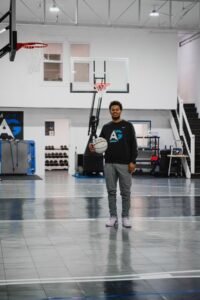
Austin Carroll, known as Coach Ace, owns Ace Grind Sports Performance in Bridgeport, Pennsylvania. He manages two training locations, runs an AAU program, and has coached college basketball at Eastern University for 8 years. If you know anything about college coaching, that’s basically a second full-time job.
None of that is possible without a coaching staff. Here’s exactly how he built his.
Who is Coach Ace?
Austin Carroll started Ace Grind Sports Performance as a side hustle right after graduating from Eastern University in 2017. He spent years working chain gym jobs and growing Ace Grind on the side. After COVID, the business took off, and he went full-time in 2021.
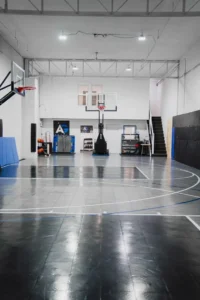
Today he runs Ace Grind HQ, a 2,700-square-foot facility in Bridgeport with two overlapping half courts, plus a partnership location called The Hoop House near Villanova University. His programming covers youth athletes through professional players, with a core focus on basketball skill development, group training, and strength and conditioning.
Your training business is a single point of failure
Most coaches build around themselves. Every session goes through them. Every parent relationship is with them. If they step away, even for a week, the business stalls.
Coach Ace had no choice but to solve this early. His college coaching calendar pulls him away from Ace Grind for months at a time. The business had to run without him, or it wasn’t going to survive.
“You have to delegate, you have to multiply yourself. You have to be willing to create a system that can be replicated by your team so that the product is still consistent.”
That forced decision is what most coaches avoid until they’re already overwhelmed. Figuring out how to hire coaches for your sports training business before the pressure hits is what turns a fragile solo operation into something that can actually grow.
How do you find quality coaches for your sports training business?
Ace built his entire staff pipeline through college internship programs.
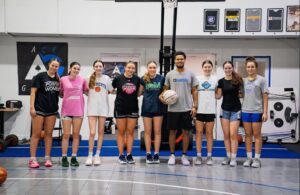
He partners with local universities, including his alma mater Eastern University, to recruit seniors in exercise science who need internship hours to graduate. Students get class credit. Ace gets trainers who are hungry, coachable, and showing up with no bad habits from other programs.
He doesn’t wait for applications. Every year he goes directly to the rising senior class at Eastern, speaks to them in person, and lets them see who he is and what Ace Grind is about. For other local schools, he contacts the internship coordinator or department chair, describes his business, and asks to be included in their placement list.
“These universities are looking for us. They don’t know what’s out there. And they want their students to see that there’s more to do with a sports science degree than go to PT school.”
Most coaches assume this is complicated. It’s usually just an email.
How to onboard new coaches for your sports training business
Before any coach leads a session at Ace Grind, they shadow for at least a month.
They help with camps, assist during group sessions, and see Ace on good days and rough days both. The point isn’t just to observe. It’s to absorb the values, the energy, and the standard before he hands them any real responsibility.
“The only way to thoroughly get a trainer to understand your commitment and your pride in the work that you do is for them to be around you.”
Skipping this step, Ace says, costs you the only real opportunity to put your culture into someone before differing habits take hold. Four of his first five coaches came through this process. He’s since shortened the timeline for more polished candidates, but the shadowing phase is non-negotiable.
He also built a formal onboarding checklist with a former intern who now handles admin work remotely. It covers CPR and first aid certification, sports instructor insurance options, business banking recommendations, and a full walkthrough of what being a 1099 contractor actually means, including which expenses to write off and how to track income weekly. He hands them the Excel sheets he built when he was starting out.
“The better they manage their business, the better they’re managing my business.”
How to pay coaches in your sports training business
All of Ace’s coaches are 1099 independent contractors. Every coach knows their split per private session and their percentage per athlete in group training before they step on the court for the first time. For clinics or team practices with variable attendance, they get a flat rate.
No surprises. He’s been on the wrong end of this.
“I worked as a personal trainer at a chain gym and they were selling sessions at $125 an hour and I was getting $40. They at least told us.”
The lesson he took: be fully transparent about the numbers from day one. That transparency is also a retention tool. Coaches who understand what they’re earning and trust how the business is run don’t leave when a bigger facility opens down the street.
He asks every coach one question during onboarding: do you want to eventually run your own business, or are you looking for a long-term home? The answer changes how he develops them. Two of his coaches have since launched their own programs in the area. He still sends athletes their way when he can’t take them. It works because he expected it, not despite it.
Managing a multi-coach operation means athletes can’t fall through the cracks when someone else covers a session. CoachIQ’s client management system keeps every athlete’s history, bookings, and notes in one place, so any coach can step in without missing anything.
Build the systems before you need the help
The mistake most coaches make when figuring out how to hire coaches for their sports training business is waiting until they’re swamped. By then, you’re moving fast, onboarding poorly, and hoping someone figures it out. Ace built the opposite: a pipeline that produces coaches who know exactly what an Ace Grind session looks like before they take their first athlete.
Read how Coleman Ayers grew his sports training business to 7 locations for another look at what building a staff-supported operation actually requires.
Part of what makes it possible is having the back-end infrastructure dialed in. When athletes book their own sessions through CoachIQ’s automated scheduling system, coaches stop managing calendars through group chats and can focus on actually developing other coaches. Read how Mike Shaughnessy automated his coaching operations to see what that looks like in practice.
The bottom line
Hiring coaches for your sports training business isn’t just about getting help on the court. It’s about building something that doesn’t stop when you step away.
Coach Ace built his staff through a college internship pipeline, a structured shadow-first onboarding process, and an open-book pay model that keeps coaches around long enough to actually get good. His business now runs whether he’s at Ace Grind HQ or on the road for a college basketball road trip.
If you’re ready to build the systems that support a real coaching team, book a free CoachIQ demo and see how coaches are managing athletes, scheduling, and staff all in one place.
Follow Coach Ace’s work at @acegrind_hq on Instagram.
Full Episode Transcript
The following is a lightly edited transcript of the episode above.
▶ Click to expand full transcript
Russell: Welcome back to another episode of the Coach IQ podcast. We have Austin Carroll here, Coach Ace as a lot of people know him. I’m not going to steal the the spotlight. I’m gonna let you go ahead introduce yourself. Tell us exactly what you have going on right now. What’s your everyday look like? Where where are you at at this moment?
Ace: For sure. What’s up, man? Appreciate the opportunity to be on the podcast, Austin, but everybody knows me as Coach Ace, and I’m the owner of Ace Grind Sports Performance. We are specifically a basketball skill development company, but we also dabble in a little bit of, just sports performance training, strength and conditioning as well, but our main focus is basketball. we’re located in Bridgeport, Pennsylvania, which is right next to King of Prussia. If you guys have are familiar with the Philly area, it’s a huge mall, King of Prussia Mall. We’re about 25 minutes from the city Philly. right in that area. And my my home gym is my first official home gym, which is called our Ace Grind headquarters. And that’s where we run our show. mainly a lot of, small groups, private as well as larger group skill development training. We start from ages as as as early as they can bounce the ball up to, college and professional. we’ve been rocking there for about a year now, but I’ve been in business since I graduated in 2017. I went to Eastern University and played basketball there and then since then just started the company and tried to see how far I could grow it and here we are. we’re rocking.
Russell: Nice. Now, is this your full-time thing that you do, just your business, or do you have anything else you do on the side? So this is my full-time it organically moved into a full-time role for me in 2021. I started the business just as my passion and like my part-time gig and then it it dominated and got to the point after co like I’m sure is similar for a bunch of people in our industry and it it it just blossomed and has been taking care of me for the last four or five years now. what I’ve done over the course of that time since graduated I worked a whole bunch of different jobs in the fitness and training industry from at chain personal training gyms to corporate fitness for larger companies teaching classes and as well as just doing and growing ace grind on the side and also I’ve been coaching college basketball at Eastern University for the last eight years now so this is my eighth season so I still do that which is if it’s a it’s a full-time job I’m just
Ace: So you do another thing on the side.
Russell: You feel me? it’s that that’s essentially my side, but any coach will tell you it it’s full-time commitment and I I love it. that’s what I do on the side, but Ace Grind takes care of me and pays my bills and that’s my that’s my full-time baby.
Ace: Very cool. Well, that leads me to my next natural question. How how do you juggle all of that? Because you just mentioned it’s another full-time job. any college coach I’ve ever talked to, whether it’s assistant, head coach, or just a part of the staff, that
Russell: That’s your whole life. that’s everything. how do you how do you juggle running that in in conjunction with your your private training business?
Ace: Well, you one, I’m blessed to have the team that I have around me, but mainly, you have to you have to delegate. You have to multiply yourself. You have to be willing to create a system that can be, replicated by your team so that, the product is is still consistent that you put out there. over the years, I’ve had, interns that have grown into employees for me. and I I I’ve tried to go very specific on who I bring into my business because I need help to be able to juggle all of these things. But quality people and quality trainers are, what allows you to keep the the product the main thing. so simply put, delegating, you can’t go anywhere far alone, or fast. You need people. it’s forced me into doing that. some of it’s trial and error, of course, but being taken away from my business for, a couple months at a time and having to change my schedule to to do the college practices and games, it’s forced me to to bring other people on and bring other people up. And that organically has helped my business grow. And now it’s become okay, well, I know I need to bring bring another coach on if I want to keep coaching college basketball. with help essentially is how I juggle it all. and then creating, schedules and system and putting the same amount of effort I do into my training into the the the logistic side of it. getting, three two or three quarters ahead of, that next quarter that’s coming up for for training. Understanding what my summer schedule is, taking advantage of my peak months is super important because I know during my college coaching schedule, that’s that’s not necessarily my peak training months anyway. when it is peak, I got to I got to, hit the ground running. just a lot of planning and effort behind the scenes.
Russell: Right. There there’s a couple points you made in there that I want to touch on that we we haven’t yet touched on with the podcast. You mentioned delegating and creating more versions of yourself that for me for me in my gym like I I’ve been able to mostly separate myself from running the encore workouts and that has allowed me to really really supercharge what we’re doing. Like it’s I can focus on all of the backend stuff and taking that step back from being involved in everything. at least for me made me spot so many little holes like oh this this this and this and it would come up and like parents would would mention something and I’d be like oh why are they doing that and then I look at it it’s like oh that’s on me like I could fix that right so my question for you would be when you started to delegate because this is something that I know scares a lot of coaches it used to scare me big time what what did you do how did you find that person how did what was your in you said you had an internship process what does that look like? just talk us through what that looks like. Being able to create another version of yourself because that is very, very crucial in my opinion to business success and just in general being able to create more versions of yourself. You deliver a high quality product. You want more high quality trainers in the market.
Ace: For sure. my system that’s worked very well for me has become like a internship to employee type of thing. I almost I partner with Eastern University because being a graduate from there, I know that all the seniors in exercise science have to get senior internships and there’s a bunch of kids like me, not just at Eastern, but at these local universities that are looking for, what career they want to be in. a lot of those kids get credits for the internship. essentially, it’s, it’s work for me, but it’s class credits for them. we organically help each other. and the only way to thoroughly get a trainer to understand your commitment and your, pride in the the work that you do is for them to be around you in my opinion. One, you have to know what that is for yourself. to the point you said, stepping back and like just evaluating and looking at other sessions and, trying to see, okay, well, what do I do in my sessions and why do I do it? Like taking yourself out of it to to evaluate that is the only way you’re going to be able to teach it. So I really can connect with what you were saying like taking a step back I’m like oh shoot yeah that is wrong there is a hole but you can’t do that until you do take a step back but also every employee or coach or contractor that’s worked for me or with me has spent time just working around whether it’s helping me with camps or just shadowing for at least a month at a time. And if you skip that step, then you’re skipping an opportunity to just put, your company and your personality values into that person. and I’m very upfront with them about that. And then once you’ve done it one or two times over, the same way we can talk up our product on the court, I can talk up my product and I can help get you to where you want to be as a basketball trainer. that’s the given. Kids will always want training, but the style and the product that we put out. Here’s the steps on how I get you to become an Ace Grind trainer. And it’s, an internship at at least for a month. you can see my style, you can see the energy, what we look like on good days, what we look like on bad days, and then I can learn you. And once that becomes once we check that box, it’s so much easier, I feel like. so out of my first four or five coaches, all of them were interns with me. And now I’ve I’ve been able to see what from that process has, been things that I want to make sure that every coach gets. And I don’t have to do a full year internship to onboard the next one. At this point, I still look for those college kids that want to get into the field that I’m doing, but I can grab, someone my age or someone a little bit more polished and still not miss the the values that we do at ACE Grind and still allow them to bring their own personality to the table.
Russell: 100%. That that’s a really creative point partnering with that college. I want to touch a little bit more on that. What did that because I’ve had some conversation with some colleges. Nothing extensive or partnership like you have, but what did what does that partnership look like? How did you land of course you’re involved in the program and everything like but what is like a bird’s eye view of that partnership? Do they
Ace: Are they putting you on their like internship recommendation list? like what does that look like?
Russell: When you’re a junior, senior in college, especially in the exercise science field, these schools, they have internship packets, they have lists of people and organizations that they have worked with in the past or that they recommend and they just allow you as a student to go out and find your own. for me, I was handed a packet when I was a junior and I had to search through that packet and be like, “Oh, this looks cool.” And so since that worked for me, I knew that going into it, looking for interns of my own. And I reached out to the directors and I went back to my university and spoke at that school and talked to the class ahead of time. So every year I go get in front of that junior class, rising seniors, so they can hear me, see me, and all of that because, personally with Eastern, it’s easier for me because that’s I’m alma moater. But, with other schools with Westchester and some of the other local schools as well, I just reach out to the internship coordinator or the department chair and tell them about my business, tell them about past internships, what we do, and simply just ask ask to be included in their, internship packet. If they have a student they think fits this, we’d love for, a conversation. And these universities are looking for us. that’s the thing. Like I feel like we often feel like that’s a what I’m saying it’s we got to apply to no they’re looking for more opportunities for their students and they don’t know what’s out there and then also for for me personally I’m sure you may be able to relate like people don’t understand the success you can have in our field and then in exercise science or in any athletic training type of degree what we do isn’t always glorified in their the graduate and professional studies. It’s like go be a physical therapist or go be an athletic, but it’s it’s never run your own business and doing the passion you love. I love to be that person that’s, tells these kids there’s so much more that you can do with or without that degree. and I that’s that’s what my my approach has been with it. Ask for that connection. reach out to the department chairs, tell them about yourself, and ask if they have students that they think fit.
Ace: Really cool. There’s there’s a lot of good things that come with that. is from a from a staff perspective and as just a person perspective like we have I have a couple of my seniors in high school that have been with me for years that are training now. like I like to have I like to have them in because one, it can teach them all of the hey, you can do this. I started this from nothing. You can figure this out. I’ll help you out. Help you find your voice. because I know what it felt like when I first started.
Russell: As far as just like a personal human confidence level, like when you begin to train and you have, what you’re doing. You can talk to a group, you can talk to a crowd. It’s cool to see kid, not kids. they’re kids, I guess, but It’s cool to see them open up and become become themselves. You see them grow. And two, from a staff and a program quality perspective, at least what I found is those kids that are late high school, fresh out of college that have never trained before, they’re like an open slate. Like you can teach them the right way, however you train, what you have found to be the most effective that all the families like that have given results versus maybe finding somebody that’s been in the field for 5 to 10 years, been bounced around to a bunch of different programs and they have their way of training that doesn’t fit yours and now there’s that clash. so that’s that’s a byproduct of being able to recruit those those young younger college kids and really helping them develop and hit the ground running. so I think that’s a very very cool point.
Ace: Got it. I agree.
Russell: Very cool point. So when I was we’ve talked a bunch before on Instagram DMs. Do you have multiple locations going on? Do you have one location? What does your physical training locations look like? I have had multiple locations over the last few years because I’ve been a trainer that trains out of multiple gyms. What am I trying to say there? I didn’t have my own space. I had rented time here, rented time there, and that was how my dynamic was until I got my own space. Now that I’ve opened my own gym that Ace Grind headquarters, I have that as our home base. And then I still have some partnerships with, other local gyms or, facilities that aren’t necessarily mine that I own. but over the course of building, working relationships and renting time, they still have, I’d say, like part-time partnerships with them. I’m able to offer some of our classes and our trainings at different locations. And to the to the user, it, it it doesn’t make any difference. They’re going to train with Ace Grind staff, but I still have my home gym facility. I have right now two main locations, which is my Ace Grind headquarters and then a gym called the Hoop House, which is a just a basketball training facility about a couple miles away right in right near like Villanova University. and that’s owned by my my buddy Mike English who runs a youth basketball organization and Ace Grind has partnered with that organization to be their training and skill development arm. we work with all of his teams and all of his clients and all of those kids to help develop them and make it a more fullervice basketball organization. But then also I run my AEU program out of there and also do some trainings and some weekly classes there as well. those are our two main gyms that are really in our umbrella. and then, if we need to rent time at other local schools or places we do as well.
Ace: Really cool. yeah, if you need to run like a big camp or something like
Russell: Exactly.
Ace: Yeah. You can you can do that there. You just mentioned I asked this to everybody that’s involved in AAU and training at the same time. I personally am not. How do you juggle that being having an AAOU team, a program, I don’t know how big your program is, and also having that training side?
Russell: Love it.
Ace: How do you juggle that? What does that look like?
Russell: A AAOU, we we all know the the connotations and the feelings with AAU right now. It’s a a unique space and it it’s not the same that it’s been over however many years ago.
Ace: That’s why I got to ask this.
Russell: Yep. And the reason I got into AAOU, this is year one with ACER and select AAOU, is simply because I feel like AAOU for me was done right. I got blessed to have a AAOU organization that was just homegrown in my county with my friends locally that I grew up with and my best friend’s dad coached that team and he took us from sixth grade through 12th grade. we learned how to be men. We traveled to different states, stayed in hotels, team dinners, walkthroughs, everything that prepared me to be a college athlete and a man. I learned so many of those lessons from AAOU. Now, the dynamic of AAOU is very different. and I’ve seen so much and so many people just talk negatively on AAOU and I’ve been in that point as well, but I’m but I have a chance to change it. I have the resources, I have the coaches, I have the staff, I have parents that trust me, and I have a good group of kids that can start this off with. the reason I got into it is for that is to bring some of the changes and some of the old ways back to at least my organization and see what we can do with it from there. to answer that question, I’m not a huge organization. I don’t have intentions to do a team in every age group or multiple teams in every age group. I don’t have intentions of doing teams in every state. My plan is to start with this group of homegrown athletes from our local area and take them as far as basketball allows. And I want to fix some of just the logistical problems with my resources as well. Everyone is upset with not enough development going on in the AAOU field. And then also strength and conditioning is something that every kid needs to play at the next level. but oftent time doesn’t have enough time in their schedule to fit that in with AAOU and high school and all of those things. And I’m well, I went to college for exercise science and that’s my field before I started in basketball. why not include that in their AAOU membership during their practice time with their coaches? it’s more of a full service thing and they’re not seeing 15 different coaches. And then also take them as far as I can. so that’s where we are now. We have I think six six or seven teams in different age groups and it’s it’s just random with our network of the age groups we started with the good teams and good parents and we’ll see what they do and as teams graduate we’ll we’ll bring up some under them. but it’s it’s just to eliminate barriers to playing at the next level. We want to try to give these kids everything they need from AAOU as as a man or a woman to prepare them for their next steps and their next opportunities. I think I think us
Ace: We said what
Russell: I said I I definitely got excited talking about AU and didn’t talk about how I juggle it as much. So I will touch on that.
Ace: Here you go. Well, I I’ll re ask you after this. I think I think us as private trainers and people who really understand the development of kids and especially I also had a really good experience with AU. Like I was very close. It was just one one team. We went through I started eighth grade with that team through 12th grade. we we it was pretty much family environment every everything you said I had the same experience so
Russell: It’s it’s very tough to see what has happened to it
Ace: Like it it’s tough to see so I think us as private trainers and like I said people who understand development have a unique opportunity and this is something that I was thinking about rolling out this year at our gym I’m not sure if I will or not I need get everybody together, but an opportunity to do exactly that and recreate the experience we’ve had because at least, it’s it’s the national narrative now is how bad it is. And you you can see it like
Russell: Go to any any weekend game and it’s it’s rough because jump around teams all the time is it’s it’s rough.
Ace: But do you do this this will lead into how you juggle it. Do you do this in the the typical, one or two practices a week and then weekend games? because the thought that I had would be to flip that almost like your weekends would be your practices and then have maybe partner with AU organization to come in on Wednesdays or Tuesdays, whenever and play you like a real game. So that could be a scrimmage for that AU organization. so that that would be my thought as to how I might do it there. I need to, think of all the repercussions of changing it like that. But how do you handle that in conjunction with your your schedule at the training facility?
Russell: Hey, I just wanted to take a quick break. My name’s Russell. I’m one of the founders of Coach IQ. We put on this podcast here. Our goal is to interview top coaches and business owners in the youth sports space across the United States and give you guys insight on the ground floor. How are they running their business? what do they think about the current ecosystem and what are their thoughts on where things are going? we’re super excited to bring this to you guys. If you don’t know about us, we are an all-in-one sports management platform. We run a lot of the businesses that we have on the podcast and we’re fortunate enough now to work with about a thousand sports coaches across the United States and it’s our goal to make your life as easy as possible in running the business itself. Website, scheduling, payment management, everything handled seamlessly on our platform. And really what separates us is we are built specifically for sports. We’re not powering nail salons. We’re not powering Pilates studios. Every second of the day we focus on you. So if that’s something you need where you’re looking to get your time back or you’re looking to grow your business, Coach IQ is really the only platform thinking about you every single day interviewing and working with the top coaches in the industry specific to sports. if that’s something we can help you with, we would love to connect with you. You can visit our website, coachiq.com, schedule a free demo there. The demos are awesome. It’s really less about selling and much more about just walking through what we’ve learned and providing value on what other coaches are doing. And if it’s a match, it’s a match. absolute no-brainer. Go schedule a demo. worth the time. And thank you guys for tuning in. Thank you guys for watching. Thank you for customers who are working with us. It allows us to do all this make better product and the main goal help athletes all across the United States and the world get a phenomenal experience from you guys the coaches.
Ace: Yeah. So love love what you were saying. There’s there’s a lot of opportunities for us to change the narrative and change what the norm is, but these kids are so used to what has been the new norm now. it just takes us and takes good programs to slowly change that and then it’ll it’ll become norm. with with the norm being games on the weekends and these circuit companies and all of these different programs for them that the kids are locked in, I still do do games on the on the weekends. but we we do, one to two practices a week depending on the age group. All the middle school kids are pretty much doing two practices a week. With that, we also do weekn night league games or scrimmages like what you said with other programs that I know the directors at. I’m always either inviting other programs in either during practice time or on other days. And then with our ACE grind a not ACER AU with our AC grind training programs, they also get, discounted memberships and opportunities to come train with us if they wanted to add any more additional training in. And then all of our AAOU members get free access to all of our online training programs and portfolio stuff that I’ve done with Coach IQ. so that’s the the the baseline of what it’ll look like depending on the age group. We increase or decrease with younger kids in our area specifically. I know it’s different everywhere, but these kids are young and play multiple sports. So each season is different. And I’m not that player or that coach that’s just trying to tell them they have to be basketball players only. Like we just don’t know yet. So I try to The reason I like being a smaller organization is because it gives me the flexibility to make the program work for this age group. It’s not a huge program that if I do this change with them, I have to do that change with every age group. so what you mentioned for our our young kids, we’re doing a fourth grade boys group for them. A lot of those kids play other sports in the spring and we may do a lot more weekn night scrim scrimmages with other local programs because I know their weekend availability is a little different. But I I like that thought process is just being able to constantly, play and scrimmage and do those things that the kids need. So that’s what we do so far.
Russell: Cool. Very cool. Yeah. I like I said, I think that it’s just a unique opportunity to combine that with the outside development that that we would offer because it’s all inhouse, you know. very cool. I think that’s something that a lot of a lot of other businesses I know they don’t want to get involved with AU. Even if you don’t want to get involved with AU, you can always like like if I didn’t want to do it, I could call it Pro Stander Development Club, like something something to that that effect. yeah, very cool point. You mentioned coach IQ in there. do you how do you util we’ve already talked about everything you do? You have a lot going on. How do you do you use Coach IQ for your website? Do you use it for just the online training like you mentioned? What role does it play in everything you have going on?
Ace: Coach IQ plays a role in Ace Grind training like my Ace Grind business, my Ace Grind headquarters. It’s not as involved in my AAOU world other than maybe sending updates for like weekly workouts and things like that, but it is everything it was created to be. It’s, my CRM software, it’s my tech service, it’s my website, it’s my camp flyers, it’s my group training offerings throughout the week. I don’t put our private training sessions out there yet just because they’re so spotty in availability. but anything consistent that Ace Grind is offering and consistent communication is run through Coach IQ. Online training programs are offered on Coach IQ. and just, getting new users and new leads, all of that is managed through Coach IQ. And for myself, a independent business owner, started off small and grew to where I was, I’ve used every resource that I could that was free, starting with Google forms to Mailchimp to, Smart Waiver to all the, free ads for all these guys at this point, the things that I’ve used. And Coach IQ has helped simplify all of that, putting it all in one. so for my business, that’s that’s the biggest problem it solved. And then also I for years was looking for an option to sell online basketball programs. and just coming from the strength and conditioning world there’s so many apps and services that do that but none of them were just quite right enough for basketball and Coach IQ’s programming service is pretty easy and straightforward to use. so I I do all my programs through there and that’s something we’re we’re we’re slowly growing on but happy to say we’ve put some programs out. so that’s how I mainly use Coach IQ.
Russell: Cool. Yeah, it’s it’s always funny whenever whenever we talk to coach like we I we’ve all gone through the same thing like like I used Mailchimp. I used Google forms like I still have my old my old Google form or not Google form my old Google Sheets thing with my class rosters which I didn’t need. I had like two kids at the time. But it’s it’s just funny to like it’s all the same all the same journey. At what point how long have you been on Coach IQ?
Ace: Only about a maybe a year now. I don’t I’m not sure if it’s even been a year. I believe it was around this time last year.
Russell: Okay. Okay. So you relatively new.
Ace: Yes, for sure. it took me a little bit to figure out some things. So I feel like I know what I’m doing now, which is good.
Russell: Yeah. No, there is. And that’s the thing I like about it is Russell and the team, they keep adding new stuff. Yeah. And like I work with them now and I’m still trying to keep up.
Ace: There’s so much so much customizability that you can make to your business while also keeping everything the same everything in the same place. I think it’s very very cool.
Russell: That was another reason I chose Coach IQ. Just so and they know I’m like all of us in our field. I’m personable. Like everyone I work with is I know you or I can talk to you. and being able to send Russell a text or an email and talk to someone face to face, that was huge for me because I got questions answered and also just the personal connection is my entire field. That’s what we do with our clients. So being able to have a platform that treats you like an individual, here’s how your business is different from the rest and appreciates your feedback and implements changes. Like that’s that’s a huge reason I chose Coach IQ.
Ace: 100%. me too before I even joined on to work and help with the podcast and everything. They helped me a lot. Russell helped me a lot with like I just questions I had like random questions like hey what should I do for this? have you had a coach do this? How can I do this? And there’s always like boom, they respond quickly and real advice. It’s not just like blowing you off, you know? so that that was a big reason for me as well. So that was another great point there. Couple more questions and we’ll wrap it up. with everything you got going on, let’s say it’s and you you mentioned your peak month, which I don’t know about you, but for me it’s the end of basketball season, midsummer, and then a random little jump here in fall. definitely not in season. What does a during your peak month, what is a week look like at your facilities with your AU team, with your ace grind in general? What is what does a normal week look like? I’ll look to, the the first peak month that’s coming up is that that time you mentioned just before AAOU starts heavy and right after basketball season for most high schools and middle schools ends. our peak months look so that’s about, end of February, March through early April. That’s another peak time. We try to offer programming based on what we feel the kids need in that month. And I do a lot of strength/hoops classes that are, about 30 minutes or 45 minutes of strength and conditioning at and in our facility followed by onc court skill development. because a lot of the athletes we work with are young athletes that are needing to get stronger, needing to get more physical, one to prepare them for their upcoming AA seasons, but also just because they’re in their freshman, they’re in their sophomore year and they they need it. and AAU is getting ready to dominate their their lives for the next couple months. we offer a lot of those trainings. we’ll have, high school girls, high school boys, middle school boys, middle school girls, all all classes for each each of those age groups consistently throughout the spring. As well as, at our facility, we’ll have private training hours specifically for private training or small group training that our coaches get to go in and book and schedule as well. and then with AAOU starting two of those nights a week for pretty much each team, we’ll be doing practices, but we don’t do those in our training facility. our training facility is mainly for training. It’s more the personal side. It’s more that type of that type of vibe. a week could look high school, even some college people home on spring break coming through, as well as, the younger kids getting in for private and small group training. And then in the later evenings we go into AU practices and then on the weekends training and tournaments. And then in the summer it’s this summer we’re doing four weeks of camp. last summer we did our first I think we did three or four last summer and it went well. So got my summer camps out now and those camps are offered and they’re going from about 9 to 2 pm. and those will be happening also at a separate bigger gym location. And then we’ll have consistent programming all summer through our gym. parents have a plan before the summer starts and they know there’s always something they can drop into with us.
Russell: Nice. quick little point in there. You mentioned, correct me if I’m not understanding this right, during your private slot hours, you have your coaches book that. So right now my gym is different than I feel like a lot of gyms. So my Ace Grind headquarters is, about 2700 square feet. it’s two almost fulls size half courts next to each other. but they overlap each other. There’s only enough space for, about, two to three people on the smaller court and four to five on the bigger court comfortably unless I want to use the full gym, for a session. So it is a little bit more intimate to say the least for training. So with that being said, I don’t have the the luxury to offer larger groups consistently as well as larger groups while a private training session is going on. So I have to be very structured with those hours. with my coaches, we all understand what the weekly group schedule is for classes is and then they all have an understanding of what hours are left open for them to schedule with their clients, which are ultimately Ace Grind clients, and them to to utilize. And we have in peak months oftent times certain days that coaches are assigned that they get the primary focus or they get the primary look for the gym hours and then it’s on them to either use or don’t use those hours and then if they don’t other coaches can dabble in those hours as well. So we have an understanding and just a thorough grasp on the calendar of when the gym is open and what it’s being utilized for. and we share it and and work together to to make sure we get our full client base through those doors.
Ace: Nice. Yeah. I was just curious about that because that’s something I’d considered. I know we’ve talked before. The only time I do individual work is in season for high schoolers. That’s that’s just how we do it.
Russell: And the way I have it is I make slots available. we only take we’ve only take we only taken like 10 kids if that. And whoever has just because we don’t have many workouts going on at this time of the year. Winter is very slow for basketball at least for me. We just have a coach like one of our coaches is taking on Monday. So he would take if somebody books Monday at 7 p.m. or not then he would take that if so. So I was I was just curious. You don’t have to answer this question if you don’t want to. But what is that? How do you compensate your coaches for that? like if they’re booking a client in at 7 p.m., do they get a split of that? Do they get what does that look like? Because I know that’s another big question that at least I get a lot from coaches is how do you like how do you pay coaches? Is it salary? Is it per session? Is it per group? What what does that look like?
Ace: That’s that’s huge. So understanding how your business and is organized from that standpoint will make or break you retaining coaches. so I’m very upfront with my coaches and everyone goes through that same process. that’s a part of like their internship with me. The coaches get a known split per per client or per person in a group session. They know what that split is. and they I’m very very upfront with, how much the total number is and how much of that number they get. I’m not trying to hide from them because I’ve been in that spot. I worked as a personal trainer for a chain gym and they were selling sessions at $125 an hour and I was getting $40 out of that. But they at least told us it was crazy that we had to sell it. but so the difference is I do a lot of the the backend work with, sales and partnering my clients with my coaches and then I, oversee a lot of that, but I I leave it on them to to schedule with those gym time hours. And then also so yes they do know they get paid a portion of that private session and then for groups they get paid a portion of that. Now if we do a clinic or something that is a little bit more unpredictable on how many people we’ll have in it then I’ll give them a known flat rate or if a lot of times we get teams that come and want to use our facility and they have different rates for those teams and we run team practices for local travel teams. They’ll know their flat rate there. I’m just very upfront with those costs. and that’s been our system and it’s been successful so far. I don’t have W2 employees. I have all, 1099 contractors. and I also walk them through what that means and how to use it to their advantage from, a tax and a business perspective. so I’m I’m I try to be as open book as possible to help them because the better they manage their business to say the least, the better they’re managing my business. So that’s why choosing those coaches is super super important. And then I feel like I was going to say one other thing, but I might be losing it. Yeah, I think that’s that’s pretty much it on that one. Oh, that’s what I was going to say. And the reason being is because in the area I’m in, we I’ve I’ve taken this first year just to like really study like what’s needed and what’s wanted from our client base in this area. Why do people choose us? Why do they come to us? And over and over and over again, they prove that Ace Grind is just more of a personal like private and professional company. in in my area, I’m in a saturated basketball training market. Like I opened my gym and two months later a huge facility opened right down the street. It’s got four or five full courts tournaments every weekend and training and there’s another one down the the other way. Like there’s so many different facilities and basketball opportunities for these kids. So I’m like okay there’s nothing wrong with that. we’re all a family. I support everyone but like what can I do to make my company different? and I’ve had to learn how to embrace my niche and that’s we are a little bit more private, a little bit more, personal and our clients appreciate that and they they seek us out for that. so those are reasons why I’ve kept more smaller groups and private training on our schedule and then just with the gym size that I have, those two things fit. It makes sense.
Russell: Very interesting point there that all of your coaches are 1099. I have one of mine on. My manager is 1099, but the rest are W2. if coaches out there don’t know, there there’s a you get a lot more flexibility with 1099 like as far as manipulating your taxes and what you pay. Do you have a this is something that I think a lot of coaches would find interesting that have staff. Do you have like a PDF that they have to go through? Like when you said you educate them, of course. What does that process look like? Is it just sitting down? like is it just like naturally or do you have like a formal like hey you got to follow this?
Ace: So got to shout out my my old intern and now administrative assistant Adam. he just graduated from Eastern and he’s in PT school right now. He still works for me remote and just handling a lot of stuff helping me out on the logistic side. But we sat down and made a like onboarding checklist for my coaches. and in that onboarding checklist it has everything from get CPA first aid certified. here’s where you can do it. here’s the business bank account that I choose. It’s worked well for me. here’s where you can get some sports instructor insurance. Here’s what I use. And I put all those resources in their face. so then when we have our meeting, I can talk them through all of those points as well. here’s let’s sign our W4 or, our 1099 essentially, and talk to them about what that means. so yes, I have a a PDF platform with some links included in it that has everything that we need to talk about. And when they’re first starting with me, we have a couple follow-up meetings. And then I even give them Excel sheets that I’ve used over the years to to track expenses, to, track clients and all of the all of the resources that worked for me when I was on a smaller scale in terms of amount of clients I train. I give to them and I I I try to get them to be as organized as myself. I’m I want you to keep track of how much money you make every day, every week, every month. See the trends in that. I need you to understand what you’re able to write off as a 1099 contracted coach. so educating them on the things they’re able to write off, what’s partially used for their business. And then another big question I ask every contractor that I have with me is are you in this because you want to be you want just part-time work with me and this is like what works for you. You don’t really want to grow your own business or grow your own thing. You just need you love basketball training. You want someone to hand you clients. Is that why you’re in this or do you have aspirations to start your own company? And once I get the answer to that question, I know how to coach them. I’ve had two of my boys that both worked with me in different scenarios and have both started their own things even in this area, but we’re still partners. I still send kids to them when I can’t take them. They still send kids to me, but it was just an organic cycle. If from the start that this person wants to start their own thing, then it’s not going to hurt you when they leave. you start getting them ready, getting them ready, and then I can bring the next one in when they’re ready to leave. so that’s huge from a business perspective on how to handle it. Like coaches are going to leave at some point, but either get them ready to to go off on their own or, get them as many resources as they can to feel comfortable to stay for as long as they need. So
Russell: Yeah, and that too to that last point, there’s at least in my area, maybe if you’re in some smaller towns, there’s not, but there are plenty of kids to to go around. Like there are more than enough if you’re running a business, a sports training business, and you’re organized and you do it the right way,
Ace: You don’t need every single kid in the city to make money or be able to do it as a living. Like,
Russell: Listen, man. I was about to make a I’m trying to make some more like content videos and stuff and like that was the first thing that I have on my, checklist cuz I’ve had to remind myself that over and over. Like I just look back to Martin Luther King Day, man. There were there were probably 10 basketball clinics offered on Martin Luther King Day in a five mile radius. And back to Chris, we’re all doing the same stuff, but there’s plenty enough business for all of us to be successful. But like when I’m talking to myself, I’m but why are you doing it? Like what’s your why? And then once your why, you’ll know how to deliver on that why. And like those are the things, I try to tell myself is just, put your blinders on. There’s enough business. Kids still choose you. and the kids that don’t, there’s nothing wrong with that. At the end of the day, we’re all here to help these kids grow and get their best opportunity. And I just see so many people wanting to be the not wanting to be the best. Of course, we all want to be the best, but it’s like,
Ace: There’s there’s no reason to try to keep kids like let just help them as much as they can because if they choose to go somewhere else, the next kid will come in and those kids will come back happy, not out of spite. Like it’s there’s enough business to go around to say the least. That’s every time a kid like because there’s been some kids that will they’ll come up to me and Chase. Chase is the our manager here. He’s here all the time. They’ll come up to us and be like, “Hey, I think I’m going to go do this.” And we’re always like, “That’s fine. Like the best.
Russell: We hope you’ve had a great experience here. Always let us know if you need anything.” And like sometimes those kids will be
Ace: Training at another place or whatever and they’ll like message us and ask us for advice and like we don’t of course we help them out. Like
Russell: It’s always there is plenty. Like there’s I think there’s 250,000 people in my city. Like you’re telling me
Ace: For us to make solid money, we need like 75 to 100 kids. Like you’re telling me we can’t get that many.
Russell: Exactly. If we’re not helping the kids, like what are we even in it for? Yes. and that’s the AU world as well. Like kids are playing for a million other teams, but sometimes kids need different things. whether this kid was the best player on my team and needs to not be the best player on the next team or this kid just needs a different environment like it’s natural and it’s organic. So you can ask any family that has played with me and gone to another program like that is my family. They will consistently be my family. I train multiple athletes that have played for me and play for other programs. I train multiple athletes that don’t play for me and play for other programs. I like it’s we’re here. We’re in the business of helping kids, not Yes.
Ace: Being mad at them or their families for their choices. So,
Russell: That’s that’s where that’s what we’re about at least.
Ace: Yes. It it doesn’t do anybody any good. Like you’re
Russell: If if a kid leaves and you’re you feel some type of way about it and you’re upset towards them, like you’re just you’re just burning a bridge that doesn’t need to be burned. And then that family is now telling every single other family like, “Oh, this person did this and this.” Like we have kids that come to us and tell us about their previous whatever. And they’re like, “Oh, they were mad and they said this, this, and this.” And I’m like, “Oh.” So like for me, like if I if we say something about it, like even if we don’t agree or whatever, if we are acting a sort certain way towards that kid, now that family and that mom, that dad is going to tell everybody else and then you don’t know how big their network is. So it just it does nobody any good for for if somebody wants to leave to to act any certain certain type of way. But great points there. So all this something I think you do really really really well is how upfront you are with your coaches, your parents, everybody involved with with your business. And I think that’s a reason that you’ve been successful with it because, we see often that it people can just let things go. They can they’re not going to be upfront with it. And if if all the details are not laid out upfront, whether it be from business to client or business to staff, then things can come up later, like things will come up later and then we have to handle it a certain way based on your policies that you didn’t lay out up front. So now the coach is mad, the client’s mad and then there is that energy between you two that is just it’s not not conducive to ultimately achieving our goal. I think that’s a a big point is and something I try to work on myself is be unbelievably clear with your expectations, your goals, whatever it is when you’re working with somebody, It it just saves it saves so much time down the line, Like because there’s no no question about anything. This is what we’re doing. This is what it is. This is exactly what we’re what the plan is, I think that’s a huge learning lesson for whether it be business or anything. last question. What is what is next? You have all this stuff going on. What is next? Are you focused on just keeping everything moving along? Are you trying to lock in more on the training side? Are you trying to open up another facility? Where are you going with Ace Grind?
Ace: For sure. Love it. I appreciate the words on the last point, too. because it’s, it it’s hard sometimes, too. It’s rewarding when you are up front.
Russell: What’s next? My my goal is like I I’m corny and I try to put like themes to my years and stuff like that and like this year I am trying to like just separate myself from the crowded middle. Those words mean a lot to me cuz it’s like we may all be doing the same thing but what makes yourself different. And separate yourself does not mean make yourself better or worse. It just means be different. And we already are in a a a lane of our own I feel like. so with what I’m doing currently, without setting huge goals for me, I want to just tie up every loose end. Getting Coach IQ was a big part of tying up loose ends just from a consistency and organization standpoint. But I want to really understand what makes an Ace Grind training session different and make sure every coach in every session is, doing that or emulating that. I want to really understand what type of schedule works best for each month of the year, each month, each week, and and try to get some consistency and strategy with that because I’ve been in my gym for one year, and that year has been a year of collecting information. this year is all right, let’s put that information that we have to work and see what we can do without making dramatic changes. So yeah, this year is about like all right, we’re going to keep the ship rolling, but we’re also going to be much more efficient in it as well. I don’t want to, achieve for here and skip some steps along that way or add new things on the plate. So with AAOU in the mix, that’s enough change up for me to keep me, busy outside of the normal day-to-day. but our goal is just to really really dive into the product we’re putting out there and see is it at the best possible, possible category of product that we can put out right now. Is our system, is our weekly schedule, is our our sessions, is everything at the best we can do and is it consistent with where we’re trying to go? Does does it fit our our company personality? And that’s that’s the goal of this year. And then along those lines, finding different things to add more value to what we do, like adding in the online, adding in different customer follow-ups and client rewards and stuff like that. Like those are the type of things I’m really focused on this year. and then lastly, like down the line, I I definitely have a goal of getting a a bigger facility that could house like my dream size business, but I’m not against getting another facility the same size that I have now in a different location. I’m letting, God take the wheel for me and see what what happens or what what arises cuz everything in my business has built off of been built off of delayed gratification. And it’s like just stay diligent in the work that you’re doing. Let go of the result and it’ll come to you. That’s how I got my gym as soon as I stopped looking and just started on focusing on, the work. So separating myself just from that that crowded middle just with value points and then constantly looking and seeing what else is out there but staying focused on my ultimate goal I say is what’s next for Ace
Ace: Right yeah you you made a great point about a great point at the beginning there about how you plan on separating yourself right like your first year of owning the facility it was that year like you open the facility and you just lay out what you got and you just let it roll and then it’s so easy to just continue with that. But if you if you take that year all of the feedback because that’s a year of feedback, You have to be able to adjust that second year. You have to be able to adjust to a larger facility getting built next door. Like be able to adjust to parents wanting this to the collective group of your clientele wanting a certain thing. They want more of this. want less of that. You have to be able to adjust and be able to deliver the best product you possibly can and continuously just innovate what you’re doing and stay ahead of the game. just being able to take feedback, flip it and turn it into a better experience and just continuously do that process. That’s what makes facilities, programs, businesses in general, not just sports, be really good and be just ahead of the game and succeed ultimately. well, that was a very, very good conversation. It we went a little bit long, but that’s fine. We covered a lot of good stuff. Would love for you to go ahead plug yourself. What’s your Instagram? Where can people reach you if they want to check you out? Of course, we’ll tag you and everything, but go ahead. Let everybody know where they can find you.
Russell: For sure. Appreciate you, man. You guys can tap in follow me at the Ace Grind the_ace grind and the number two. You’ll find this logo pretty much everywhere. and then our AAU page is Acce Grind Select. AG Select. And then our home gym is the Ace Grind HQ. just look for the logos, follow all the accounts, and then you’ll find us, find our trainers, and everything that has to do with us. now I appreciate you wholeheartedly. It’s been a lot of fun. it was great conversation.
Ace: Absolutely. Absolutely. Well, hey, it’s best of luck to you. Of course, always reach out to us if you have any questions, need anything, and and we’ll take care of you.
Russell: No doubt. Appreciate you, man.
Ace: Yep. All right. Now, you have a good rest of your day.
