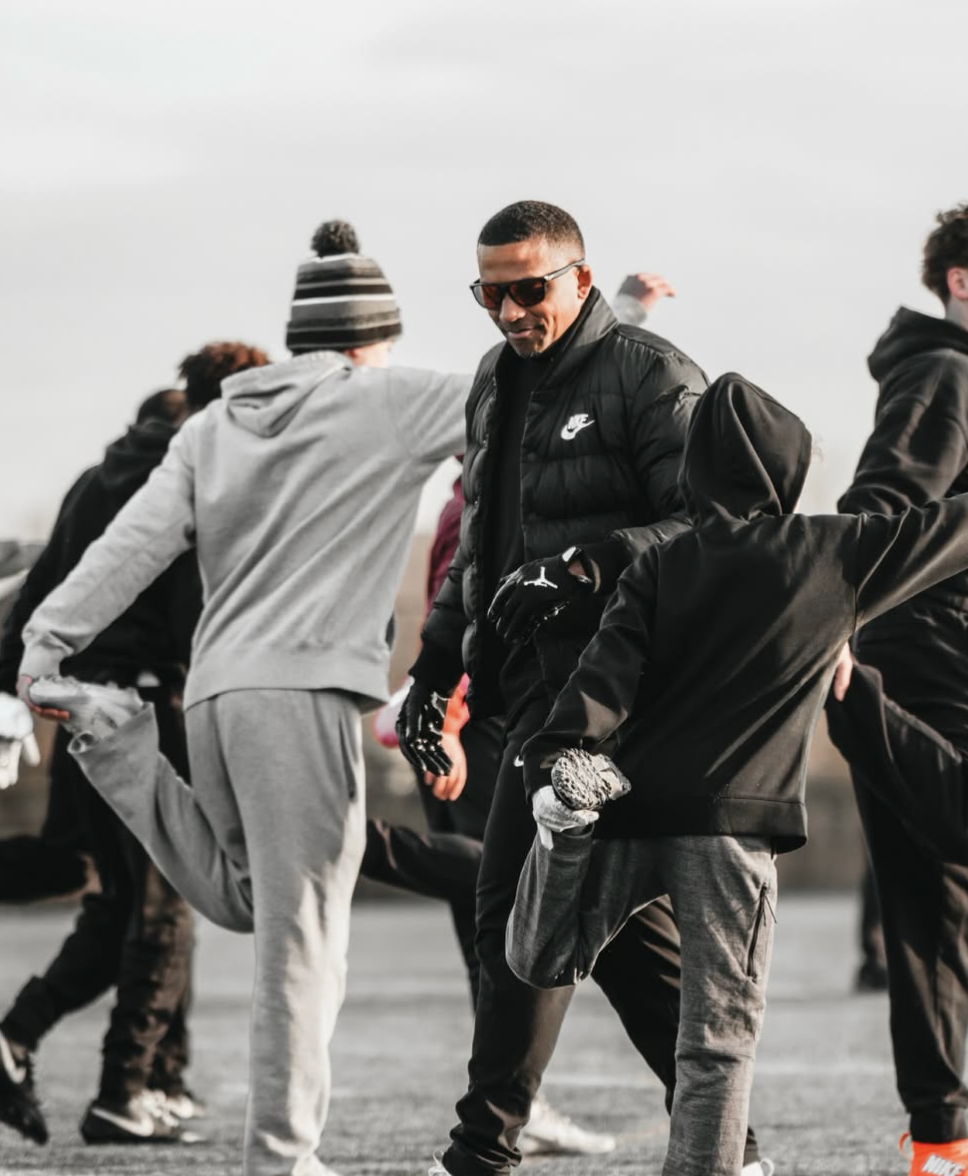
Starting a sports training business doesn’t require a commercial lease, a warehouse, or a six-figure buildout. Plenty of coaches run successful sports training businesses out of rented turf, shared gym space, church gyms, and public parks. The key to building a sports training business isn’t the facility — it’s how you negotiate access, manage your schedule, and build something athletes want to come back to.
Greg Fenner Jr. is proof. He runs A1 Performance out of Dulles Sportplex in Virginia — a sports training business he built inside a facility he doesn’t own. He’s been training athletes since 2013, coaches high school football in his 16th season, teaches business and marketing full-time, and has landed partnerships with Nike, Lululemon, and Wilson. All without signing a commercial lease.
In this guide, we break down exactly how to start a sports training business without a facility — using Greg’s story and real strategies any coach can apply today.
Why You Don’t Need a Facility to Start a Sports Training Business
The biggest barrier to starting a sports training business isn’t knowledge or credentials. It’s space. Most coaches assume they need a commercial lease before they can take their first client.
That’s not true. A facility gives you four walls and a roof. Everything else — your coaching, your brand, your reputation, your athlete relationships — travels with you regardless of the address on the building.
Greg never planned to run a sports training business. He just wanted to coach football. But every year at the rising freshmen camp at Tuscarora High School in Leesburg, Virginia, he noticed the same problem — kids from Ashburn and Sterling were more developed than his players. Those towns had more youth training resources. Leesburg didn’t.
So Greg became the resource. He started working with kids outside practice hours. One athlete became three. Three became six. Then the entire youth football league wanted to work with him. A basketball team jumped in. A girls lacrosse team followed.
That was 2013. He didn’t sign a lease. He didn’t buy equipment. He just started coaching kids who needed it — and a sports training business grew around the demand.
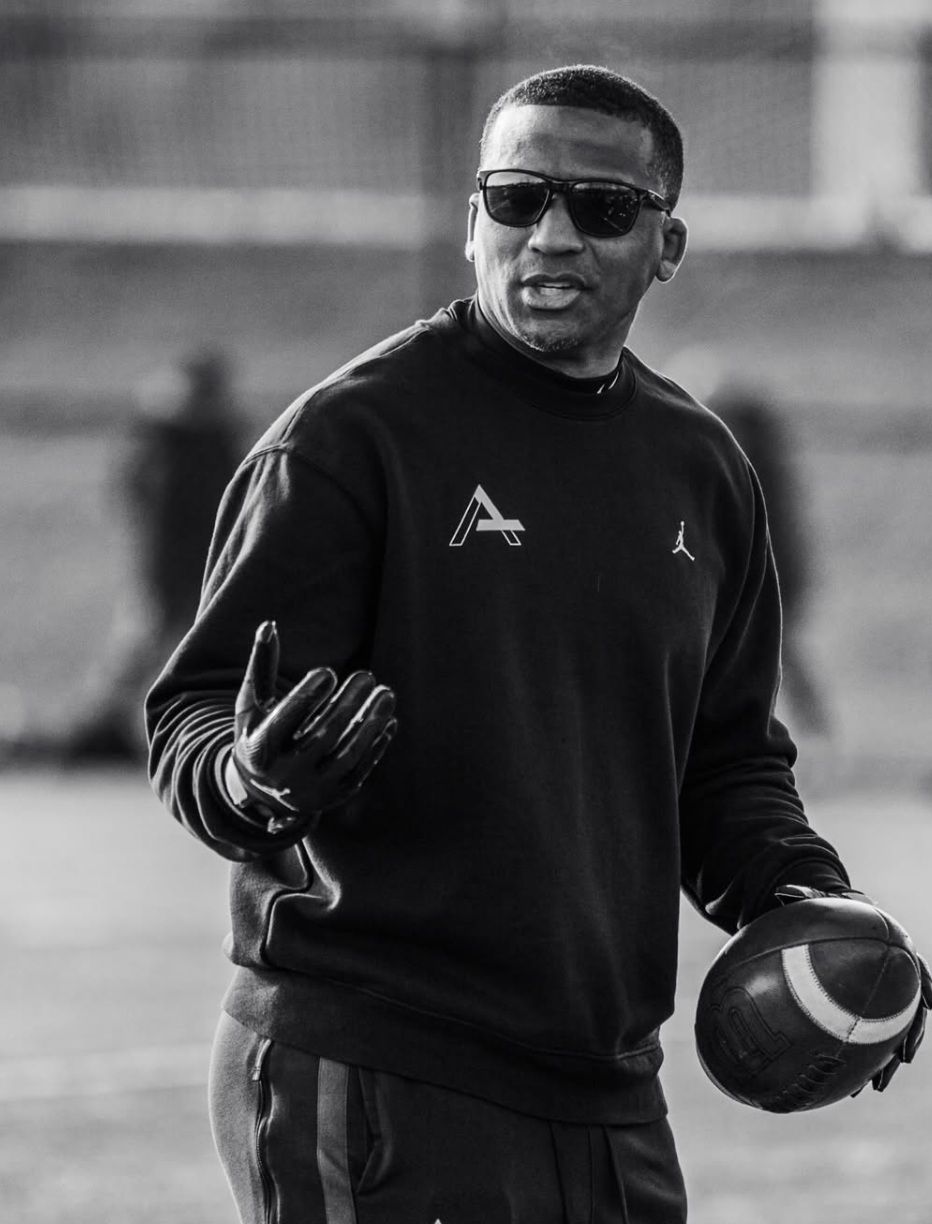
How to Find Space for Your Sports Training Business
If you’re starting a sports training business without a facility, you’ve got more options than you think. The key is asking the right question when you find a potential space: “Aside from money, what else can you offer me?”
That one question changed everything for Greg’s sports training business. When his previous training space got bought out by the county in 2023, a friend who managed Dulles Sportplex asked if he’d run their flag football and youth speed programs. The pay wasn’t enough. But instead of walking away, Greg negotiated.
The deal: for every class Greg taught for the Sportplex, he got a free hour of turf time for his own sports training business. Three classes a week meant three hours of space — no rent.
Where Sports Training Business Owners Find Space
Most coaches only think of commercial gyms. Expand your search:
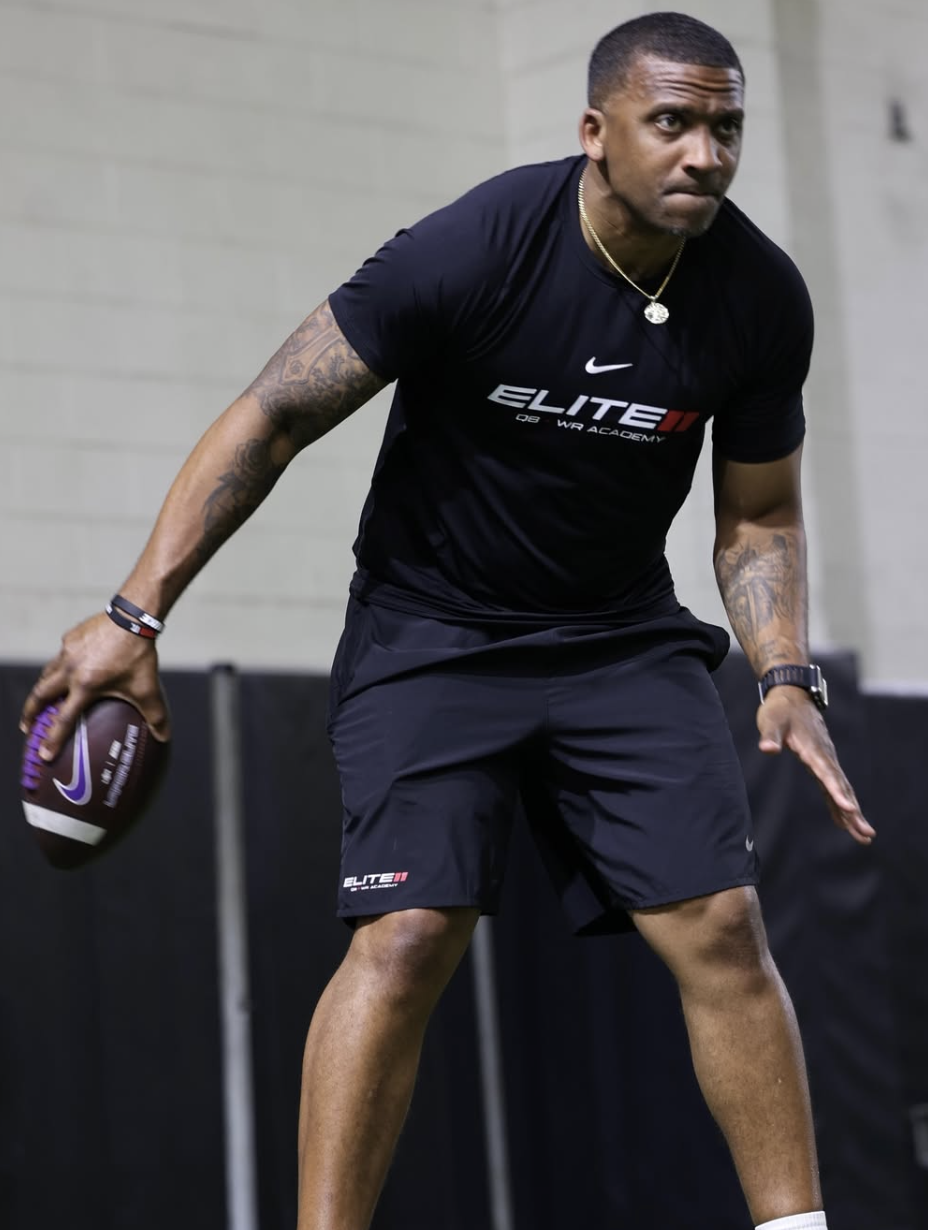
- Sports complexes and rec centers — Many have underused hours they’d love to fill. Greg’s Sportplex had open turf slots sitting empty.
- Churches with gyms — Brandon (CoachIQ’s host) started his basketball sports training business by renting a church gym nobody knew about. He offered $5 per kid per hour instead of a flat rate — cheaper for him early on, more profitable for the church as he grew to 50-80 athletes per session.
- School gyms after hours — If you have a relationship with a local school, their facilities sit empty most evenings and weekends.
- Outdoor fields and parks — Free or near-free. Weather is your only variable. Soccer, football, lacrosse, and speed training all work outdoors.
- Existing training facilities — Other trainers may have space during hours they don’t use. Greg’s former landlord, Lamar Marshall (9-year NFL veteran), now rents from Greg. Relationships flip over time.
How to Negotiate Facility Access for a Sports Training Business
Cash isn’t the only currency when you’re building a sports training business. Here are deal structures that work when you’re getting started:
- Trade services for space — Greg teaches classes for the Sportplex in exchange for turf time. No cash changes hands.
- Per-athlete pricing — Brandon offered $5 per kid per hour instead of a flat hourly rate. Lower risk when you’re starting your sports training business. Higher upside for the venue as you grow.
- Revenue share — Offer the facility a percentage of what you earn during their hours instead of fixed rent.
- Solve their problems — Greg recruited his high school students to work the Sportplex’s summer camp when they were short-staffed. That goodwill led to more access and eventually a full weight room build-out.
- Start small, prove value, expand — Greg went from 3 free hours per week to a login for open hours, to a converted birthday party room, to his own weight room with a key. Each step came after he’d earned trust.
The pattern is always the same: bring more value than you take. Greg calls it added value — and it’s the single most important concept for coaches negotiating facility access for their sports training business.
“There’s got to be more than just the numbers listed on the contract,” Greg says. “What added value do we bring to the organization? And what added value do they bring us?”
One parent who signed their daughter up ended up being a higher-up at Google — and gave one of Greg’s students an internship. That kind of added value doesn’t show up on a balance sheet, but it changes lives.

Managing Your Sports Training Business Schedule in Shared Space
The hardest part of running a sports training business without a facility isn’t getting space. It’s managing a schedule that changes based on someone else’s availability.
Greg teaches full-time, coaches high school football, and runs his sports training business. His schedule looks different every week. Here’s how he keeps it together:
- Morning football activities — Strength, conditioning, and team activities happen before school so evenings stay free for his sports training business.
- Controlled overlap — He uses lunch periods and prep time to handle business logistics like booking turf and answering inquiries. “I like to call it controlled overlap. I’m not going to stress myself out, but I might have to spend my entire lunch period getting the evening together.”
- School breaks become peak training windows — Summers, Christmas break, and spring break are when he ramps up sessions.
- Protected personal time — Fridays are off. No exceptions. That’s time for his relationship and personal life.
The tools matter here. Greg uses CoachIQ for follow-ups and client management — tracking every inquiry so nobody falls through the cracks. “If there’s somebody I haven’t reached out to, all I do is click last 30 days or all inquiries, they all pop up. You guys have changed it.”
When you’re sharing space with other programs, scheduling software built for coaches is essential for any sports training business. Sessions move. Turf gets booked by someone else. A JV game bumps your 7:30 slot. Your athletes need to know immediately — not find out when they show up.
“People just want notice,” Greg says. “They just want to know ahead of time what’s going on. Just get out in front of things.”
Running a Training Business as a Side Hustle
Most coaches starting a sports training business aren’t doing it full-time. They’ve got a day job, a coaching gig, or both. Greg has all of it — and his system works because of one thing: the people around him.
“First and foremost, it’s people. My clients are very understanding of when I go into season, things change a little bit. My high school football coach is very understanding. And the person that ties it all together — my significant other.”
The practical side of any sports training business comes down to communication. Greg communicates schedule changes immediately. Not the day of — as soon as he knows. Athletes and families don’t get upset about changes. They get upset about surprises.
Brandon sees the same thing across CoachIQ’s 450+ coaching businesses: “That’s a common trait I’ve seen from coaches that have a lot going on. They communicate it. They’re upfront. And people appreciate it.”
If you’re running a sports training business alongside coaching or teaching, communication is non-negotiable. Use your communication tools to push updates instantly. Set expectations upfront about seasonal schedule shifts. And protect at least one day per week that’s completely yours.
Building a Coaching Team for Your Business
You can’t scale a sports training business beyond yourself if you’re the only one who can coach. Greg thinks about this through the lens of a coaching tree.
“Your legacy is your coaching tree. We could talk about Bill Belichick all we want. On one hand, he’s the greatest coach ever. On the other hand, his coaching tree is actually awful.”
Greg’s been intentionally developing younger coaches — many of them former players he coached in high school. He started the A1 Football Institute last year, building a camp staff from the best coaches and people he knew. His criteria: know football, and more importantly, be good with people.
He structures deals that make it work for everyone. A young quarterbacks coach needed weight room access but couldn’t afford rent. Greg’s offer: coach my quarterback camps for free, and you get the weight room every Sunday for two hours. Both sides win. That’s how you grow a sports training business — through people, not just space.
Brandon runs a similar model at his sports training business. High school athletes who’ve trained at his facility since middle school eventually become coaches themselves — training younger kids, finding their voice, learning to speak to parents, running sessions.
“My knowledge is only as good as what I can pass on,” Brandon says. “Why would I not want more of what I feel is really high quality training in front of my kids?”
Start identifying your future coaches now. When you’re ready to expand your sports training business — whether that’s a second location, more time slots, or a bigger facility — you’ll need people you trust already in place. Here’s a guide to hiring and onboarding trainers when you’re ready.

How Sports Training Business Owners Land Brand Partnerships
Greg has partnerships with Nike Football, Nike Strength, Lululemon, Wilson, and Skills gloves. Every single one came from the same place: social media.
No cold emails. No agents. No connections. Just consistent posting.
He tagged Nike in every post. He wore Nike exclusively — in every video, every session, every piece of A1 apparel he produced. Eventually, Nike noticed. They sent cleats. Then cleats for his whole team. Then gloves. Then prototype running shoes and asked for feedback.
When one shoe messed up his ankle, Greg told them. Most coaches wouldn’t risk it. Greg’s take: “As a teacher, if I’m not giving you my honest feedback, what am I here for?” Nike appreciated the honesty. Lululemon reached out next. Wilson came through his Nike rep.
The takeaway for sports training business owners who want brand deals:
- Post every single day. If not daily, every two to three days. “If Instagram is a fishing rod, I go fishing every day and I come home with a fish.”
- Be loyal to one brand first. Don’t tag Nike and Adidas in the same week. Pick one. Go all in. Let them see you’re committed before you ask for anything.
- Your first audience is friends, family, and former athletes. Those 67 views aren’t people laughing at you. They’re 67 people who just visited your page — and they’ll tell their friends.
- Be honest. Brands don’t want yes-men. They want real feedback from coaches who actually use the product in the field.
Having a professional online presence helps any sports training business. If a brand clicks through to your profile and your coaching website looks professional, it reinforces that you’re serious — not just posting for fun.
Pricing Your Sports Training Business: Show It or Hide It?
Greg puts his sports training business pricing on his website. Brandon doesn’t. Both have good reasons, and this is a real decision every sports training business owner faces.
Greg’s case for showing prices: “We go to the grocery store, the price tag is right there. You go on the Nike website, the price is right there. Why should I be any different?” He’d rather filter upfront than spend time on calls with people who can’t afford it. If the price scares someone off, “maybe the fish wasn’t meant for me anyway.”
Brandon’s case for hiding prices: He doesn’t want someone to see a number and bounce before he can explore alternatives — a different package, a trade, a creative arrangement. Given how often he works out flexible deals with families, that conversation matters.
There’s no universal right answer for your sports training business. If training is a side gig and you want to minimize back-and-forth, show prices. If every conversation is a chance to close a deal or build a relationship, keep them off the site. Either way, make sure your pricing strategy is solid before you publish anything.
3 Tips for Starting a Sports Training Business
Greg’s advice for coaches just getting started with a sports training business:
1. Invest in Sports Training Business Branding First
“Spend more time branding and marketing than you ever thought you would.” Build your logo, your image, your community presence before you start posting drill videos. Let people know who you are first — then show them what you can do. When athletes see your brand, they should already have the context. No explanation needed.
2. Learn Business Management
“A lot of sports performance coaches are great coaches, but they’re not great business people.” The sports training business owners with clean websites, on-time scheduling, and zero missed follow-ups? They usually have business education or business tools backing them up. That’s not an accident. If you’re not naturally a business person, use scheduling software and automations to cover what you’d otherwise miss.
3. Don’t Be Afraid to Promote Your Sports Training Business
A coach told Greg he wanted to start his own sports training business. How many reels had he made? Zero. How many posts? Two. Greg’s response: “Get to 100 and call me back.”
Your initial reach will be friends, family, old teammates, coworkers. They’re not laughing at you — they’re buying in. And the snowball effect is real. One person shares your post, their friend signs up, and suddenly you’ve got seven new athletes from a single reel. That’s how a sports training business grows.
Sports Training Business FAQ
How much does it cost to start a sports training business without a facility?
You can start a sports training business for under $500 if you’re creative with space. Your main costs are liability insurance ($300-$600/year), basic equipment (cones, agility ladders, resistance bands), and software for scheduling and payments. Greg started his sports training business by working with kids outside of practice hours with minimal equipment. The biggest “cost” is your time negotiating space access.
How do I find gym or turf space for a sports training business?
Look beyond commercial gyms. Sports complexes, churches with gymnasiums, school facilities after hours, recreation centers, and public parks are all viable options for a sports training business. Ask about off-peak hours, trade services for access, or offer to run programs for the facility in exchange for your own training time. Start by reaching out to facility managers you already know.
Can I run a training business as a side hustle?
Yes — and most coaches do exactly that when they’re starting a sports training business. Greg runs A1 Performance alongside a full-time teaching job and high school coaching. The key is clear communication with your athletes about schedule changes, using scheduling tools to manage bookings, and protecting at least one day per week for yourself.
How do training business owners get brand partnerships?
Post consistently on social media — daily or every 2-3 days. Tag the brands you already use. Be loyal to one brand in each category. Greg landed Nike by wearing their gear exclusively in every post and tagging them consistently. It took time, but they noticed. Every partnership he has — Nike, Lululemon, Wilson — came from Instagram visibility. No cold emails required.
Should I show pricing on my sports training business website?
It depends on your sports training business model. If training is a side business and you want to filter leads quickly, display your prices. If you prefer having conversations and offering flexible arrangements, keep pricing off the site. Both approaches work — the important thing is that your pricing strategy is set before you go either way.
Where to Find Greg Fenner Jr.
- Instagram: @A1__performance
- Website: a1performancetraining.com
The CoachIQ Podcast features real conversations with coaches and facility owners building sports training businesses. If you’re ready to get your scheduling, payments, and client management in one place, start your demo or join our office hours to see CoachIQ in action.
Full Episode Transcript
The following is a lightly edited transcript of the episode above.
Click to expand full transcript
Brandon: All right, welcome back to the Coach IQ podcast. I am your host, Brandon Evans, a fellow private training business and facility owner. We have Greg Fenner here and he has been training athletes since 2013. He is in his 16th season coaching high school football as well and worked the 2018 NFLPA collegiate bowl as an offensive quality control coach. He runs A1 performance out of Dulles Sportplex in Virginia. Greg, welcome to the show.
Greg: Hey man, thanks for having me here. So it’s so nice to finally meet you guys. You you look at number one, you know, the guys that have done so much for my website and my business over the years. It’s nice to put a name with a face. Number two, it’s good to know where my $25 a month is going. So that is awesome. That is, you know, good to meet you guys. Thank you.
Brandon: Mm-hmm. Absolutely. We’re excited to talk to you. Like I said, when I was preparing for the episode, we kind of just touched on it. But there’s a lot of stuff that I’m excited to dive into with how you run your business, your journey, all that good stuff. So let’s go ahead, dive into it. Like I said, you’ve been training athletes since 2013. And you’ve been coaching high school football for 16 seasons. Which of those came first? And how did they start feeding each other? Because we have a lot of coaches on the platform that they both coach.
Brandon: and run a training business on the side. And sometimes people get that kind of, what’s the word for it? They feel like they conflict with each other, right? Cause they feel like they’re training business. People think that they’re maybe associated with that school or something like that, or they feel that pressure. How do you manage that? How do they feed off each other? Do they help each other? Is it an issue? I’d love for you to talk about that.
Greg: So I started coaching high school football at Tuscarora High School over in Leesburg, Virginia, about 20 minutes from my house back in 2011. And I was just telling somebody the other day, I graduated from college, I believe May 7th, 2011. And May 10th, I was out there at spring practice. And I packed my stuff over the weekend, came home, and I knew what was in store for me, what I wanted to do. And so I started off coaching there. And ironically enough, two years later in 2013, it’s so funny.
Greg: see around me, my A1 performance gym, my clothing, the logo, everything you see, it came from me being angry. You know, I never really had aspirations of being any kind of sports performance trainer. I just wanted to coach football. But every year I noticed that kids, when we would do the rising freshmen football camp, everybody else’s eight-graders were better than ours. And I couldn’t figure out why that was. Is our youth league just that far behind? Are we doing something wrong? What’s going on?
Greg: The areas around me like Ashburn, Virginia where I’m from Even sterling, Virginia. So many areas had more resources than we did in Leesburg So I decided just to be our own human resource and I started working with kids outside of practice hours No one kid becomes three three kids become six before you know it. It’s the entire youth football league wants to work with you There’s a you basketball team girls across team that jumps on board. So really that’s where it came from and My first client ever was the younger sibling of our freshman football quarterback
Greg: His name is Steven Kalavokis, always special place in my heart, love him to death. But yeah, I always had dreams and aspirations to be a coach. I never thought I’d be in this position, but I can’t say I’m disappointed the way it turned out.
Brandon: Mm-hmm. Very cool. Very cool. That is 100 % in need. I’m very close friends with a sports performance business. And we talk all the time. even I’m a basketball guy. I have a basketball facility. And I mean, I see it. Like you said, eighth grade, that age group, there are certain kids that are just so much more advanced, especially going into college nowadays. You got to
Greg: Especially in your sport, with AU circuit, you have to.
Brandon: Yeah, yeah, especially, I mean, we got pros playing college now. So you got to be strong. You got to be strong and shaved. You have to work on your body. I think it’s very important.
Greg: They don’t have time for you to get ready. Now you gotta show up ready.
Brandon: Yes, you have to be, you got to be in shape and ready to go. So I think that’s very important work that you’re doing, 100%. I see it. And like I said, I’m good friends with somebody who’s in the field. So this is what I wanted to talk about that I just mentioned. You worked the 2018 NFLPA collegial as an offensive quality control coach. How did that come about? How did that happen? What did you learn from it? Talk about that.
Greg: So back in 2012, was the inaugural year of the NFL PA Bowl. My cousin Jared Green ended up playing a few years in the NFL, a year with the Panthers, a year with the Cowboys, and with the Saints. He was coming out of Southern University, and he was invited to play in the game. Now, his father was a position coach for the team, so everything kind of made sense. Coming to find out about five, I want to say it was five years later, his father, my uncle, ended up being named as the head coach for the NFL PA collegiate
Greg: We were the, I believe we were the American team. And he had already had a full staff, former NFL guys, couple of long time NFL college coaches and all. And he was like, all right, I wonder if I can get my nephew involved in any way, or form. Because at this point, I’ve been coaching high school for six years at that point, both sides of the ball, I’m just a complete football junkie. When he was playing for the Redskins growing up, I just followed literally everything. I would track his stats and just watch his film. was was engulfed with the game.
Greg: And he was like, you know, what a lot of people don’t know is I don’t really watch football. Like, yeah, I’ve got to go to all these team events and NFL alumni and this and that, but I don’t spend Sunday glued to the couch. You know, he always said football is how I provide it for my family. wasn’t my love or my passion. So he was like, you know, I need somebody who can be with me that, you know, if ESPN is going to say we got, need to be on air in 20 minutes, who can brief me on these stats and players make me sound like I really know what I’m watching. You know, so that’s where he pulled me in and it was around the
Greg: I was out there celebrating my birthday out there. I had no reservations going. I knew it was a once in a lifetime opportunity. Met some awesome guys. Matthew Hatchett played X amount of years with the Vikings. He was our offensive coordinator. Adelius Thomas played for the Patriots, was our linebackers coach. Cadillac Williams played for the Buccaneers and Auburn University was our running backs coach. I’m just a nerd. I’m just surrounded by all these guys. And it works out so well because I was treated as no
Greg: job was too big or too small. So I was, you know, as quality control, I helped organize practice. I made copies of the playbook as offensive coach. I made my own notes to help the college guys understand because I’m coaching a lot of world. We’re coaching all college guys at this point and a lot of them, you know, depending on how simple or complicated of a system they come from, you got to be able to bridge that gap somehow. And I was working with a lot of former players. I was not working with a lot of coaches. So with that being said, I kind of had be bridged that gap there, which was all
Greg: Awesome for me, I loved it. know, like on one hand, we got John O’Corn as one of our quarterbacks from Michigan. He’s in the hardball pro style offense. Our other quarterback is Kenny Hill from TCU, who’s in a complete run and gun fun, just have fun with it offense. So the verbiage and terms were very different. And it was fun for me to be the guy to bridge that stuff because, you know, lot of the NFL guys were just doing what they know. So for me, it was, I really enjoyed that experience. We were out there for about a week. We played at the Rose Bowl in Los Angeles.
Greg: And even on the other team, because we’re all staying at the same hotel. So on the other team, Mike Martz is the head coach, Dre Bligh is one of his coaches, Ray Rice was his running back coach. So I’m surrounded by all these guys that I grew up watching. So I’m sitting there like, all right, well, I want to beat you guys. But on that same token, I want to take a picture with you get to know you, because I watched you when you were in college. So I can’t wait. It was just awesome.
Brandon: That’s very cool. That’s such a unique experience. So naturally, my next question would be from that. You rattled off a ton of high level coaches, guys that have been in the NFL, a bunch of college guys there. What was it like being around that level of coach and athlete? Did you leave there with anything that now lets you apply that knowledge to your eighth graders? I’m not sure what the main demographic you work with is.
Greg: 8th grade to 12th grade. mean, as a high school, I mean, I coach high school and that’s what I’ve always done. But I worked a lot of youth guys because I like to prepare them for high school to be my guys. So yeah.
Brandon: So yeah, what did you learn from being around that level of person? Because not a lot of coaches have had the luxury to be around a true pro coaching staff.
Greg: You know, more than anything, it was just an art of preparation.
Greg: And you know, some guys were overly prepared and then some guys I was working with, I was like, wait, he doesn’t have his soul and soul ready. So now I got to go back to the hotel and get everything together. So it taught me that, you know, the true art of your backup plans need backup plans. know, like, you know, contingencies got to have contingencies like you got to be ready for anything because we had a thunderstorm one day. So Rose Bowl was all grass. So we couldn’t go out to practice one day, but we ended up getting some things done in the hotel and, you know, just for every physical aspect of practice.
Greg: have a mental aspect as a backup for like a weather delay type situation. So it taught me really the importance of film, the importance of meetings, to have flashcards, notes, whatever we need, any walkthroughs. I started carrying around poker chips because we would draw formations with those. There were so many little contingencies and I got that from, gosh, Charlie Fry was our quarterbacks coach. He was the big poker chips guy and I was like, are we playing poker tonight? He’s like, no, no, no, no, no. I gotta draw trips over in the event that we see this odd front versus east.
Greg: and all the receivers have the easiest time using poker chips because I just give them the color on their wristband and I was like, okay, perfect, perfect. like that.
Brandon: That’s so funny. Like I said, it’s a unique experience. And what you just said right there is very unique and stuff that you can take down and help the younger crew with. So very cool. So you’ve got an FOPA bowl on your resume. You’re coaching high school. You’re running A1. I want to talk about how you actually manage all of that. So how do you juggle coaching high school football and A1 performance at the same time? I’m asking more about your schedule.
Brandon: What does off-season look like for football? Are you not training as much during football season? Is it the same? What does that look like for you? What does your schedule look like managing both of those two?
Greg: So first and foremost, it’s people. And when I say people, I mean number one, my clients are very understanding of when I go into season, things change a little bit.
Greg: My high school football coach is very understanding of, know, if we’re going to finish on a defensive period, can I slide out 10 minutes early because I’m an offensive coach to get over there and get my stuff ready. We do a lot of stuff in the morning, strength and conditioning, team activities, our green day, off season practices. You know, they’re great about doing that stuff in the morning. So my evenings I can coach and the person that ties it all together, you know, especially if you’re like me, you’re in a relationship. My significant other is the one that makes a lot of things work because she’s got to be so understanding.
Greg: standing on so much stuff and she’s so great about it. And so, you know, there’s, but there’s little things I negotiate with her, with myself. Like for example, I don’t work on Fridays. Friday would be the time that I’ve lost during the week. We’re going to go get something to eat, this and that. Now also my job allows me to do a lot as a high school teacher. I’m off for the summer.
Greg: I’m going to have two weeks off for Christmas break. I’m going to have a week off for spring break. Like we’re going through right now, we got hit with the snow so bad we might not be in school all week. So it affords me I have to kind of build out hours in the day to be able to do things. You know, and even when I’m teaching, we might have an hour and a half, classes are hour and a half. I might spend 20 minutes on a PowerPoint presentation, 20 minutes, you know, for learning lab understanding and the rest of the class period, they might have to work on the assignment. That might be another 40, 45 minutes.
Greg: But that’s 45 minutes I can get my evening together to get the practice plan ready and this and that you got to build it out within like there’s overlap But I like to call it like controlled overlap if you will like, you know, I’m not gonna stress myself out over this But yeah, I might have to spend you know My entire lunch period while everybody’s hanging out in the you know teachers lounge, which I love my department They’re awesome people there might be a Monday a Wednesday in a Friday where yeah guys I got to use that half hour to get my stuff together. I got to get on the phone
Greg: with the complex to make sure that my turf space is booked out because my field hockey girls are coming at 730 tonight. So there’s a lot of overlap, controlled overlap, but it all comes back to the people. My coaches understand, my friends and family, my relationships understand, my clients are very understanding and you know, they’re loyal man. They’ll say things like, well we don’t want to go find somebody else, we’ll wait till you’re free. And in that moment I know I got to take care of you as people. So I might cut you with discount, you say something like that to make me feel good.
Brandon: 100%. That’s a common trait that I’ve seen from coaches that have a lot of different things going on, whether they coach or whether they have another job or whatever. It’s them communicating that with people and being upfront. And people seem to really, really appreciate, like, hey, I got to do this. I got to do that. And people understand it. If you don’t be flaky about it, just be upfront. Just be upfront. And ultimately, people know you’re doing a good thing for.
Brandon: for kids, right?
Greg: You know, and like, you know, shout out to Team Snap, the app. Team Snap has saved my entire career from an organizational standpoint. Dude, I put my entire schedule out there and it allows me to mass communicate. Like on a Sunday, I might say, hey guys, JB game has moved to Wednesday tonight. So field hockey girl 730 is canceled. Maybe we could try Thursday because I know we’re going have a short practice. So little things like that. People just want notice. They just want to know ahead of time what’s going on. You know, it’s like if you tell me I’m about to go bankrupt, at least
Greg: I’ll feel better than if I wake up tomorrow and there’s nothing in the checking account. You know, if you tell me, you can’t tell me, you can’t say, well, you weren’t prepared. No, you knew it was coming and you had all night to think about a plan. So let’s cope a little bit. Communication, man. Just get out in front of things. That’s all.
Brandon: That’s that is one of the biggest things that a lot of stuff just comes back to just communicate, just communicate. It will save so much issues on the line. Yes, great, great point there. So I want to talk about your facility. You mentioned that you got to call up and make sure a service free. So you’re inside of the Dulles Sportplex, right? Not your own building, not your own facility. I want to understand how that setup works.
Greg: Correct. They let me build my space on the top floor, that’s my own, but not the entire facility as an own. So the facility we’re in right now, you see my logo, this is the weight room that I’m in. They let me build this when I first moved in. And you know, actually I’m going to tell you the whole story about how I even got here in the first place.
Brandon: Sorry, say that again?
Brandon: I was about to ask.
Greg: I used to be, I was like, I know this has got to be coming, right? I used to have a space over in my hometown, Ashburn, Virginia, where I live. It was called Phenom Strength Conditioning. Ran by my buddy Lamar Marshall. He played nine years with the Redskins. He’s actually downstairs working with clients because now he rents from me. So used to pay him rent. Now it’s the other way around. The county bought his building. They were going to turn it into a data center. Then it became a hanger for fire trucks. It was all sorts of stuff, right? And I’d been with him since COVID.
Greg: I went out on a limb, took a chance investing in a property during COVID and it paid off. So it was awesome. But right around that time that they said, know, fall 2023, September, we’re to be buying it up. You guys are going to have to be out by then. Right around that time, a very good friend of mine that I grew up with is the facilities manager over here, Dulles Sportsplex. She’s big in the soccer facility management, the whole thing. And she said, so…
Greg: You know, we’re trying to build back our flag football programs and our youth speed and agility programs, but we don’t have anyone to run it. Would you be interested?
Greg: And I was like, well, I could be. How much are you guys paying? What are the benefits? She mentioned how much they were paying. I was like, yeah, for my time, effort, and the amount of kids in class, it’s not going to work. And she’s like, OK, hold on. Well, maybe I can bump it up to this. I was like, that still wouldn’t be enough. But I teach business and marketing. I teach business law, business management over the high school level. So I was like, all let me put my business cap on. Let me exercise what I teach to kids. Aside from money, what else can you offer me? And then the back of my head,
Greg: I know we’re about to get bounced out of this other place because the county is buying it So I kind of need a home, but I couldn’t let her know that up front So she was like, okay, how about this for every class you teach? I’ll give you a free hour of turf time and I was like, all right Perfect. That will work if I do football on Monday, it’s being agility Tuesday in lacrosse on Thursday That’s three hours of turf time. Awesome. I’ll take it So that start it starts off that way I get three hours a week Things start going really well. We’re building good relations
Greg: relationships in the building, doing a great job with the classes, we’re building the class, I got a couple young guys helping me out, then it becomes, here, we’ll give you a login, so if there’s free hours, you guys can just kinda take it, but if somebody books it, you know, you’re screwed. That’s okay, I’ll take the risk. Right now I gotta bet on myself, we might not have anywhere to go.
Greg: Well, this facility also has a summer camp. They have the youth summer camp where all the parents from around here dump their kids off here and they come pick them up at like five in the evening. They were running low on employees. So what do I do? I go to my high school, I go in the morning announcements and I advertise, if you’re for a summer job, 18 bucks an hour to watch some kids, I got something for you.
Greg: Like of my students sign up and it becomes awesome. Then after that, it got to the point where they were like, all you know what? You built the weight room. I didn’t even tell you about the weight room. So they had a birthday party room upstairs. And I was like, OK, how much do you guys use that? They might host like two or three birthdays a month. OK, so you might make $400 $500 a month on that. What if you let me turn that into a weight room and I pay you rent?
Greg: I thought they were going to come back with a crazy price. They came back with something very manageable. I said, I will call my guys. We’re going to start moving in and building today. So they let me build my weight room upstairs and everything worked together. But after the summer camp, all my students did such a great job working here that they eventually came to me and they were just like, you you’ve done a lot of good work. I’ve known you since childhood. Here’s a login. I’m going let you start booking some time on your own. And that’s kind of just became where we are now.
Brandon: Very cool. Very cool.
Greg: So it it all worked together, man. God was looking out for me. My homegirl MJ is the one that runs his spot. She was taking care of me. You know, my kids held me down. If they were terrible at the summer camp, I would have got kicked out. So everybody played their part and we won a championship together. I loved it.
Brandon: Very, very cool. You made a good point in there about asking what else besides money they can offer. think because that’s I say I got lucky. But when I first started, that’s one of the biggest things for sports training business owners, regardless if you’re doing strength and conditioning, football, basketball, whatever, is just having a space to do it. Right? even if you’re soccer, you could have outdoor turf. You don’t know if you’re going to be able to
Brandon: do it, the session gonna get messed up, whatever. I personally I went to all of the churches in my city that I knew had gyms. And I asked like, do you need somebody to rent your gym out? And somebody actually told me about this little church way off to out of nowhere. I’d never even heard of it. And I was like, hey, I’m trying to do this. This is what I’m doing. This is my plan. I can’t pay your hourly fee right now. But if I give you $5 per kid per hour,
Brandon: In the short term, it helps me. It helps me get up and running. In the long term, you’re going to make more because they were only charging like 30 an hour, which is not that much. But I just started. I had zero kids. I couldn’t. And it helped me in the short term. And then long term, they were and I’m getting 50, 60, 70, 80 an hour. And apart from that, like you said, which is I think is a huge point, you nurtured that relationship that whether it be business or probably became friends with them over time.
Brandon: Like I would run fundraisers where all the money went straight to them, even though I needed it a lot. But I realized that relationship, that business relationship between me and the church and the people there is the only thing that was keeping me going. So I wanted to do right on them. Like I would stay after and help set up for whatever they needed. That’s a huge point is just negotiation, right? Like it doesn’t always have to be pay you per hour. It can be something else.
Brandon: right? Use whatever resources you have, whatever people you know, and you might be able to work something out, right? You might, you might not.
Greg: And that’s what I try to tell you know, if I can give any advice to business owners, especially young people, two words, added value.
Greg: Besides what we can see, what meets the eye, what’s right in front of us, what caught our attention in the first place, what added value do we bring to the organization? And if we choose to work with these people, what added value do they bring us? There’s got to be more than just the numbers listed on the contract. There’s got to be more than just a facility. There’s got to be more than just a training business. What is the added value? And there’s so many people that since we, they allowed me to open this space in here, we get so much foot traffic, it’s ridiculous. And so one of the people
Greg: that came on sign their daughter up to train with us ended up being a higher up at Google and ended up giving one of my students an internship. So I was like, where’s the added value? Like stuff like that doesn’t happen by mistake. And so, you know, people are so money and capital driven that if the money’s not there, they immediately say no. And I’m like, okay, the money might not be there now. You might strike gold with this one. If you get the one right person in your program, it’s just like, mean, again, you’re a sports guy. Every pick in the draft matters.
Greg: It doesn’t have to be first, second, or third round. That six round pick might be Tom Brady. You just don’t know. Take advantage of all that, man.
Brandon: 100 % 100 % even even for me, because I get a decent amount of people that come in and they say, I can’t afford it won’t fit in our budget. I always try to like, okay, well, if I’ll think of something like, do you have this? Could you would you be able to help out with workouts? Would you be able to refer somebody I’ll try to think of something to where
Brandon: we can make that agreement feasible. I mean, because if I can help you, can you help me? Like if we can help each other, then we can get your son or daughter in here to ultimately do what you want to do, right? There’s always ways to work things out. It doesn’t always just have to be, pay me this, and then that’s it, right? So that’s.
Greg: And you have these questions. I mean, the amount of rigid people, like, there’s so many rigid personalities in business and sports and entertainment and everything. Well, if I can’t have it this way, I’m done. OK, that sounds great. If you’re like buying a house or there’s a certain TV you want from Best Buy. OK, sure. When it comes to people, we’re never going to get anybody exactly the way we want them. I mean, our best friends aren’t exactly the way we want them, but they’re still our best friends.
Greg: You know, so again, just how rigid people are. just, it absolutely, you know, it just, it, I’m perplexed by it. Cause I’m like, there’s no way you thought you were going to come in here and get exactly what you wanted from everybody in the room. Did you like that only happens on TV. Where’s the, where’s the give and take.
Brandon: Yeah, that just, it just doesn’t exist. It doesn’t, it needs to be there. Of course, like there’s a fine line between being flexible and then like letting people walk over you. There’s that fine line, right? Like we have to make sure that, oh yeah, if, yes. I am 26, I just turned 26.
Greg: yeah. And they’re gonna try.
Greg: You know what mean? We’ve all been there. If you don’t mind me asking, how old are you?
Greg: my dude, listen, when I was you, some of the deals people were trying to cut me. Lord have mercy. I’m like, no, no, no, no. There’s no way you thought I wouldn’t read this. Because now here I am at 37 and I’m like, there’s no way I would have done that to a 26 year old. I’d been like, look, like I got a quarterbacks coach right now that I’m working with. And he’s starting to do some weight training and everything. But of course, like everybody else, doesn’t have facility. So I was like, OK, well, you know, the rent I would charge you for where you are right now is probably not feasible.
Greg: But I’m starting up a strand of football clinics. If you coach my quarterback free, you can use my weight room every Sunday for two hours. There’s some added value there. I was like, look, in my head, I’m like, I don’t have to pay him X amount of cash. But if I did, it would just be going right back into the weight room. So how about you just do the camp, I’d use the weight room, and I’ll get you a key made, and I’ll work with you because I like you.
Brandon: Yeah, to that point, some people have definitely offered me some wild stuff. Because you see me, you probably could tell I’m younger. I’ve had my gym since I’ve had it for two years now. I opened it when I was 24, and I started my business at 20.
Greg: Which is crazy impressive. I didn’t open the gym till I was 30, God, was 33 when I opened it, 34 when I opened this place.
Brandon: Yeah, I will admit I had a lot of stuff that had to go my way in order for this to happen. Yeah, I worked hard for sure, but a lot of stuff went my way. And sometimes that’s part of it, right? I.
Greg: Hey, you know to the victor goes to spoils history is told by the.
Greg: that. A thousand times it is. mean, think about it. Stuff had to go Michael Jordan’s way. He had to get lucky with a few things.
Brandon: Yeah, that’s a huge part of it. And even if it didn’t, I would have still kept going until things worked out my way. So just keep going and then be good and be flexible with people and something’s going to work out.
Greg: I mean, listen, I can’t remember what song it is. Somebody said, put the work in until it works out. And I just live by that. I love it.
Brandon: Yep. If you just live by that, you’ll be all right. So speaking to a point that you just made about adding somebody on with your football clinics, from everything I can see, you’re completely on your own, Is that intentional? Are you looking to eventually add people on? Are you looking to make clones of yourself as a coach? Are you looking to do internships? What are your thoughts there?
Greg: Alright, alright man.
Greg: Yeah. So it’s funny, I’ve got a small group of guys that I’m kind of bringing up.
Greg: They’re all right around in your age group. A lot of them were players when I first started coaching. You know, some of them are players at other schools. I’m like, dude, I coach against you. You hurt us in 2012. You know, so it makes it easy to work with them. And some of them, I know their families. Some of them, I coach myself. But I’m looking at it, and I’m like, you know, as a coach, we can talk about, you know, your legacy is the amount of championships you win, your rings, how many players got drafted out of your program, da da da da. To me, your legacy is your coaching tree.
Greg: You know, so we could talk about Bill Belichick all we want. On one hand, he’s the greatest coach ever. On the other hand, his coaching tree is actually awful.
Greg: And a lot of guys just have not worked out. So there’s several guys that as I started last year, I did my first ever mega camp. I called the A1 football Institute because again, everything with me is teaching and education themed. You know, because I’ve had guys make comments like, well, I mean, you’re going to go work out with him. I mean, he’s a school teacher like that. Okay, I’m sorry. School, no sports. Okay, cool. I’m sorry. You played 15 minutes with the Ravens. I don’t think anybody cares what you have to say. Like that looks great on a flyer. Let’s go watch your practice.
Greg: Let’s go see, right? Like we step on those lines with cleats on, it’s your game. You’re in the film room now, this is my game.
Greg: You know, so there’s a lot guys that when I started that camp, I was like, okay, if I were to start a coaching staff tomorrow, who would be my quarterbacks coach? You, I want you at my camp. You linebackers coach, I’ve worked with you for three years. You are awesome. And I see you around the building building relationships. I need you in my camp. So I just put together a group of the best guys I knew who also you got to know a little football. Now I’m not going to lie to you. If I, if I see some foolishness in your drills, that might be in the deduction, but, but I just put together the best people and coaches I know. And we’ve just
Greg: been having fun like that ever since. So and I’m looking at the amount of older guys that didn’t want to work with me when I was coming up. Some of them because it was a threat. We kind of do the same thing or some of them because you know, they know that I’m related to this person and they might not really care for that person too much. Whatever the reason might be. I was like, you know what? I’m never going to I’m never going to be a gatekeeper in that regard. Like you can help somebody but you choose not to because you’re afraid he might be better than you. A lot of these young guys I’m bringing up. You never know. There’s I got
Greg: I got another young receivers guy. You know what? My guys might leave me and go train with him. You know what? I trained him. I coached him. I built him. I used to pick him up from school when he was little. Shout out to him. does it. And I’d love to see him do well. I refuse to be a hater in that regard. And there’s just so many young guys that I do want to bring up. Because ultimately, I want to move into a bigger facility.
Greg: Something I know that I cannot monitor or finance completely on my own. And when you’re in that situation, the worst thing you can have is enemies. You need allies.
Greg: So with that being said, yeah, and I’m like, you some of these guys, I’m like, okay, you’re a full-time fitness guy. So you’re at the gym from 8 a.m. to 4 p.m. training people. Well, that’s while I’m at school. So I’d love to have you on board if you could hold down to four while I’m at school. That would be awesome. I’ll give you a key, I’ll get you a locker. I got extra office space over there. Whatever it is that entices people, you know? And so there’s definitely some guys like the young quarterbacks coach I mentioned that’s working in my weight room and doing my camps. I was like, wherever I go, I need to take you with me.
Greg: I coach at now, actually my alma mater, Stonebridge High School. My buddy Aaron, Aaron Huber, he’s the DB’s coach. We coach together at my last school also. Wherever I go, he will go with me. I wanna make sure I’ve got my Avengers ready for whenever something might go down.
Brandon: Yeah, I always will tell people like new trainers that come on, like my knowledge that I have that I’ve been able to gain through all the stuff that I’ve done, it’s only as good as what I can pass on. Why would I not want more of what I feel is very high quality training and people, right? And really good coaches and people that want to be here, at least for me, are difficult to come across or a dime a dozen.
Brandon: I want to see the best people possible in my gym and put them in front of my kids. And being able to pass on what I know and create what I think is really good training and ultimately spread that out to more kids, whether it’s under our gym or whether they go off and do their own thing is huge. Right. Like I think that’s very important. And another thing I tell, so I own it and I have a manager, he’s
Brandon: He’s like my right hand guy. try to like we actually have a couple of our high school kids that train our middle school kids here. And I think that’s just another layer of our program is once one of our high schoolers has been with us since their sixth or seventh grade, they get to their junior, senior year. Now we develop them as people too. Right. I think that’s just another layer of our program. Like we’re there, they’re finding their voice as coaches and people, they’re teaching all the stuff that.
Brandon: We taught them. They learned to explain things, vocalize themselves, and feel what it’s like to speak in front of people, and speak to parents, and be responsible, have a job, quote unquote. So I think that’s just a very important thing, people-wise and business-wise. I love doing things on my own. a very I’ll just do it person. But.
Brandon: If I wanted to get this gym, I just cannot run every single class we have. We have like 20 something a week. I just can’t. I will burn out.
Greg: stretching yourself thin, you have a life too. mean, you know, in the, know, when you touched on, you know, bringing up former players and helping them become this and the third, what’s awesome about that is I saw a phrase, I saw one of those, you know, quote, slides on Instagram a little while ago and it showed like a grown lion, like it personified them as people. It showed like, like a lion in the form of a human, but he had on like his karate gi and everything. And he was putting the black belt on a baby lion. They said when you train your son, you train your son.
Greg: And I was like, wow, you know, knowledge and information travels through a lineage. We got to make sure that we clean up that lineage the best we can. And it sounds like that’s what you got going on.
Brandon: 100%. I mean, even from my mentor out in California, Ryan Rizuki, it’s just an extension of him. Like it is me or it’s Ryan, me, and then my guys and then the guys that they’re eventually going to teach like I’m I told them they’ve been with me for a year or two now training. I’m like, you’re gonna have to teach new kids that come in. You’re going to teach them how to train.
Greg: Dude, mean, like we were talking about earlier, that coaching tree is strong. You know, I know the tree is good because the fruit is good. So that coach is strong.
Brandon: Yeah, it’s huge. It’s a big thing that I think every single coach should do, regardless of sport, regardless of whatever you do, your business, or anything. I think that’s massively important to success, whatever you deem success is. OK, so that was a great point. I’m very passionate about that topic.
Greg: I see, hey, I love hearing people speak when they’re passionate, man. I don’t care if it’s rock, scissors, talk about it.
Brandon: 100%. So something I noticed, I going through your website, on the business side of things, your pricing is right there on the website. You make it visible for everybody. And a lot of coaches hide that. I hide it because I don’t want people to just see, oh, I can’t afford that, and then move on. Because like we said earlier, we’re always figure something out, or at least try to figure something out. So do you have a reason why you put it out there? Do you just put it out there? What do you think?
Greg: I just put it out there because number one, I’m going to, you know, for a guy that doesn’t mind playing spades and playing poker, I’ll show my hand. I’ll say this is we’re doing, this who we are. If you like it, you know, I always tell people, especially when it comes to my teaching, my coach or whatever, if you love it, stash it. If you hate it, trash it. You know, if you look at my price and say, well, I think that’s outrageous. Okay, well then maybe I’m not for you. Next website. You know, but again, it’s at the point where it’s like, look, regardless of what is going on around me, I’m going to use the same net to catch fish.
Greg: So if that’s what it is, if that fish evades me and goes somewhere else, that’s fine. Maybe the fish wasn’t meant for me anyway. You know, so I’ve got no problem putting that out there because, and I treat it this way, we go to the grocery store, the price tag is right there. You go on the Nike website, the price is right there for the shoes. Why should I be any different?
Brandon: It’s funny to see the two…
Brandon: Very fair. It’s funny to see the two sides of the coin right between both of us. I used to show the price. I’ve kind of gone back and forth. It’s just, I don’t know.
Greg: Now sometimes you just got to call and say, I’d to get a quote and I get it. That’s business, you know, but I think the other part is if this was my full time nine to five and I wasn’t teaching and I wasn’t coaching, maybe I’d be a little different about it. But I’m looking at it as it’s, you know, to me it’s, this is a giant side quest anyway, whatever comes from it is awesome. But if if God came to me tomorrow and said, so I’m taking a one, I’m getting rid of it you’ll never have anything like that again. I’ll just go focus on being the best teacher I can be, you know, so.
Brandon: Very good perspective. Yeah. I was just curious because I see a lot of coaches, they don’t actually display that pricing. I don’t, like I said. Both good reasons. Both good reasons. So we talked about how you’re doing this solo. How do you keep track of everything? You’re scheduling your payments, your follow ups. How do you keep track of that?
Greg: For sure, for sure.
Greg: So first off, Coach IQ, you guys are a tremendous help with the follow ups. Because if there’s somebody I haven’t reached out to, all I do is click last 30 days or all inquiries, they all pop up. I’ll go through my phone and be like, I did not follow with that person. I did text them. I need to hit them back. You guys have changed it. Between you guys and Team Snap, I owe everybody a steak dinner by the time it’s all said and done. I swear, take you all the way. I’d be writing on the calendar and missing up and having bad reviews on Google for not being able to follow up a community.
Greg: You guys are phenomenal with that. Again, the information sheet, every time one pops up and gets my email, I get excited. It’s just like, there’s might be one more person, I might be the one we need, you know? And then team snap with the scheduling, everything just, it all works out. The individuals, get my wires crossed sometimes, I won’t even lie to you. And I’ll do a phone clean out and I’ll be like, that person emailed me in November, I did not follow up. Greg, what are you doing?
Greg: But for the most part, I’d say I’ve got about a 90, 95 % accuracy rate because of you guys and Team Snap. Y’all make my life exponentially easier.
Brandon: I’m interested to hear because you said you use scheduling and team snap, right and I personally use coach IQ for their scheduling their credits and everything what What exactly do you use coach IQ for and what all do you use team snap for? I’m curious to hear the the reason you use both
Greg: So Coach IQ, I will always always always you guys as everybody that’s interested, any interested client is gonna come straight through you guys and the portal is so easy to operate that I love it. Also, you guys remember, you guys first got me with the website.
Greg: You know, when y’all first created the website for me and I saw the media and then you guys even showed me how to move some things around and how to do this. I was like, ooh. So for the website and that alone, Coach IQ is never going anywhere in my book. Team Snap is just an easier central database for me because I can have unlimited amount of people sign up for it. I put the calendar out there. You get all the RSVPs. I can put the notes, arrive 15 minutes early, make sure you have shoes and like it just as a teacher. Team Snap reminds me of this thing that we use called Schoology where I put
Greg: all my assignments and tests and quizzes and everything. It’s my central database. They are my central database. I think of you guys as more as like my communication line.
Brandon: OK. OK, very cool. If you get a chance when we get off the podcast, you should check out what the scheduling feature is in Coach IQ. Just look at it. I use it a lot. It’s very customizable. So I don’t know how you hold everything. Just take a look at it. Again, just take a look at it. It could be worth your time, because it does integrate well with the portal.
Greg: That was a lot of fun.
Brandon: Take a look at it, see what you like. I was just curious because Coach IQ is so customizable. I’m not super familiar with Team Snap. But it does sound like you got a good thing going on regardless. Good.
Greg: For sure, it works out nicely. And they’re both at the two apps right on the top of my coaching tab on my phone, on my home screen. So it’s easy.
Brandon: Nice, very cool. All right, last couple of questions for you. What is next for A1 Performance? You mentioned you were eventually wanting to own a facility. Is that something you’re trying to do in 2026? Is that something that if it happens, it happens? I think you mentioned that before, but what is next in your mind? Are you just going with the flow? What’s your thoughts?
Greg: The facility I’d like to if we could do it by summer, that would be incredible. I understand that would be the most feasible. But if it doesn’t happen by summer, January 2027, because you cannot do that while you’re in the middle of a football season. It’s just impossible. So that’s there. I’d like to get into the NIO consulting business a little bit. You know, and I’m not I’m not like financially motivated in that regard. But I’m I just I want to help kids build their image the right way and show people that it’s
Greg: not all your brands and y not about being the best it’s more about having an and having a business mind like for me, like when I when I partnered with Nike all came down to content i that I was putting out a they could just see that I was posting every day. I’m tag I wear as Nike, even my, apparel that I put out,
Greg: saw that and they were just like okay well at least we know there’s not some Adidas under armor wearing guy who’s not gonna go do this and the fourth you he’s true to the swoosh and that’ll work out nice for him so you know that’s really what it came down to is just visibility and you know as far as sponsorships and partnerships there’s not a ton more people I’m interested in working with you know I’ve accomplished a lot that I want to in that regard whether it’s Nike football, Nike strength, skills, Wilson football, Lululemon I mean we got those outside of them if you need more I
Greg: you’re just a greedy person. know, but the US Sports camps, used to be called Nike sports camps, but they’re still Nike affiliated, but the US sports camps brand, I’m trying to do a speed and strength camp with them also. We’ve talked back and forth. Actually, I got to get in touch with my guy, Chris Miles. I know that’s one guy I got to follow up with, but I’d like to host one of those clinics and just continue building out the camps and the education part of it. I got some PowerPoints I’m working on that I’m going to start selling to people. I also coach at the Nike
Greg: Elite 11 in the opening. And I love coaching at the Elite 11 Academy for all the younger kids because we get classroom time. So I just go crazy on the film and the PowerPoints and training clips and putting together montages and reels for them. You know, just to educate you, I just want to continue to educate. I just want to keep going in that light.
Brandon: Nice. Well, I had one more question for you, but now I have two. You mentioned all these partnerships. said Nike, just casually dropped Nike, Lululemon in there. What are all your partnerships? How did you get them? And because I know a lot of coaches want partnerships. That’s a big thing. Everybody wants to be Nike and you actually are. So how did that come about?
Greg: So every partnership I’ve ever gotten has come from social media visibility.
Greg: Every single one. And it wasn’t always just a partnership. In the beginning, it was a guy named Boobie Dixon, former Buffalo Bills fullback. He had a brand called Boobie Dixon Football. You know, I just hit him up on Instagram. We started chatting. He invited me to come run a camp in Louisiana. And from there I was like, okay, well, let me, you know, I’m going to keep putting my stuff out there. Maybe the reach gets a little wider. And sure enough, I had gotten a DM from the head of skills brand, which is the football gloves.
Greg: He asked me to try them. He sent me an entire case. I put them out, worked with them. And I said, okay, he’s a great person to have, but I really want Nike. And, you know, it’s like as a high school coach and a high school football player, we wear Nike. We’ve always had Nike. So I just was like, well, if I tag them every post, if I make sure I’m only wearing Nike, if I continue to put out the content, look, they saw me. What are you doing? Wow, you’re really good at this. How about I send you some stuff? That’s all it was. They sent me cleats. Then they sent me cleats for my whole team.
Greg: Then they sent me gloves for my team. Then they sent me receiver gloves. Then it was, well, we’re coming out with a new running shoe. What do you think? And I’m like, this thing is fantastic. They had a few things I didn’t like. I told them that, you know, like there was one iteration that really wore out my ankle. I was like, this was not good. So, and they were like, wow, thank you. You know, for a lot of people would say, this is great. This is Nike. They don’t want to bash anything, right? Because they don’t want to ruin the relationship. And I’m like, as a teacher, if I’m not giving you my honest feedback, what am I here for?
Greg: Same way I don’t have a problem putting a C on a kid’s paper. And I was like, this was not good. My ankle is messed up because of this. Here’s the proof. And they were like, wow, we really appreciate your honesty. A lot of people don’t do that. I was like, well, I’m not a lot of people. I’m an educator. So, Nike was awesome. And then from Nike, Lululemon reached out. The content was just getting better and better and better. And I just kind of built from there. And the Wilson football stuff came from,
Greg: being a coach at the Elite 11 and doing some camps with Nike. And then Wilson and Nike are, you know, in bed with each other, basically. They’re great partners together. And so my Nike rep was like, hey, do you need footballs? And I was like, I need footballs for my camp. Yeah. And then she just reached out and I got balls, got cones, got the whole, you know, the whole Wilson catalog came through the door. So it was amazing. But it all started with the post. It all started with making a real.
Greg: And I know how people feel about social media and that’s your prerogative, I’ll respect it. If you don’t want to be on there, perfectly fine. But from a business standpoint, you’re really doing yourself a disservice because the visibility that you get, I have gained more clients from Instagram than I can count. If Instagram is a fishing rod, I go fishing every day and I come home with a fish.
Brandon: How often are you posting?
Greg: I try to post every day. If not, every two to three days. I always get something out there. And also being in a large public facility helps because when I’m working with the kids, a lot of these parents see us, they ask about a business card, something to scan. So yeah, it’s, and that’s the added value piece when, you know, Dulles Sportplex, they gave me access to the turf. I’m walking around here wearing A1 logo stuff. I got A1 apparel all throughout the building. There’s families saying, what is that? Oh, well, let me tell you. So.
Brandon: There you go. You’re marketing while you’re working.
Greg: Yeah, everything I do, everything I wear, my car, everything, everything is a one, everything, everywhere, all the time.
Brandon: Good, good. That is great advice for coaches that do want partnerships. Put your stuff out there on social. That’s always a good thing. 100%. All right, last question for you. What advice would you give to a coach who’s just getting started in this business? We’ve kind of talked about some stuff, but if you have one tip for a new training business owner, what would it be? What’s the number one thing you’d tell them?
Greg: Number one, spend more time branding and marketing than you ever thought you would. Because I spent way more time on building my logo, building my image, getting out there in the community than I did posting, here’s a drill I did, here’s a drill I did. Because it was like, first off, let them know who you are, then let them see what you can do.
Greg: So when they see the brand, they already have all the context. So I don’t have to say, hey, I’m a strength coach at the sport, blah, blah, blah. They see my stuff, they go to my profile, everything’s right there. So branding, marketing is first. Number two, learn business management. Seriously, learn business. Because what I found is a lot of sports performance coaches are great coaches, but they’re not great business people. And if you are, then you are part of a special class because there’s not many.
Greg: And you can notice when a sports performance coach is also a great business person, because their website’s phenomenal. They’ve got the whole thing working together. Their scheduling is on time. They never miss a follow up. And you’re like, man, you know, I’ve never had a complaint about that person. So you can see the cream rises to the top and those people usually have some type of management or business education. It’s not by mistake. And the third one is do not be afraid of self-promotion.
Greg: And I’m the biggest culprit of this. I need to self-promote. I need to tell the world more. But there’s so many people I was talking to a football coach the other day. He was like, I want to start my own brand. I want to start a fitness company. I was like, how many reels have you made? Zero. How many posts have you put out? Just two. I said, get to 100 and call me back.
Greg: You know, I was like, you there’s, there is, there is some people that don’t want to self promote. They don’t want to go on social media and, that’s a whole different conversation about the pros and cons, but just take it from somebody who does. It works. And your initial reach, your initial viewership or listenership, whatever is going to be friends, family, old teammates, old classmates, old teachers, coworkers. They’re not laughing at you, dude. They’re buying in.
Greg: So when you get that 67 views, they’re not laughing at you. 67 people just went to your page. And then when they go out and talk to their friends, hey, did you see my boy Greg just started his brand? He’d come work out with my son. Now I just got seven new people. And the snowball effect keeps going and going and going. Those three things, those three things will never leave me. Take that to the bank.
Brandon: Great advice. Greg, I appreciate you coming on and talking with me today, man. That was a great episode. I feel like there’s a lot of good content in here that business owners and new business owners and coaches should take a look at. Where can people find you? Can you, yeah, where can people find you?
Greg: Absolutely, man. You can find me on Instagram at underscore A1 performance. My website is A1 performance training.com and then the other Instagram is at A1 football Institute. That’s my football camp page. Come find us. we’re always looking for good people, followers, connections, and I’m always open for a conversation. I am always open for somebody to ask me some questions. And that goes for even other sports performance coaches. I’m never going to gatekeep anything.
Brandon: Absolutely. Thank you, Greg. I appreciate you, man. To all the listeners, like, subscribe, follow, like always. We’ll catch you guys on the next one. Thank you.
Greg: Appreciate you guys. Thank you.