

How do you grow a sports training business from Miami training sessions to seven locations worldwide? Coleman Ayers figured it out—and the answer isn’t what most trainers expect.
What started as court rentals and one-on-one sessions has become By Any Means Basketball, a global brand reshaping how young athletes experience the sport. Coleman has over 400,000 YouTube subscribers, a network of facilities, and a business model that lets his coaches take weeks off without everything falling apart.
In this episode of the CoachIQ Podcast, Coleman breaks down the systems, pricing strategies, and content approach that made it possible to grow his sports training business at scale—and why chasing viral content might be the wrong move for your local operation.
In this episode
- Why combining training with AAU creates a better athlete experience (and stronger business model)
- The systems that let Coleman’s coaches step away from daily operations—and how to grow your sports training business without burning out
- How to price your services based on value, not what competitors charge
- Why 500 local followers beats 1 million random views
- The “binge bank” content strategy for coaches who hate creating content
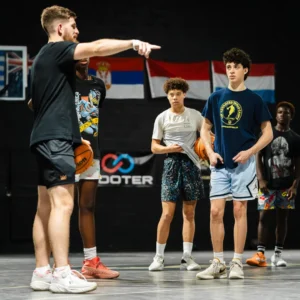
From Miami facility to seven locations worldwide
Coleman’s journey started like many trainers—passionate about basketball, eager to make an impact. But around 2021, something shifted. Opening a facility in Miami marked his transition from basketball trainer to business operator—a shift that required thinking differently about scheduling, payments, and client relationships.
“That kind of marked the transition at least personally from like a basketball trainer to also somebody who is very interested in the business side,” Coleman explains. “And then from there, just through some lucky breaks, started traveling internationally.”
Those international trips changed everything. Seeing how European clubs operated—the holistic approach, the federation oversight, the emphasis on development over tournament results—gave Coleman a blueprint for something different.
The result? Adapt Academy, a program that combines training and club basketball under one roof. It’s the “anti-AAU” approach, designed to address the pain points parents kept bringing to his Miami facility: too many games, too much money, too much pressure on 12-year-olds.
The holistic model: why training-only has limits
Not every market needs the all-in-one approach. Coleman is clear about that. Some cities have thriving training cultures where parents prioritize skill development and pay premium rates for it.
But in markets like Miami and San Diego, Coleman noticed a ceiling. Parents would invest in training, but club basketball always came first. The priority was always AAU—even when parents complained about the experience.
“There was only so much that we could provide to them when we knew that the priority was always going to be club basketball,” Coleman says. “So we go, ‘Hey, why don’t we combine these things where we take the positives of Europe and beyond and the positives of American basketball and put them all together in one?'”
The key insight: it’s not about choosing between training revenue and club revenue. It’s about recognizing which model serves athletes best in your specific market—and building systems to deliver that experience at scale.
This mirrors what Tyler Leclerc discovered scaling his Massachusetts facility—the breaking point where market limitations forced a strategic pivot.

What systems do you need to grow a sports training business?
Ask Coleman about the biggest mistake he sees trainers making, and his answer is immediate: no systems.
“A lot of trainers run their businesses like services. They don’t have SOPs, they don’t have systems in place, they don’t have different methods through which you can take time off their plate, make more money, scale the business further.”
This isn’t abstract theory. Coleman spent two years investing in robust systems across all By Any Means locations. The payoff? His trainers can take weeks off—actual vacations, time with their kids, opportunities to build their personal brand—without the business grinding to a halt.
“It honestly more than helps. It changes everything,” he says. “To the point where most of our trainers can take weeks off from being physically in the business and travel and go on vacation or spend more time with their kids.”
The connection to coaching quality matters here too. When coaches aren’t drowning in administrative work, they have time to actually learn and improve their craft. Coleman admits he went through a six-month to year-long stretch where business overwhelm prevented him from studying basketball—the very thing that drew him to this work.
Automated scheduling and payment processing aren’t just conveniences. They’re what create the space for coaches to keep developing as coaches while running sustainable businesses. A solid client management system ties it all together—tracking athlete progress, managing leads, and keeping communication organized in one place.
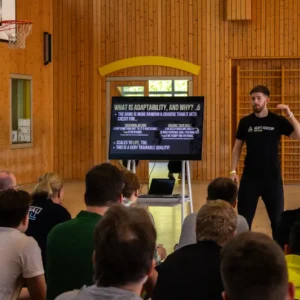
Pricing: stop copying your competitors
If systems are the foundation, pricing is the architecture. And most trainers get it completely wrong.
“Take an average of everyone else around you and then bump it down a little bit so that people train with you,” Coleman says, describing the common approach. “Which is the opposite of what we want to do.”
His alternative framework starts by ignoring competitor pricing entirely:
- What are competitors actually offering?
- What else can you offer beyond that?
- How can you do the overlapping parts better?
- What price reflects that value—regardless of what others charge?
This isn’t about pricing people out. Coleman’s team includes trainers whose entire mission is helping athletes who can’t afford training. But here’s the insight: sustainable scholarship programs require profitable core businesses.
“The people who can pay are happy to pay. They want to pay for this,” Coleman explains. “That allows you to then go and start a nonprofit and then scholarship athletes through this.”
Building a strong pricing structure—one that reflects actual value delivered—is what funds the impact work. You can’t give away what you haven’t built.
Once you’ve set your pricing, automated payment processing ensures you actually collect what you’re owed—no more awkward Venmo requests or chasing down late payments.
How content helps you grow a sports training business (without going viral)
Coleman has over 400,000 YouTube subscribers. His Instagram following spans the basketball world. He’s a legitimate content creator.
And he’s telling you that strategy probably isn’t right for your local training business.
“Personal brand equals a powerful business brand automatically—that’s the fallacy,” Coleman says. “I learned this personally when I opened up in Miami and realized that nobody was coming to train with me because of the x amount of followers that I had on Instagram or YouTube.”
The distinction he draws: personal brand content is designed to spread globally. Business brand content is designed to convert locally. They require completely different approaches.
For local business content, Coleman recommends:
Identify 3-4 content pillars specific to your business. At By Any Means facilities, that might be culture, rentals, and training. Each pillar addresses specific pain points your local market cares about.
Focus on trust-building content over viral content. Testimonials, transformation videos, behind-the-scenes culture—the stuff that might feel “boring” but that parents on Facebook actually respond to.
One content angle that consistently converts: showing the economics behind your model. Parents respond when they understand why group training delivers better value than individual sessions at a better price point.
Reframe your metrics entirely. “I would rather have 500 views from 500 people who are our ideal customer profile versus a million views from people who aren’t even in our local market.”
The binge bank approach for busy coaches
What if you hate creating content? Coleman has a framework for that too.
Think of your Instagram as a digital storefront—not a daily content machine. Create nine great videos that showcase who you are, where you train, why you care. They can be six months old. It doesn’t matter.
“At least you have that presence,” Coleman says. “I’m a parent, I’m like, ‘Okay, what facility is this?’ I can go to the Instagram and it’s kind of like a website.”
This pairs well with having a proper coaching website—another digital storefront that works for you around the clock. Or take it a step further with a branded mobile app that lives on parents’ phones and keeps your business top of mind. Combined with even modest paid advertising ($150 to $200 per month on a high-performing video targeting your local market), you get visibility without the content creation grind.
Then, as profit margins grow, you can reinvest in a content creator who comes in twice a month and produces the four videos you need. Scale the content operation as the business supports it, not before.
What actually fulfills Coleman about this work
Seven locations. Hundreds of athletes. A global brand. But when asked what’s most fulfilling, Coleman doesn’t talk about numbers.
“For me, it’s helping other people like myself who are passionate about basketball, youth development, and business… develop legit full-time careers out of this to the point where they can not only feed their family, but live good lives.”
He gets specific: coaches moving into nicer houses, taking vacations they couldn’t afford before, having the flexibility to invest in their own development. This freedom comes from building businesses that don’t require their presence every hour—something that becomes possible when scheduling and client communication run automatically.
“Seeing these things not only encourages me that they are impacting more athletes, but that this is a very scalable way to help develop quality coaches who over time change the lives of thousands of athletes.”
It’s the ripple effect. Impact 100 athletes directly as a coach, or impact 100 coaches who each impact thousands. The math favors building systems that help other coaches succeed.
The youth basketball ecosystem problem (and what could fix it)
Coleman doesn’t hold back on the state of youth basketball in the United States. The lack of regulation, the barrier to entry for AAU programs, the coaches who take the check over upholding their standards—he’s seen it all.
His diagnosis: USA Basketball and similar federations aren’t doing nearly enough to vet programs, educate coaches, or ensure quality experiences for young athletes.
“Baseline, AAU programs should be vetted by somebody at USA basketball. They should have to go through an actual education process,” Coleman argues. He took the USA Basketball coaching course recently for a live period tournament. “I just clicked through it and it took me 30 minutes and I learned absolutely nothing.”
The contrast with European models is stark. In most European countries, coaching youth at different levels requires progressive licensing—almost like a college course. Programs are vetted. Standards are enforced.
Coleman isn’t naive about the challenges of implementing this in American youth sports. The fragmentation, the capitalism, the sheer scale of the industry make consolidation difficult. But he believes even partial solutions could dramatically improve the youth basketball experience.
For individual trainers, the takeaway is simpler: be the program in your market that upholds actual standards. When you’re tempted to take a problematic client for the monthly fee, remember what it costs your culture and reputation long-term.
Key takeaways to grow your sports training business
Build systems before you try to scale. The time you invest in SOPs, automation, and documented processes pays dividends when you want to take a vacation—or open a second location.
Price based on value, not competition. Understand what you’re offering, do it better than anyone else, then price accordingly. Stop racing to the bottom.
Local content beats viral content for local businesses. Five hundred engaged followers in your city matter more than a million random views. Focus on trust-building content that converts.
The binge bank works. If content creation overwhelms you, create nine great videos and treat your social media like a digital storefront rather than a daily show.
Impact multiplies through systems. Helping other coaches build sustainable careers extends your impact far beyond what you could achieve training athletes directly.
Ready to build the systems that grow your training business?
Coleman’s success comes back to one thing: systems that free coaches from administrative overwhelm so they can focus on what matters—developing athletes and building sustainable careers.
CoachIQ helps sports coaches implement the scheduling automation, payment processing, and client management systems that make scaling possible. With automated reminders and communication tools, you reduce no-shows and stay connected with athletes between sessions. Schedule a free demo to see how these systems could help you grow your sports training business.
Connect with Coleman:
- Instagram: @byanymeansbasketball
- For coaching ideas: @byanymeanscoaches
- For business growth: @byanymeansbusiness
- YouTube: By Any Means Basketball
Related reading:
Full Episode Transcript
The following is a lightly edited transcript of the episode above.
▶ Click to expand full transcript
Russell: I’m here with Golden Airs.
Coleman: Yes, sir.
Russell: Thanks for coming in, man.
Coleman: Absolutely, man. Anytime.
Russell: Yeah. we’ve been fortunate enough to work together for a couple years now.
Coleman: Very long time. Yeah. It’s probably what, 2021 is when we started. four years.
Russell: Right after co. A little bit like midco. Right after co. It’s crazy.
Coleman: Yeah, it’s been a while.
Russell: Time flies.
Coleman: It does. It does indeed, man.
Russell: Well, let’s let’s start there. Why don’t you tell everyone a little bit about who you are, what your business is, where you’re located.
Coleman: Easy. Sounds good. My name is Colemanires, but run by any means basketball, which has taken a number of different forms over the years, but in a short sense, we just try to spread different basketball ideas, unique, innovative basketball ideas. obviously most of them are training but also some team coaching as well and business ideas around the world and and be ahead of the curve on that. So yeah, it really all started probably a decade ago, but the business I would say started when we right before we met like 2021 where we opened up a facility in Miami. That was the first of hopefully many but a few that we have now rolling in terms of ourmies. That marked the transition at least personally from like a basketball trainer to also somebody who is very interested in the business side and and more. and then from there just through some lucky breaks started traveling internationally a bit that opened up everything for me not only in terms of like building the brand and the reach worldwide but also just seeing the perspective of what basketball is what it can be the room for improvement around the world obviously gaining connections and and learning from people around the world. So since then we’ve expanded a pretty good amount obviously on the basketball side continued to grow the brand build connections etc but then also expanding to the seven locations that we have now and then some of the the things that we’re innovating and offering on the on the business side as well. So it’s been an interesting journey man but hopefully we’re just getting started here.
Russell: Yeah that’s awesome man. Yeah. so just to recap, like for everyone listening, seven locations and if I was a parent of an athlete, like what would be your your main offer in those seven locations? Like how how do you how are you helping basketball athletes in these seven locations?
Coleman: Yes, absolutely. we usually or not usually, we do identify with a a new style of basketball training that is very dependent and based on creativity, innovation. and a lot of the science is coming out on motor learning, skill acquisition. but then also just really building a culture and investing the bulk of the time into building a place where athletes feel at home, where they can get everything that they need out of this process where, we approach it super holistically. so usually the pitch amongst all of our locations is once again you’re going to get a different experience on the court. you’re going to get a completely different experience in terms of just the vibe that you feel and the comfort that you feel and the personal development that you gain as an athlete. And then a lot of these locations as well, we’ve started to approach it by combining the development and quote unquote the performance side of things in terms of like the AAU the travel ball where athletes have to go out and and perform in these tournaments. and offering everything in one place and and delivering really all the needs that you will ever have as a young athlete in one place and and start to be the anti-AU AAOU program with Adapt Academy is what our what our club is called. So
Russell: Yeah, the more that we can holistically I guess combine everything into one place the better. That’s been the goal of the last three or four years. to make sure that these athletes, regardless of the location that you’re in, have a home and a home that they look forward to going to every single day.
Coleman: Yeah, that’s awesome. I love how you said that there. what’s really interesting in working with so many coaches across the nation at Coach IQ, I’ve loved how you have continued to innovate
Russell: On what is the best experience for a parent and an athlete.
Coleman: And it’s also been really cool to watch you travel around the world.
Russell: Sure.
Coleman: To figure that out. Yeah.
Russell: You tested it first in Miami. You started as just training. Yes.
Coleman: You were just a training facility.
Coleman: Walk through what were some of the issues with that
Russell: Or what were the shortcomings of that?
Coleman: What you learn and then what you learn abroad which landed you here at seven locations with this more this model this holistic model.
Russell: Yeah, for sure. one of the biggest drawbacks of training and this is dependent on the market. Some cities, demographics, markets, whatever, are way more receptive to basketball training or they are more dependent on basketball training where they feel like they have to be, or their athlete, their their child, whatever, has to be training, multiple times per week to not fall behind everyone else.
Coleman: Most places that’s not the case. in Miami and also in San Diego, which were our two first locations that we experimented this or with this. There was only so much that we could provide to them when we knew that the priority was always going to be club basketball or AU basketball. Now, why that is the priority is a much longer conversation. I think
Russell: We can dive into that later.
Coleman: Yeah, we can we can we can talk about that and I think most people are on the same page that you don’t get everything you need out of AAOU. There are a lot of drawbacks of AAU, but when done in a, holistic and with the right intentions,
Russell: AU is pretty good and you get a lot of benefits and you can see that on the world scale. Like I I would attribute a lot of USA basketball success to the competitiveness of the youth basketball system.
Coleman: But once again, there are significant drawbacks there. there are a lot of pain points that parents would come into us in Miami with about AAOU. whether it’s, the amount of games, whether it’s the amount of money that they have to invest in it, and then also be training, whether it’s, how they’re being treated, the fact that, they’re not really training to develop, but more so training to perform at these tournaments. And there’s a lot of pressure on their 12-year-old athlete. So,
Russell: This was all concurrently happening as we were traveling throughout Europe, a couple times a year and seeing how they do things over there.
Coleman: You’re getting the pain points live in Miami. Exactly. running while also traveling to Europe and all these different club models and all these different things. And that’s what
Russell: Exactly. And then we go, hey, why don’t we combine these things where we take the positives of Europe and beyond and the positives of American basketball and put them all together in one. And that’s how we came up with Adapt Academy.
Coleman: Yeah. Really interesting, too, because with how many facility owners that we see at Coach IQ and we power, you’re spot on. Like I I was thinking of a couple facilities that we power right now where
Russell: They focus purely on development.
Coleman: Yeah.
Russell: And they’re large they’re large businesses
Coleman: And they have a good AU ecosystem outside of it and
Russell: They do phenomenal but they don’t need to dip into the holistic but it really just depends on the market right like on where you’re But you would say as a whole though across the United States
Coleman: You probably would say I wish I saw more holistic more all one one-stop shops. I think so. for me, it’s like you have two variables to to balance here. You have business side and then the impact side,
Russell: For us, if we’re in a location where the training side of things is put up on a pedestal by the local community and people are willing to invest in it at a high rate, you likely from a business standpoint don’t need to or should not go into the AEU side of things because you have just an influx of politics that comes with that.
Coleman: Yeah. Yeah. however for us there have been situations where we go look we can make a much bigger impact on these athletes if we know based on the people that we educate vet and bring into our system through by any means
Russell: That if these athletes have a chance to play for a club like Adapt Academy where we really hold high standards. We we emphasize the culture over anything. we’ve developed systems on the back end that make everything a lot smoother for our coaches so they can only focus on delivering a positive experience for athletes. We know that all these athletes that we care about
Coleman: Are going to have a much better
Russell: Youth basketball experience and thus childhood
Coleman: By being a part of our program. So it’s tough to balance that. I don’t think
Russell: It’s for everyone.
Coleman: I see a lot of programs who do it the wrong way. Yeah. where they set out and you’ll see hundreds of programs around the country that are we do AU basketball the right way,
Russell: But then they have a a shitty kid who comes in. Shitty meaning like their character, their attitude, maybe the the problems that their parent creates or
Coleman: Whatever the case may be
Russell: And they put them in a situation where, you know,
Coleman: Are you going to take a bad attitude or a bad, parent, a cancerous parent for x amount of money a month, or are you going to uphold your standards? And what most of those people do,
Russell: They take the parent and the kid because they have $500 or however much amount in front of them. And
Coleman: That’s a chain reaction that we see a lot of the time and it starts these programs where again they set out to do good things and the the intentions weren’t bad.
Coleman: When you’re tempted with money,
Russell: That’s when that’s when everything gets tested and and not to say that we just have more resistance to these urges. Yeah.
Coleman: But I think we have a better perspective of like long term. Yeah,
Russell: We need to ensure that our image, our systems, our culture are in place and without that you turn into every other AU program and you get you sacrifice that short-term gain for long-term success.
Coleman: Yeah. Well, I just love how deliberate you are, Like how many people start an AU program, they’re just not deliberate at all. Oh, we’ll take anybody, we’re not really thinking about the parent experience. We’ll do X, Y, and Z, That type of thing. So,
Russell: Especially these days, man, everyone’s everyone’s doing it. And I get it. It’s a good business opportunity for sure to capitalize on what you sports has become in the US, but you have to balance it out with the right intentions.
Coleman: . All right. let’s go now into based on everything you’ve seen, what you’ve created, you’ve traveled all over the world and seen basketball culture everywhere.
Russell: What if you could design the youth basketball experience
Coleman: From the ground up in the United States, what do you think from the perspective of what do you think would be the best for the athlete?
Russell: Right.
Coleman: And you’re working on it right now. you’re taking steps of doing that. seven locations. That’s awesome.
Russell: Yeah, for sure. Hey, if we can develop a little snapshot or niche of the market that does it, hopefully the right way, then I’m cool with that. But, yeah, I would say, there’s a lot from a even just a rule standpoint that I don’t agree with, whether it’s, and we don’t have to get into all this, but like
Coleman: Limited zone defense early on, I think would be fantastic to to completely eliminate zone defense. add shot clocks, have players play on like a lower basket, all these, more technical basketball rules or standards that
Russell: Foster a better competition environment
Coleman: 100%. And obviously create more of a an engaging experience for athletes, I think, and just create a better style of play and and more adaptable players, better thinking players. Now, on the macro scale, I would say I do think there should be significantly more regulation. And mind you, all this has to come from a federation like USA basketball in my opinion should be responsible for these things. I think
Russell: Doesn’t NBA have a
Coleman: NBA has something like they have the junior NBA, but it’s more so like to spread their name. I think USA basketball and I like I’ll just say this freely. I don’t think they really care that much about the youth basketball scene or maybe they’re just they don’t have the resources to do it. I’m sure they care about it. Whatever the case is, USA basketball doesn’t do nearly enough because
Russell: Who are they? I’m not even familiar really with I know the name obviously, but do you know?
Coleman: It’s essentially the basketball. every country has a basketball federation.
Russell: Who governs it and who’s the
Coleman: I I couldn’t even tell you who is responsible for what should be happening in the youth basketball space, And and and that’s probably just my lack of of research that’s being done.
Russell: If there’s someone to know about it, it’ be you and I probably.
Coleman: Yeah, for sure. And I’ve tried to connect with USA basketball plenty of times being like, “Look, I just want to like spread some ideas with you guys.” But
Russell: Again, that’s neither here nor there. In other countries, federations are the ones who set the rules, who, filter, who vet. And in my opinion,
Coleman: Baseline, AU program should be vetted
Russell: By somebody at USA basketball. they should have to go through an actual education process versus the USA basketball coaching course, which by the way is not required for the majority of AU tournaments.
Coleman: Anybody could just start,
Russell: Anybody can start one. And and they do and they do, And that’s the thing is that if you have
Coleman: A way with your words to convince parents and players that you’re going to do right for them, you will probably start a successful AU program. And
Russell: Parents are so unaware of what a good coach looks what a good program looks like. So it’s like a new turnover of parents every year that are completely
Coleman: Unaware and then eventually over the course of their child’s development they identify the pain points but by that time their child hates basketball and they’re done with it.
Russell: Yep. Exactly. And then the new parent comes in to experience the same exact thing.
Coleman: The same exact thing. And so for me, USA basketball should be requiring that every coach goes through a I don’t want to say extensive, but at least a sufficient education process. again, I took the USA basketball coaching course recently for a live period tournament and I just clicked through it and it took me 30 minutes and I learned absolutely nothing. No, nothing. And I’m not sitting here to say, oh, like by any means coaches certification should be like
Russell: What USA basketball uses. I don’t care what it is.
Coleman: It just needs to be something that is a barrier of entry to where if it’s a month, two monthl long process of like going through stuff,
Russell: Doing more interactive exercises. And does the federation in Europe have this or% how do they do it?
Coleman: Most European countries have number one you have to get FEA licensed to different levels. So I believe like
Russell: I’ve seen that for soccer.
Coleman: Yes. It’s it’s pretty similar, So if you want to be like under 12 year, you have to get level one and then move up the ranks to where it’s pretty extensive where like you’re taking almost a full like
Russell: I don’t want to say college course, but like if you want to coach at high levels, you have to do that.
Coleman: Well, what’s crazy too is like people just brush it off like, “Oh, anyone can become an AU coach.” Yeah, that’s bad. But also what you’re developing a kid,
Coleman: You’re taking in an 8-year-old, 10y old, 12-year-old, 15-y old, the most developed years, like developing intensive years.
Russell: You have to be an amazing person to help develop that that athlete and an amazing coach. Absolutely. the fact that we’re just hey, anybody can do it,
Coleman: It’s terrible.
Russell: 100%. And even like I think a simple fix is at big AU tournaments, number one,
Coleman: Not just anybody should be able to run a tournament just like they shouldn’t be able to start a program. You should be highly vetted
Russell: To be able to run massive AU tournaments. Yeah. Then you should have a representative from USA basketball pop into these AU tournaments. You don’t have to be at everyone. Just vet make sure that when I’m coaching a game, I don’t have a ref who’s looking at their phone
Coleman: And then go to the tournament organizer and say, “You’re ruining the the the experience for these coaches or for these players who are paying a lot of money and,
Russell: Getting developed.” And then you can look at the coaches and and see who’s exercising poor behavioral techniques with their athletes and and yelling at them. And there should be more of a vetting process. There should be more of an evaluation process. And that goes for teams, that goes for tournaments, that goes for the entire ecosystem.
Coleman: Super interesting the NBA is not more involved in this. It seems like such an opportunity for them to get in at the grass like grassroots.
Russell: Yeah. And even like I’m sure they’ve thought of this idea and there’s a reason why they’re not doing it and this would probably screw us over but yeah I’ve always been surprised that the NBA doesn’t have club teams under their organizations.
Coleman: Oh interesting you got Yeah. You got Real Madrid and you got Real Madrid youth.
Coleman: Every for the most part professional organization is also a club team at the youth level. Yeah.
Russell: I’ve always wondered why Miami Heat doesn’t have the biggest, you know,
Coleman: Club in all of Miami considering the resources and what that how that system could work in terms of, feeding into that organization into the NBA. But
Russell: There’s probably reasons why they don’t. I’m just curious why at some point the NBA does not invest at least a task force into understanding what we can do to fix
Coleman: Even just parts. I don’t think we’re ever going to fix the ecosystem. Yeah. But just parts of the ecosystem that could help the product improve over time.
Russell: I would have to say probably the fragmentation is like
Coleman: To think, oh, even as the NBA with all the resources, all their players, everything like that, oh, we’re going to come in and we want to fight the fragmentation is probably where they get pretty scared. And then it’s always changing. NIL just dropped.
Russell: Yeah. like
Coleman: It’s it’s all it’s a super dynamic like fluid environment and and and the fact of the matter is like we’re in a very capitalistic country where
Russell: That’s not a bad thing at all. However, if you want to
Coleman: Consolidate how things are done from such a massive industry right now that is very difficult to do and it would take people who are pretty high up in
Russell: The US government
Coleman: To appoint US basketball to do these things and that’s the last of their worries.
Russell: Yeah. Yeah. They’re not concerned about that at all right now. Yeah.
Coleman: There’s bigger things to focus on. Yeah. But if there was one thing that I would say, it goes back to that child development, youth development, sports development, like
Russell: If you’re investing in your youth and it’s a good experience and they’re becoming great humans.
Coleman: Yeah.
Russell: Like that’s a pretty big investment in your
Coleman: I agree. And a lot of people play basketball in the US and a lot of people could potentially become better people.
Russell: . 100%.
Coleman: In the US. So,
Russell: Well, also, like with what you do for a living and with what we do for a living, you think about where a parent can spend money, like spending $200 to $300. I’m a dad right now. If I’m a dad right now, me spend $200 or $300 for him to spend two days a week with you, I’m ecstatic. Yeah.
Coleman: Right. Like
Russell: You’re a good human. You’re developing him in the sport. You’re challenging him. You’re teaching him. He He’s not listening to me at home when I’m I’m punishing him and stuff like that, too. Like there’s so much to it where and that’s why I think it’s such a unbelievable industry. one from a perspective of what you do and what you give to the athletes every day, but two also why I think
Coleman: It’s it’s huge. parents spend so much money because they get so much more out of it than just the sport development too.
Russell: Yes. Absolutely. And I think that’s that’s something we’ve really tried to emphasize. And I I’ve always come from the belief of all right, I can only we as trainers and coaches can only help these players so much. And I’ve always tried to downplay the effect that we can have on young men and women. until I started to see
Coleman: Some of the testimonials that we get from all of our locations and and until I start to talk to parents who I’ve been working with their athletes for years and I’m just like, “Holy shit.” like
Russell: We really make a big impact and I don’t think that’s to be
Coleman: Understated and I think when when you emphasize that more than you emphasize the onc court side of things or at least use the onc court side of things as a Trojan horse to get into the development side of things the human development side of things not only can you make more of an impact but you can also keep them around for longer and we probably have athletes who they’re not ever going to play college basketball and they know that and we have plenty of these and but why they’re around is because is they love the environment, their parents love how they’re developing as a human,
Russell: Their social skills, their confidence,
Coleman: The whole nine. And again, I don’t think that can be understated. Like,
Russell: You invest a lot into the school system, but
Coleman: Kids don’t care about school and you don’t see results there. it’s only getting worse versus potentially
Russell: Investing time and ensuring that the right people
Coleman: Are coaches
Russell: And that I believe at least that will have a much larger impact on the youth
Coleman: Than a lot of different things that are happening. So
Russell: 100%. On that note too what would you say this whole journey this whole business you’ve created seven locations what would you say is the most fulfilling thing for you doing this? I think for me obviously everything there are a lot of things that are fulfilling right how many players can experience the methods and the the culture that we’ve created and work very hard to scale through all of our locations. Mhm.
Coleman: But for me, it’s helping other people like myself who are passionate about basketball, youth development, and business, but mainly the first two
Russell: Develop like legit full-time careers out of this to the point where they can not only feed their family, but live good lives and then go on to make even more of an impact because they are financially
Coleman: Able to and and comfortable and flexible. So seeing other coaches whether they’re by any meansmies or whether they’re just clients for us at by any means business seeing other coaches in basketball and outside of basketball
Russell: Who are able to like move into a nicer house that provides more space for their kids
Coleman: Or go on a trip a vacation they’ve been wanting to forever but they haven’t been able to because they don’t have enough money nor do they have enough time to step away from their business. Seeing these things helps me or I would say I’ll put it this way. Seeing these things not only encourages me that they are impacting more athletes, but that this is a very scalable way to help develop quality coaches who over time, change the lives of thousands of athletes. yeah, I would say that’s probably e easily the the most fulfilling part of what we do.
Russell: Yeah.
Coleman: And that’s how I’ve always approached it. yeah, you can affect 100 athletes as a coach,
Russell: But if you affect 100 coaches, you can then affect thousands of athletes. Y
Coleman: And then going in that totem pole is a
Russell: It’s a fun process.
Coleman: Yeah, 100%. Hey, I just wanted to take a quick break. My name’s Russell. I’m one of the founders of Coach IQ. We put on this podcast here. Our goal is to interview top coaches and business owners in the youth sports space across the United States and give you guys insight on the ground floor. How are they running their business? what do they think about the current ecosystem and what are their thoughts on where things are going? we’re super excited to bring this to you guys. If you don’t know about us, we are an all-in-one sports management platform. We run a lot of the businesses that we have on the podcast and we’re fortunate enough now to work with about a thousand sports coaches across the United States and it’s our goal to make your life as easy as possible in running the business itself. Website, scheduling, payment management, everything handled seamlessly on our platform. And really what separates us is we are built specifically for sports. We’re not powering nail salons. We’re not powering Pilates studios. Every second of the day we focus on you. So if that’s something you need where you’re looking to get your time back or you’re looking to grow your business, Coach IQ is really the only platform thinking about you every single day interviewing and working with the top coaches in the industry specific to sports. if that’s something we can help you with, we would love to connect with you. You can visit our website, coachiq.com, schedule a free demo there. The demos are awesome. It’s really less about selling and much more about just walking through what we’ve learned and providing value on what other coaches are doing. And if it’s a match, it’s a match. absolute no-brainer. Go schedule a demo. worth the time. And thank you guys for tuning in. Thank you guys for watching. Thank you for customers who are working with us. It allows us to do all this make better product and the main goal help athletes all across the United States and the world get a phenomenal experience from you guys the coaches. Okay, so switching gears a little bit let’s move into like the actual tactics of running a great business as a sports coach as a facility owner. so to start, let’s start with what’s probably the biggest mistake you see across the board seeing all these coaches and these business owners. Where do they struggle the most and you see them running into issues most often?
Russell: Just having no systems in place. I think a lot of trainers run their businesses like services. They don’t and this is this makes sense. I didn’t have much experience working in actual larger businesses where you have SOPs, where you have systems in place, where you have different methods through which you can take time off your plate, make more money, scale the business further. They don’t even think about like hiring systems to ensure that they are taken out of the business at some point so that they can retire and try other things and use hopefully the money that they’ve created
Coleman: In other ways. And again, like it it took me having number one experiencing a lot of this stuff and getting frustrated and doing a lot of research, but also having a few guys on our team who come from larger, big four corporations and exposing me to
Russell: How to put robust systems in place to build a business and not just a service where you’re trading time for money and
Coleman: Doing that until you’re tired of doing so. Yeah.
Russell: For us, it’s always been about how can we build out these systems. We’ve been probably investing the last two years
Coleman: Into building out the most refined, robust systems we possibly can. And it helps a ton. It more than helps. It It changes everything..
Russell: To the point where like
Coleman: Most of our trainers can take weeks off from being physically in the business and travel and, go on vacation or spend more time with their kids and and try other things, build their personal brand more on the basketball side, travel. And for those who don’t want to invest even just a little bit of money into it, it makes sense why they don’t grow, Even if even if they’re a fantastic coach, and I’m sure you see it all the time where like
Russell: This this they’re a great person, they’re a great coach or great a great trainer, whatever, but they stay at that level for years, not because it’s constrained by them and what they can do, but by the systems and the machine that is the business.
Coleman: 100%. And then the biggest thing there too that I love is when you get that time back now at who wins, it’s the athlete. Yes.
Coleman: Exactly.
Russell: You’re running a better business, you’re making more money, and the athlete wins,
Coleman: And that’s we had this whole conversation at our retreat this past weekend. again, to go back to what we talked about a little bit earlier, I am not only doing this and helping businesses
Russell: Because I slashwe are these moneyhungry capitalists. I am truly passionate about freeing up time for coaches and trainers to yes make more money but with making more money on less time impact more athletes deliver a better experience invest into their coaching development which is something that I couldn’t do for years I would say maybe six months to a year I got so overwhelmed with the business
Coleman: That I couldn’t learn about basketball right which is crazy because that’s always been and still is like my first
Russell: Priority that’s the athlete improvement for the athlete.
Coleman: Exactly. And then your business goes downhill because you’re not tapped in with new methods and learning. And
Russell: So for us, it’s it’s all just like how can we free up time to make more money and thus how can this person not only live a better life for themselves, but also help the athlete live a better life for them and do that with more athletes over time.
Coleman: 100%. 100%. Yeah. I would say what we see on our end like systems 100%. That’s like overarching, but if I were to like drill down a little bit more, I would probably say pricing.
Coleman: Like a coach, we talked in this podcast about how you’re very deliberate and the experience you want to create and how you brought in AAOU
Russell: And that’s an offer. you looked at the parents’ pains and you looked at the market that you’re in and you developed an offer that worked really well. So you thought a lot about pricing and how to set up pricing the right way, which then once you set up that offer the right way,
Coleman: You then can have the systems to deliver more to the athletes and to make more money.
Coleman: So I get on I have done thousands and thousands of demos with
Russell: Facility owners across the nation
Coleman: And I get on the call and they’re just copying what the next coach is doing. They haven’t spent any time on thinking about their pricing or what the parents paying are. They’re just like like you said that six month toyear train where it’s like I’m just in I’m so in the weeds. I haven’t taken a step back to create a really great offer to run my business that enables me to step out of it.
Russell: Correct.
Coleman: So like another to drill down on that even more is like pay session, Yes. Oh, hey, anybody can come, anybody who sees my Instagram post can come in and train with me whenever they want,
Russell: Well, you’re not ever going to scale anything that way. And
Coleman: So that what I is what I would say probably I run into the most.
Russell: Yeah.
Coleman: And another great example too is like Alex Herozi is like blowing up. Like I see a ton of coaches are super interested him in in him teaching his systems.
Russell: You’ll notice he’s a he
Coleman: Acquires other large companies service businesses. But what you’ll see a lot of the times is what he does is he goes into these service businesses and he spends all of his time on just reframing the pricing and the offer. Yep.
Russell: Which then lets the systems come into play
Coleman: For sure
Russell: And automate everything and scale everything. But yeah, that’s probably what I would say I run into the most.
Coleman: For sure. No, pricing is again like you said, take an average of everyone else around you and then bump it down a little bit so that people train with you, which is the opposite of what we want to do. We want to take a look at what everyone else is doing. Really insulate the price from that equation at first.
Russell: What are they offering? What else can we offer? And how can we ensure that even the parts of the offer that are the same, we do those things better.
Coleman: Which goes back to also having systems to educate your employees or yourself or whatever.
Coleman: And then what is a proper price for that? Not based on the others, but based on what people will
Russell: Pay, but also how much value you’re providing. Yeah. Yeah. So rather than making it a race to the bottom where I’m going to be lower, I’m going to be lower, I’m going to be lower, make it a race to the top where how much value can you provide
Coleman: For a reasonable enough price. and that’s not saying to price people out of it because there are always ways that you can provide scholarships.
Coleman: Like I I had a conversation at our retreat Sunday with one of our guys who his entire mission is to help athletes who cannot afford training train. And I told him, well, look, you’re already training people. And a little bit of backstory, he already has like 10, 15 clients who are paying him,
Russell: But that’s not his mission.
Coleman: So I told him, hey, the people who can pay are happy to pay. They want to pay for this. Like
Russell: That allows you to do it.
Coleman: That allows you to then go and start a nonprofit and then scholarship athletes through this. This allows you to develop the time to go and make calls to get grants and donations. You may meet an athlete whose dad is very passionate about this as well and has the money to donate to allow the other athletes to come in, but you’ll never do that if you don’t build a business. And that’s always been, something for me as well where of course I’m passionate about
Russell: That side of things as well. and and that’s that’s pretty clear based on a lot of things that we’ve done in the past but we need to ensure that our business is in place
Coleman: And we all we have all the the other boxes checked so that
Russell: We can scholarship athletes and every year we bring five to six athletes from around the world
Coleman: For completely free to Miami to train with us and to play AU and and the whole nine and
Russell: Like the impact is that that they experience is insane but that’s not possible without developing a business to then fund that 100% 100%.
Coleman: It’s a balance.
Russell: Yeah, that’s awesome. All right, so another thing on Tactic that I think you’re incredible at is creating content.
Coleman: You for those of you who don’t know,
Russell: Probably millions of followers across multiple different platforms.
Coleman: Yeah.
Russell: 400,000 subscribers on YouTube, which is incredibly difficult.
Coleman: You are a thought leader and you’ve done an incredible job in creating content.
Russell: Appreciate that.
Coleman: There’s two types though. There’s a creator like you. You would fall into the creator and then there’s the business owner and facility owner. let’s talk about the facility owner, business owner. How would you advise them to create content and get into that game
Russell: Just in general as a whole? Like what is what’s your advice for the local business owner and content creation? there are a few fallacies here. I would say
Coleman: One and the biggest one that I’ll probably talk about the most is personal brand equals like a a powerful personal brand equals a powerful business brand automatically. I learned this personally when I opened up in Miami and realized that nobody was coming to train with me because of the x amount of followers that I had on Instagram, YouTube, whatever. You have to establish yourself in the local
Russell: Market and not rely on the personal brand that you’ve developed. And I think where a lot of trainers go wrong is they try to approach either they try to build their personal brand and hope that trickles into their business brand or they try to build their bis business brand through the lens of a personal brand or in the same way as a personal brand. And when everything really changed is when we brought our guy Cam in who’s now our content director for all of Bonnie Means. And he was able to see everything that we do.
Russell: Through a different lens of the business brand, not just, me building up my personal brand or the by any means brand or the global side of things, whatever you want to call it. Those are the two different distinct sides of of content or branding that you could approach it from. So I would say where business branding or what it really boils down to is understanding what makes you different from the competition. So identifying three or four things max having different pillars that you want to discuss. So for example at most of our locations like detail locations so actual gyms culture rentals obviously training and then we have the club side of things which we insulate. so it’s really just those three main pillars for the most part. understanding how to attack each of those. So the pain points behind those and then building trust behind those with testimonials with transformation videos and different ways to buy to build buyin from there versus personal branding is how can you present a concept in a way that spreads across the world.
Coleman: Yeah.
Russell: But for a local business, we don’t need to spread across the world. We just need max 5,000 followers.
Coleman: Yeah. who are just people in the local area. Yeah. And there’s so much hunger for virality for local business owners that they don’t post the boring testimonials that they think are boring but that parents on Facebook are going to love. Yeah,
Russell: They don’t post videos.
Coleman: The views are misleading and and ultimately what we tell our
Russell: Clients whether it’s a by any means location or or others on our scaling system like look you don’t need to have or I’ll put it this way I would rather have 500 views from 500 people who are our ideal customer profile versus a million views from people who aren’t even in our local market.
Coleman: . And again, it’s it’s misleading. The dopamine hit of going viral is fantastic. However, will it really provide an ROI into your local business?
Russell: Yeah, 100%.
Russell: Yeah,
Coleman: It’s been it’s been an interesting journey to see I guess both sides of it. Obviously, my main focus is the global branding side of things. any content that I post is to spread around the world,
Russell: But I’m obviously talking to our content team every day
Coleman: Who their only goal is to build in local markets.
Russell: And we’ve we have a ton of experience in in pretty much every type of market that you can imagine both in the US, outside of the US, and have identified
Coleman: Really some of the big factors or pillars that that build strong, followings in the market.
Russell: Yeah, 100%. I would say one thing that we’ve seen a lot is there’s these facilities that run amazing businesses
Coleman: And have no social media which I think is completely fine. I mean
Russell: For sure
Coleman: You have to be again like we were talking about earlier you creating content is a job.
Russell: Yeah.
Coleman: And to throw that in the mix of running a local sports facility is a lot.
Russell: It is a lot. I always thought like to the people that have no social media, I love this concept of like a binge bank or essentially don’t think like you need to make this another full-time thing,
Russell: If you just have an Instagram account with nine great videos, who you are, Yes.
Coleman: Where you train, why you care, why you’re doing this. It could be six months old. It doesn’t matter. But at least you have that presence.
Coleman: And I’m a parent. I’m like, “Okay, what facility is this?” I can go to the Instagram and it’s like a website. Like, “Oh, cool. I see a video of the founder and and why he cares
Russell: For sure.
Coleman: Now, it’s not going to reach people on a local level, but just I think that’s a cool tactical idea. Absolutely for a local facility owner who’s like, “No, you don’t need to be like Cole. You don’t need to have a million followers and create content every day.” And that’s great if you are, but you just create that what I call binge bank. I think that can help your business a ton. And it’s just like a website. And that’s a great short-term thing for the trainers who are overwhelmed with the whole content game.
Russell: For sure. just do that. You had some other great nuggets in there. Really, if you are going to go down the route of creating content for your local business, make sure you’re focused on local,
Russell: I would have very specific content pillars that you just stay on like a routine. Like don’t feel like you need to absolutely dominate the content space. Like you just need to have a presence.
Coleman: Yeah. No, 100%. And we’ve developed a like a content playbook for that at all of our locations where days of the week they choose different pillars to approach it off of. Make it very simple. Again, to go back to your idea of like a binge bank, we call it like the digital resume, digital storefront where
Russell: Again, even if you’re not super active on it, people can go and see. And then if you combine that with digital marketing, paid ads,
Coleman: People are going to be going to your page anyways, we run a lot of like super lowbudget awareness campaigns
Russell: Where it’s just a video, a high performing performing video, maybe the best video that you’ve ever posted in the local market.
Coleman: . And you put 150 200 bucks a month hopefully more but as a starter
Russell: And that way you are getting reach without creating content
Russell: Bringing people back to your page and then
Coleman: If you get a few clients from that you can reinvest that into maybe a content creator who comes in
Russell: Twice a month films videos gives you four videos that you need a month and that’s the starter pack for ones who
Coleman: Don’t really have the skill the natural talent or the natural ability to even consider content which which is a lot of trainers. and to your point, like you do see a lot of trainers and we talk, not me personally, but like our our sales team and and a lot of our like scaling managers talk to plenty of coaches who yeah, I don’t even have an Instagram, but I have 80 clients. And we’re like,
Russell: Wow, we need to learn from you how you organically built this thing up. And a lot of that we’ve refined as well, which just comes down to different word of mouth techniques. But
Coleman: Yeah, content shouldn’t be a super high pressure thing. It shouldn’t be a super expensive thing
Russell: If you get to the point where you have the profit margins to do so. I would strongly encourage investing into that.
Coleman: Yeah.
Russell: Because it can be very very powerful. But
Coleman: It goes to show how, there are so many different tools and methods to reach new leads.
Russell: Yeah.
Coleman: That social media is not necessarily the only one.
Russell: Yeah. 100%. And I just see it more in basketball for some reason is
Coleman: They just love the idea of trying to have hundreds of thousands of followers. Yeah, it’s interesting.
Russell: And it’s funny because most of the time the hundreds of thousands of followers will not result in nearly
Coleman: As much of a financial gain as running a super robust local business. And that’s what I told
Russell: Once again at our retreat a couple days ago. A lot of those guys are prioritizing going viral to everyone versus building strong. And and it is and and my thing is look
Coleman: Build up your business first to the point where you have 50 60 clients. You can remove yourself. You have other trained coaches who are running it for you. You have our systems in place to run your entire business for you. Then you can go and do some cool stuff
Russell: To post because I always say like don’t post cool stuff, do cool stuff and then post it.
Coleman: So you can invest in going and traveling and doing something cool or learning. You have athletes who you can show results with. If you have no athletes,
Russell: How are people supposed to trust you on becoming a better athlete? Exactly. You have testimonials. You have
Coleman: The ability to step into a gym with 20 athletes and spark your creativity on the content. But when people start personal brand and then business brand,
Russell: Unless you’re in a niche situation, which some people have that, it’s tough. It’s tough to really scale that. And it’s a lot easier to build a strong business first locally and then get into the personal side. Yeah, 100%. Cool, man. Well, I really appreciate all the time you’ve given us today.
Coleman: Absolutely, man. Appreciate it.
Russell: Where where can people find you, hear about you if they don’t already know about you?
Coleman: Yeah. by any means basketball is is probably the main place, but for basketball coaching ideas and training ideas, by any means coaches, is what we’re really investing a lot of time into right now, just to like I said, that’s probably my biggest passion is helping other coaches. So,
Russell: By any means coaches, Instagram, is a good spot. And then if you’re looking to grow the business, by any means business, you can check it out and get with all of our guys on
Coleman: The business side where, we work with you guys at Coach IQ to, to grow businesses and not only grow businesses, but create more scalable businesses with better systems that hopefully will take a ton of time off of people’s plate. And we’ve seen insane results with that so that they can do all the things that we just talked about in this podcast.
Russell: That’s awesome, man. Yes, sir. Cool. Well, I appreciate you coming on.
Coleman: Appreciate you, man. Sure. Long time coming.
