

Most basketball trainers focus on skill development. The best ones understand that basketball mental performance training matters just as much as what athletes learn physically.
Jordan Hamilton holds a PhD in positive psychology—what he jokingly calls a “PhD of play.” His research focuses on flow states: those moments when athletes perform at their peak, lose track of time, and execute without overthinking. For youth sports coaches and trainers, understanding flow isn’t just academic. It’s the difference between players who dread practice and athletes who can’t wait to get back in the gym.
In this episode of the CoachIQ Podcast, Jordan breaks down how trainers can create conditions for flow, why communication builds team chemistry, and what his experience on Lehigh’s Duke-beating team taught him about group performance.
In This Episode
- What flow states are and why they matter for player development
- The challenge-skill balance that keeps young athletes engaged
- How constraints-led training naturally creates flow conditions
- Why rhythm and novelty unlock peak performance
- Group flow: what it looks like and how to build it
- Communication as a competitive advantage for players
- Practical ways trainers can help athletes perform better on their teams
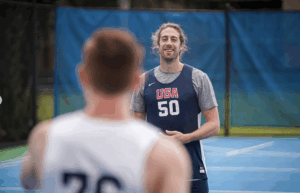
What Is Flow (And Why Does It Matter for Basketball Mental Performance)?
Flow is an optimal performance state. Athletes in flow lose self-consciousness, experience complete focus on the task at hand, and often lose track of time. Jordan describes it as a state where “the inner dialogue dies away” and players execute without overthinking.
Here’s the challenge: you don’t know you’re in flow until you’re out of it. As a result, it’s slippery to study and even harder to create on demand.
However, trainers can increase the probability that athletes experience flow—and that’s where basketball mental performance training becomes a competitive advantage. When young players consistently experience flow in your sessions, they develop faster, enjoy training more, and stick with your program longer.
The key is understanding the challenge-skill balance. Picture a graph with challenge on one axis and skill on the other. Flow happens when the challenge sits slightly above the athlete’s current skill level. Too much challenge creates anxiety. Too little creates boredom. That sweet spot—where players are stretched but not overwhelmed—is where flow lives.
For trainers, this means constantly calibrating. A drill that creates flow for one athlete might bore another or overwhelm a third. This is why trainers like Josh Fan start every program with a needs analysis—understanding where each athlete stands before designing sessions. And it’s where tracking individual client progress becomes essential—you need to know where each player is to design sessions that hit their flow zone.
Constraints-Led Training and Mental Performance: A Natural Pairing
Jordan credits Mitchell Kersh with opening his eyes to how constraints-led training pairs naturally with flow states—and why it’s become a cornerstone of modern basketball mental performance training.
When you add constraints to drills—shooting off your non-dominant foot, limiting dribbles, requiring specific footwork on catches—you force athletes to problem-solve in real time. This constant adaptation keeps their attention locked on the task. There’s no mental space for self-criticism or wandering thoughts.
“The more dynamic qualities you can add, the more they are forced to problem solve, the less opportunity they have to think in between reps,” Jordan explains. “So the more likely they are to feel a sense of flow.”
Traditional drills often focus on make-or-miss outcomes. Instead, Jordan suggests shifting the challenge to the process itself. Rather than “make 6 out of 10 from the top of the key,” try “make 3 out of 10 shooting off your right foot on a dribble pull-up.” In this way, the challenge becomes execution quality, not just results.
This process focus does something powerful for young athletes: it reduces the anxiety that comes from obsessing over outcomes. Players learn to judge themselves on effort and technique rather than whether the ball went in. This aligns with how coaches like Jeff Schmidt use constraints-led approaches to build thriving training businesses—the methodology develops better players and creates more engaging sessions.
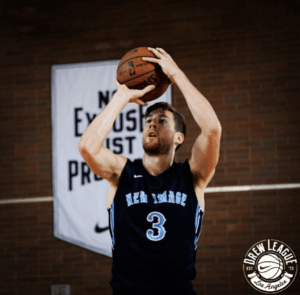
Rhythm and Novelty: Two Underrated Flow Triggers
Jordan adds two elements to flow theory based on his observations: rhythm and novelty.
When athletes enter flow, they often do things they’ve never done before. In other words, there’s a creative element—players find novel ways to apply their skills that surprise even themselves. This might come from the neural plasticity happening during flow or simply from a deeper comfort with their own abilities.
Similarly, rhythm shows up consistently in flow states. Athletes in flow describe a sense of ease in their movements, an effortlessness that feels almost musical. To test this theory, Jordan experimented with using a metronome during shooting drills at camps. Players dribbled and shot to different beats per minute, constantly adapting their rhythm.
The results were striking. Players shot at incredibly high percentages—and didn’t even notice. “They reported that they weren’t really aware of how many shots they were making,” Jordan recalls. Interestingly, the coaches observed the efficiency, but the players were too locked in to track outcomes.
This points to a key basketball mental performance training principle: find ways to induce rhythm in your sessions. Ball handling drills with rhythmic patterns, hesitation moves that exaggerate timing, even music during training can all create conditions where flow becomes more likely.
Group Flow: What Championship Teams Feel
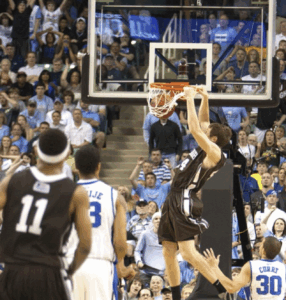
Jordan’s interest in positive psychology started with his experience at Lehigh, where he captained the team that upset Duke in the 2012 NCAA Tournament.
Group flow has all the same characteristics as individual flow—loss of self-consciousness, complete focus, loss of time awareness—but it’s experienced collectively. There’s also a sense of connectedness between individuals that goes beyond normal teamwork.
Jordan describes a game against William & Mary where his team was up 40-7 at halftime. “We were so connected, especially defensively, where we all knew where one another was going to be before they were there,” he says. “It was almost surreal—extra sensory in certain ways.”
Group flow requires additional ingredients beyond individual flow. First, a common goal that everyone commits to. Second, collective ambition—genuine belief that the goal is achievable. Additionally, role clarity ensures each player knows their contribution. Finally, there must be a willingness to put team success above individual statistics. These same principles apply to scaling a training business with multiple coaches—everyone needs to understand their role for the system to work.
Jordan’s practical insight: communication builds group flow. Specifically, talking on defense creates connection and makes defense fun. As a result, it helps players fly around together and builds habits that enable collective performance.
For trainers working with individuals from different teams, this creates an opportunity. Essentially, you can teach communication skills, encourage voice projection, and build habits that make your athletes better teammates—not just better individual players.
How Trainers Can Help Athletes Impact Their Teams
Private trainers face an interesting challenge. You’re developing individual skills, but your athletes perform on teams with coaches who may have different philosophies.
Jordan offers a strategic approach for players trying to expand their roles or build trust with coaches: learn and use the coach’s terminology.
“If you can reflect back their language, their terms, all of a sudden on a really human level they feel heard, they feel listened to,” Jordan explains. “You kind of align—hey, I see you coach, we’re on the same team.”
This isn’t manipulation. On the contrary, when players actively communicate using their coach’s concepts, they demonstrate engagement and understanding. As a result, coaches see them as high-IQ players who grasp the system. Ultimately, that builds trust, which earns opportunities.
Trainers can reinforce this by encouraging players to share what their team coaches are teaching. Incorporate that terminology into your sessions. Help players become the kind of communicator who earns playing time—someone who projects their voice, says the right things at the right times, and keeps teammates connected.
Playfulness as Competitive Advantage
One theme runs through Jordan’s research: playfulness matters more than most coaches realize.
Looking at OKC’s recent success, Jordan observes a team where players are “allowed to be themselves” without fear of rejection. Consequently, that psychological safety creates space for the looseness and joy that enables peak performance.
“Every team wants a guy that is loose, that’s going to have fun out there, that’s going to remind people to have fun, that’s going to encourage their teammates,” Jordan says. “Building in those behaviors—there’s space for that.”
For youth sports trainers, this is where basketball mental performance training intersects with business success. Young athletes need environments where they can fail without fear of punishment. Moreover, they need permission to be creative, to try things that might not work, to express their personality on the court.
This doesn’t mean tolerating laziness or ignoring mistakes. It means creating psychological safety where athletes feel comfortable taking risks and growing through failure rather than hiding from it. Mental performance coach Joey Hewitt emphasizes this same principle—joy isn’t soft, it’s a strategic competitive advantage.
When players enjoy your training sessions—when they experience that sense of play alongside skill development—they stay with your program longer and develop faster. That’s good for them and good for your coaching business.
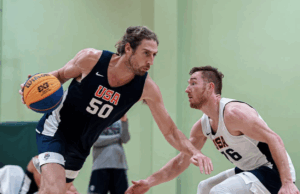
Returning to Gratitude When Things Get Hard
Every season brings adversity. Jordan’s senior year at Lehigh, his team hit a three-game losing streak heading into playoffs. The tight nucleus that had formed began to fray. Players who weren’t getting minutes suddenly had validation for their frustration.
Jordan called a players-only meeting. His approach: remind every player why they were valuable to the team—and not just for their on-court skills.
“That value wasn’t necessarily related to their skill set on the court,” Jordan recalls. “Instead, it was related to their effort on a day-to-day basis despite knowing they’re not going to play. It was related to just being a funny person and offering some relief in the locker room.”
This same principle applies to individual athletes struggling through slumps or setbacks. The key is positive self-talk grounded in specific acknowledgment of what’s going right, combined with gratitude for the opportunity to compete at all.
“There’s a younger you that chose to play this game because they loved it,” Jordan says. “There’s a kid inside that is just so stoked to be able to hoop day in day out. Finding and connecting to that part of you that wants to play the game because they love the game—that can help the other issues dissolve.”
Building Your Basketball Mental Performance Training Systems
The trainers who create the best athlete experiences aren’t just good coaches—they’re organized. As a result, they track individual progress so they can calibrate challenges to each player’s flow zone. They automate scheduling so they’re not mentally drained before sessions start. In addition, they use communication tools to stay connected with athletes and parents between sessions.
When administrative work is handled—from payment collection to client communication—you can bring full presence and energy to coaching. That’s when you create the conditions where young athletes experience flow, develop faster, and fall in love with the game.
Want to spend less time on admin and more time developing athletes mentally and physically? See how CoachIQ helps coaches stay organized so you can focus on what matters—creating peak performance environments.
Connect with Jordan Hamilton
Find Jordan on Instagram: @jordanhamilton.play
For coaches interested in bringing Jordan in for mental performance work with teams or training groups, reach out through his Instagram.
Full Episode Transcript
The following is a lightly edited transcript of the episode above.
▶ Click to expand full transcript
Russell: Welcome back to the Coach IQ podcast. I’m your host Mitchell Kersh and we are here today with Jordan Hamilton, PhD of positive psychology. I joke PhD of play. A great friend of mine, someone I met while I was in undergrad and I cannot begin to express how excited I am to have him on the podcast. Jordan, welcome.
Jordan: Thank you, Mitchell. Happy to be here.
Russell: I’ll I’ll start off by letting everybody know that I’ve never beat Jordan in oneonone. And now that we’ve got that out there, I feel a lot better entering this podcast. But I I met Jordan at a time in my own playing career where, I was trying to achieve certain goals that I had. but I didn’t really have a way of thinking about that. And it was it aligned with the time where he was getting his PhD. We’re at the same town, same school system. and and Jordan’s been an intricral part of my journey as a player and as a coach and his particular areas of expertise I think are underutilized in today’s world and I would love for you Jordan to explain what does a PhD of positive psychology mean?
Jordan: That’s a great question. I want to make one note on the one-on-one. there’s a reason why we haven’t played in a few years. I’d prefer to keep that keep my record intact. and I’m sure it would be a lot different where we’d play tomorrow. Lace them up tomorrow. yeah, PhD in positive psychology all positive psychology in general as a field looks at how systems, individuals and teams thrive. So traditional psychology is looking for dysfunction in systems and individuals. Positive psychology emerged from the 80s where two psychologists Martin Seligman Mihi chick sent me mih high the author of flow got together legend has it was on a beach in Hawaii and they’re looking at they’re like wow the world’s pretty good why don’t we study that and so that’s where the specific discipline of positive psychology emerged in my own process in that field I came from basketball playing growing up playing in Seattle, going to Lehigh University, having success there, really in the team sense and then playing overseas for a couple years and and really was fascinated with peak performance. So that’s what I became interested in specifically flow and and group flow and positive psychology offered a container a field where that could be explored. So I was like let’s do that. Let’s see how we can really how we can measure and create conditions that allow people to experience that more which I’ve learned is a lot harder to do than I thought it would be. but but that’s what inspired me to to enter into that field.
Russell: Very cool. And you talk about the conditions of flow or maybe the prerequisites whatever the term is. Could you first give a a definition of flow for everybody and then also talk about what are those commonalities or those prerequisites of flow?
Jordan: Yeah, flows, one of the challenges in measuring it and developing the theory is it’s it’s slippery because in order to be in flow or when you’re in flow, you don’t know you’re in flow until you’re out of it. So one of the conditions of being in flow, the state of flow itself is you lose sense of self-consciousness. So you are so present in the moment that you no longer are really thinking much at all. You’re and there’s some debate here where your prefrontal cortex either is highly active or and I think it is in a sense but the the inner dialogue dies away and in general flow is an optimal state of performance. characterized by in the- moment awareness, loss of sense of time, loss of self-consciousness, complete focus on the task at hand. So these are some of the experiences that happen when one is in a state of flow. And then I think what flow in terms of the prerequisites and this is useful in the context of basketball developing whether that be individual lesson plans or even at the team level is is this nice graph that has challenge on one side and and skill on the bottom. challenge on the y ais and then skill on the x axis. Had to take go back there. And the idea is you want to ideally have the challenge be slightly above the skill. if if I can make five out of 10 three-pointers from the top of the key, creating some incentive or drill that pushes me to make six. That’s a very like simple example. it gets a little more nuanced in a team context, but the idea is if the challenge is too high relative to the skill level, then individuals likely experience anxiety, which will ob lead to disengagement. If if the challenge is too low in relation to the skill, they’ll be bored. you see that with older kids having to do like simple triple drills, Or things of that nature. So I I think that in terms of looking at conditions or ways to structure activities that could produce flow, that’s a really tangible useful framework to start with.
Russell: Yeah. Could you give us a an example of that? Let’s stick with the basketball context and maybe we could do two examples. One, you’re in the gym by yourself. How do you create that sense of flow? Or maybe you could play it as you have an individual session. So one player, one trainer, what are ways in which we could help that player find flow? And then also from the the team context, what would an activity look like?
Jordan: Yeah. Yeah. Yeah. So I think with the individual and Mitchell, this is something, you’ve really opened my eyes to with constraints based learning is in infusing that element, it really pairs well with flow in the sense of I think when you add in constraints and factors that that give the individual, really a lot of different dynamic opportunities to engage their skills, and and and novel challenges that are engaging in their own nature. Then I think it reduces it more easily leads to those states where there’s loss of self-consciousness because you’re so engaged at the task at hand because oh I’ve never shot off my right foot, from from my hip or or whatever it is, whatever you be doing, you know. But it’s great because it it really does I think it it directs that attention on the task at hand in such a way that that allows for some of those qualities of the state to emerge. So for the individual for example instead of something I would say stacking on infusing constraints in in in standard mini games right so instead of like we talked about earlier making six out of 10 from the top of the key maybe it’s it’s three out of 10 on dribble off the right foot and something that that has a little that challenges their skill in a new way enforces their system to to find solutions. And I I I just think the more dynamic qualities you can add, the more they are forced to problem solve, the less opportunity they have to think in between reps. the more likely they are to to be able to feel a sense of of flow. I think shooting off shooting off different feet, shooting from different angles. I I think working on different footworks on the catch, these are all specific ways in which you can find challenges that aren’t just make or miss, Because,
Russell: Right,
Jordan: I’m I’m sure you’ve or if you haven’t, you’ll talk at some point about outcome like process focused versus outcome focused orientation. And so the more you could focus on the process and have the challenge be related to the process itself as opposed to the outcome, I think that’s another way to engage and experience flow, you know. So maybe you’re more focused on the the rep itself and the makes become, secondary or just a way of tracking.
Russell: Absolutely. That’s become a little bit of an inside joke in the workouts with Duncan and George, two guys obviously playing at super high levels. Duncan with the Pistons, George with the Jazz. And I I think it’s something that their coaches or maybe team psychologists have talked to them about and they’re so competitive naturally and and all of our workouts, everything has a score, We’re we’re counting everything. Maybe it is like the way you score is like it has to you have to make the shot in a certain way. Like you have to make the shot by
Jordan: Making a brad or it has to hit the front rim first. Just getting really particular with their their skills within the skill. But sometimes they will get they’ll get caught up in that end result. And they’ll lose the focus. And so they’ve had to sometimes remind themselves of it’s all about the process, not the result. And often times those reminders are during times where they’re they’re down in the workout. And they’ve had a lot of success building back up and winning those days when they shift focus from over obsessing or overjudging that that result and then just bringing their awareness back to the present. Hey, I just want to take a quick break. My name’s Russell. I’m one of the founders of Coach IQ. We put on this podcast here. Our goal is to interview top coaches and business owners in the youth sports space across the United States and give you guys insight on the ground floor. How are they running their business? What do they think about the current ecosystem and what are their thoughts on where things are going? we’re super excited to bring this to you guys. If you don’t know about us, we are an all-in-one sports management platform. We run a lot of the businesses that we have on the podcast and we’re fortunate enough now to work with about a thousand sports coaches across the United States. And it’s our goal to make your life as easy as possible in running the business itself. Website, scheduling, payment management, everything handled seamlessly on our platform. And really what separates us is we are built specifically for sports. We’re not powering nail salons. We’re not powering Pilates studios. Every second of the day, we focus on you. if that’s something you need where you’re looking to get your time back or you’re looking to grow your business, Coach IQ is really the only platform thinking about you every single day interviewing and working with the top coaches in the industry specific to sports. if that’s something we can help you with, we would love to connect with you. You can visit our website, coachiq.com, schedule a free demo there. The demos are awesome. It’s really less about selling and much more about just walking through what we’ve learned and providing value on what other coaches are doing. And if it’s a match, it’s a match. absolute no-brainer. Go schedule a demo. worth the time. And thank you guys for tuning in. Thank you guys for watching. Thank you for customers who are working with us. It allows us to do all this make better product and the main goal help athletes all across the United States and the world get a phenomenal experience from you guys the coaches. You mentioned winning the day too where something that I think you do really well is you structure the day around with these mini games that that all of a sudden it culminates in winning the day or who whether that’s in a lot of time competition with oneself or competition in context of of others in the workout and and I think that’s that’s a good way to look at at structuring and thinking about flow where flow you you tend to dip in and out of it right it’s it’s rare that you get in it and you you’ll stay in it for an entire game. great if that happens, but more than likely it’s periods of that. I think of like u one example is when Klay Thompson had 60, points on 11 dribbles or something like that. Like he was clearly locked in.
Russell: Yeah.
Jordan: The whole game, but but then you’ll see guys rain off three, four in a row and they can’t miss and then they’ll dip out and maybe they’ll come back. So just like that in a workout, or with yourself, thinking of structuring mini games and not as concerned about staying in that state or being in that state for that entire duration, but like like Duncan and George, how quickly can you pop back into it?
Russell: And and I think focusing and returning to the process is a good way to ground and reset, especially if if you start to notice frustration or or pieces like that kick in. Another piece with flow and this is something that this is my own personal observation of theory is is there seems to be a rhythm involved like if I were to add an element to the theory of flow I guess I’d add two one would be novelty that when you’re in a flow state you’re more likely to do something you’ve never done before so there’s a there’s a creative element and you find yourself able to apply your skill set in novel ways whether that’s due to the neural plasticity going on or just a general comfortability in that in yourself in your capacity and then similarly rhythm another observation is that when players or people are in flow there’s a sense of they’re they become aware or feel a sense of rhythm I think as basketball players if you reflect when there’s a sense of ease in movements and effortlessness which is another quality of flow so I think finding ways to induce rhythm and and experience that felt sense of rhythm, whether that’s, through ball handling, creating space in your dribbles, having that, whether it’s a hesitation where you’re exaggerating that. We used u a metronome as an opportunity to experiment with what that’s like to play on beat, dribble on beat, and pull into, a jump shot in that way. that could be I think there’s something there in terms of a prerequisite and how does one increase the propensity to get into flow and and I really want to make that clear flow there’s no formula to get into flow I do a b and c and now I’m in flow no it’s it’s all about what how do you create conditions to increase the probability that you experience flow and I think the best players are able to do that it’s the probability that they go into flow on a day-to-day basis is higher than those that don’t. And so thinking of it that way and looking at, what are what are your pregame rituals? What what do you do on court prior to competition? What do you do on court prior to your workout? What are the similarities? How does your body feel when you’re when you feel like yourself or you feel you have access to these skills? noting all those elements and then seeking to produce those effects on a consistent basis.
Jordan: Beautifully said. There are so many nuggets I want to pry at from what you just said because I I’ve got questions. I think that would be super valuable. The first I want to go back to that metronome drill you talked about. for for backstory, Jordan and I and Will Ferris, shout out to to Will, another great mind in the basketball space, we’ve been running a camp out in Bainbridge Island for two years now, and we’ve had some really fun different drills or experiments where we’ve played around with different ways of training players on the court. And this past summer, we put a metronome on the speaker and we were having players dribble and shoot to different beats per minute. So every few seconds I would go in and change it. Maybe it was 60 beats per minute, then we go to 90 beats per minute. and they’re just constantly listening to the speaker and then having to adapt their rhythm to try and hit that rhythm. And what I thought was so fascinating was players were hitting shots at an incredible rate. They were very efficient just knocking down shots. Now, this was like after we had brought the energy down, we did a little mental performance session. this was like a warm-up back into the the playing side of things. that was an interesting observation. But on top of that, like they reported that they weren’t really aware of how many shots they were making. So that was more so an observation of the coaches. Like these kids were shooting incredibly high percentages, but the players didn’t even know, like they weren’t even paying attention to that. And I just thought it was one of the coolest times where maybe things did click and it felt like players were in flow, but also just the the room was in flow. Everybody was on that same rhythm. And maybe we can use this as an opportunity to to shift more towards the group side of things.
Russell: Yeah.
Jordan: Because you obviously have a lot of experience academically studying group flow, but prior to that, you’ve been a part of some incredible teams, teams that have potentially outperformed expectations regularly. so Jordan mentioned he played at Lehi. He was a part of the Lehigh team that beat Duke and went on a historic run in the March Madness tournament. And that’s an example of a team that has done more than people maybe thought they could. So could you talk about your experience there? You were the captain of that team. Was was CJ a captain as well or he was on the team. So you and CJ McCollum captains of that team go on to beat Duke. What did you notice about that team? How did you guys maybe you can look back. How did you guys experience group flow together? What were some of the the standards that you had set as a team? And then let’s just start to transition into how can trainers and and players better impact group flow.
Russell: Yeah, that really it’s it was my experience at Lehi that led me to want to study positive psychology because of these states of group flow because of what we were able to build and experience collectively that I found so fascinating and applicable to variety of context even outside of sport. I’ll give you an example maybe just to start with an example of what group flow looks like. group flow you think of flow being an optimal state of performance. It has all those same conditions. The addition is that it is experienced collectively so that individuals are reporting these same effects and that there is a sense of connectedness between individuals in that context. An example, we played, this is during our our my senior season when we played when we beat Duke. We played Williams and Mary, at their place and we were similarly ranked in the hundreds or whatever we were at the time. And at the end of the first half, it was 40-7. We were up,
Jordan: Which doesn’t happen a lot in division one basketball. And the experience on the court is we we were so connected especially defensively where I we all knew where one another was going to be at the at before they were there. It it was it was a very almost surreal experience in in the sense of almost extra sensory in certain ways of of just really connected and knowing where people were going to be moving as one unit on the court and and defense is a great way to to look at that. I I think offensively I think five or six guys ended in double figures so we’re moving the ball finding the open shot. I think if you want to look at group flow, like look at the Spurs highlights of like beautiful basketball and you’ll see it and you can almost feel it right where oh this is just incredible those extra passes and so experiences like that I was like well this let’s just bottle this up and keep doing that. Now there’s some elements within group flow that are different than individual flow. Well one of that is a common goal. So everyone has to be committed and united around some common goal. The more buyin there is the that that is one of the core components. Similar to the common goal there’s collective ambition. So that is the desire or the commitment of the collective to achieving that goal. In our context we had both. We had a very clear common goal which is beginning of the year was to win it a game in the NCA tournament. Everybody bought in. Everybody believed. Collective ambition. We all truly thought we could do it and worked every day. Now the collective ambition that’s, that goes up and down
Russell: On the individual level of it’s great to have that preseason. Let’s see how it is in January. right. So that’s that’s where it’s a role of leaders. It’s a role of coaches to monitor that and as people drift I I think of it as a that there’s that core circle of the goal the ambition and as people drift away inevitably whether it’s due to playing time their performance rifts interpersonal riffs the duty of of captain leaders to bring people back and find ways to keep people as close to that nucleus as they can because the reality is the you can get away and there’s examples of teams that aren’t close to that, that they allow that drift. Those are the most talented teams. Teams that win that don’t have that have superior talent, period. unless you are far and away a more talented team or program than the rest of your competition, it would be worth relying and and monitoring that. And I I think those are huge elements. The other piece is role clarity which is something that is obviously challenging to instill. We were fortunate enough to have guys that were selfless in that sense. and and this I think corresponds to an element of group flow which is being one of the terms is ego. It’s not ego less but it’s it’s more conscious conscious of egoic involvement. are you willing to at times put the team above your own performance? And and that’s something that we were able to do because one of the messages that we had that I really personally wanted to install is that look, if we’re if we win, we all win. And I led that by example with, just buying into my role that the idea is if we were successful, everyone who wants to do what they have individually will have opportunities. And it turned out like I didn’t have I didn’t have good numbers by any means, but because we made such a big splash, I I I had opportunities to play. in terms of what that looks talking like some behaviors that relate to that, talking on defense is huge. Huge for me. I think it’s a really easy way to build that sense of connection and to make defense fun. It’s it’s an important habit where you can get guys flying around and build in those habits that bring that sense of connection. I think there’s and Mitch like you might have some ideas for in different constraints offensively but finding ways I think threeon-ree like FIA threeon-ree rules is a great way to build those habits of due to the constraints within that game offensively and defensively because you have to fly around a lot to find ways to move the ball penetrate and kick extra passes you have to play faster. there’s, more space, there’s more decisions that you’re making on a regular basis. And it’s a game that really requires teams to be connected. So those those are two examples like defensively and offensively of which I think you can you can play around with building the capacity for group flow.
Jordan: I think if we look at the NBA finals this past year, those are two teams that demonstrated group flow. There were clearly players with roles. OKC. They’ve got superstar SGA, but then they also have other players CE Homegrren who starred in his role, Indiana, same way. Everyone was very clear in what they had to do. And then when things shifted as far as injuries or whatever, other people stepped up and and fit their roles. And I think maybe social media amplifies this too much. like we don’t have the full story, but it appeared that those guys really liked each other off the court on both sides.
Russell: And I want to tie this back to a private trainer and how could a private trainer who’s working with individuals from certain teams, but they’re obviously trying to help the individual in front of them one perform better, but also help their team be better. So how as a coach could you impact a player’s ability to impact group flow I think is an interesting concept and then also from from a business perspective of like if you are doing small group training which is something we do a lot with elevate basketball my business what are some ways you could impact that so you talked about some ideas or some constraints like I think a simple thing of no phones like you’re not allowed to be on your phone or have your phone during the workout at any point. You have to say hello to every single person in the gym. Like those are two things that are again, they’re off the court, but it requires this interconnectedness. Your attention is in the moment because you’re not able to be on your phone or somewhere else. Those are two things that I think greatly improve the relationships of the players there. And then when they step on the court, if they face adversity, they’re a little bit better at getting through it. And then if they have success, same thing. They are excited for each other because there’s a little bit more human interaction. And I think that’s a piece of team sports right now that’s a little bit lost with maybe the increased use of phones and social media. People are a little bit more siloed in their individual. They’re focused on their individual as opposed to the team. I’ll get clear on a on a question for you because I just rambled a bit because I have a lot of ideas now that you’ve been talking about this so eloquently, but your advice to a private trainer, so again, not working with a team, but working with individuals, how can they best impact the individuals to be highlevel contributors to a team or to team flow?
Jordan: Yeah, that’s a great question. And some of the examples that you brought up I think are great because at the root of it is this sense of connectedness and your capacity to connect with others and also your awareness of of what’s happening around you and being able to adapt to that environment. There’s there’s also this underlying element. OKC is a great example of this playfulness that you see within the the team dynamic and I think that’s a big part of the leadership and and top down when you have a guy like SGA when you have the MVP who is being willing to to create that environment to make the extra pass to get guys involved you can you can have that environment. My sense from that team is that they are allowed to be themselves. That each guy on that team is allowed to express who they are without fear of ostracization or or rejection. and because of that there’s a sense of safety. So another piece of group flow is psychological safety which essentially is that you’re able to fail without fear of repercussions or punishment. It’s not to say that failure is tolerated or that mistakes are over time are tolerated. there’s an expectation those will be fixed but it’s like you can try you can show up as who you are without the fear of being rejected which is important and so in the context going to individuals of trainers a group I love the idea of like of no phones of encouraging interaction their study there’s like the high- five study right which is shows that the teams that there’s some correlation I to high number of high fives and I think winning percentage there’s another correlation between a a colleague of mine did his dissertation on group flow and found that and he looked at games within five points decided within five points in the fourth quarter with four minutes left and he found that on average the team that made more passes had a higher winning percentage than those that didn’t. So these are these are just some anecdotal evidence to certain behaviors that could be related to this sense of group flow. for trainers, I I think using getting them comfortable and practicing speaking and using their voice encourage from from a perspective encouragement even self-t talk the voice and sound in general is a great way to to connect to collaborate and then playfulness. one of the reasons why I really like CLA approach is because it it it’s fun and it’s engaging and it can just be fun because it’s fun. And having that be a part of the drills and encouraging players to engage that way. If you think of teammates you want to have, every team wants a guy that is loose, that’s going to have fun out there, it’s going to remind people to have fun, that’s going to encourage their teammates. So building in those behaviors, it seems like there’s there’s space for that. Now obviously they take their, they take their role seriously, take their job seriously, but to to add that levity into it into a team dynamic is something that is really valuable. And so encouraging playfulness by modeling it, is one way in which a trainer can do it. And and reminding them that, they’re here to develop their skills and they’re here to have fun doing that. So the more that you can create an environment of of playfulness and connection between players, even if they’re on different teams through competition, mixing up the teams so that you’re be able to build relationships between players, you’re fostering these these really like social skills that will will take form cross context as as players develop. Yeah, I want to play devil’s advocate now because I I I agree with you and I’ve seen the players that have been able to do that, but most of the time the players that have been able to do that, like you said, the reason they can do it is because the coaches give them the psychological safety to do that. But the reality is a lot of the times coaches don’t. And so now if we can shift advice maybe to a player, how would you give advice to a player who wants to improve their performance? They want to play with joy because they know it’s good for them, it’s good for their team, but that’s not something that’s positive or looked on positively from the coaches, the coaching staff. What are some sneaky ways maybe that they can in in put a little bit of joy into that process or that practice process? Yeah, this is so you like one common context I think is as let’s say a player is trying to expand their role within their team that their coach based on their own perspective or lens has put them in a specific role. Maybe it’s like, “Hey, you’re, you’re a three and D guy. That’s we we’re not going to see we don’t want to see you put the ball on the floor and you’ve been working on your game. You really want to be more dynamic and and score. Try to, be able to score at all three levels. You feel like you can. You’ve been working on it. how do you carve out that role?” Well, you you start by doing the things you can do really well. I go back to communication. And if coaches see you interacting and saying the right things at the right time and using your voice to be active on the court other than just physically, but using your voice to be active, they automatically see you being engaged. So they see engagement. And if they see engagement and you’re reiterating this is, this is some sneaky. You’re reiterating their terminology and their concepts, all of a sudden they’re like, “Oh, this guy gets it. He’s engaged. you listen. they’re building trust because they see you as someone that can, that that understands, that’s speaking their language and reiterating their message.
Russell: I I want you to dig into that a little bit more. Why is that sneaky? And I think I know, but this is something we’ve talked about as well, like sharing terminology. Yeah.
Jordan: Why is that a good strategy? maybe give an example, too, and and why is that effective?
Russell: Yeah. So this gets so we everyone wants to be heard and they want to be listened to and so a coach if you can reflect back their language their terms now all of a sudden on a really human level they feel heard they feel listened to and you are demonstrating that your capacity to absorb and and and share and you you align and like hey I see you coach I hear we’re on the same we’re on the same team. So the coach feels that and as they feel that they can they they might, they’ll start to trust you more. they can and and I think you can now start to look at carving out your role and you start showing that you’re part of you’re part of the whole you’re part of their vision for the team in whatever context that is and so it’s again it’s a way that you can start to I think the idea is a lot of times is let me go in there and I’m I’m going to take it which you can I’ve seen a lot of guys try to take it and they don’t take it and they have a tough time, if you think you can shoot threes and and you’re I’m I’m going to shoot a three every time, which I think you hear we hear a lot of stories of those, And success stories. I’ve seen a lot of unsuccessful attempts at that that end in in careers where where players never nec got their opportunity to do what they felt they could do because instead of trying to build trust, they took the route of, I’m going to I’m going to do it my way. that’s what I’m thinking. But I wonder if you have any other thoughts on on the language piece or how do you the sneaky ways to to use the coach’s scheme against them.
Jordan: I think that that’s something that as a player I benefited from. I don’t know if I was always conscious of it, but one thing that I can do is project my voice and I’ll I’ll know terminology and just by repeating coach’s language and repeating it loudly and when it matters, the timing of it, I think that I benefited a lot from that because the immediate label that a coach puts on that type of person is, oh, they’re a high IQ person. And most of the time your coach was probably praised for being a high IQ player themselves. So they look at you in a positive light. And sometimes you can use this as sneaky ways or people might think this is like unethical hoops, but like you’re you’re playing the game. Like you if you want to get on the court, your coach needs to like you and obviously you need to be good. That’s like if you’re not good, you’re probably not gonna have any chance. But when it gets to these higher and higher levels, like the difference between you and and your backup typically isn’t too much and those intangible things where your coach builds trust in you, especially when they’re going to have to make decisions where they’re at a a heightened level of anxiety or, these these are tense situations when they’re deciding who to put in the game. you want to own that psychological real estate of of being the trusted one and the one that they will feel like will execute like they wish or like they they think they could because you hear so many times like a a player that makes a transition from player to coach like it’s that’s a tough transition because they still have that desire to be on the court and and have the control in those situations, but coaches typically don’t. you gota you got to win those battles. But above all that, I think what’s most important is if you are doing those things like you said and you’re communicating at a high level and you’re projecting your voice and you’re communicating at the right time, that means you’re in tune with what’s going on around you and you’re going to be playing better and you’re going to be more likely to fall into that state of flow and ultimately those are the things that are going to give you the results that will reinforce the reason why you’re on the court.
Russell: Yeah. And and thinking of a few examples of guys that by being on the court, they make their teams better. a lot of times you’ll think of defensive guys, two-way guys that for some reason, they’re when they’re on the court, they’re consistently making the right decisions. Draymond Green, we played against him my senior year and I was impressed and he never stopped talking.
Jordan: He never stopped talking on both ends of the court. He was he ran the team. He was a true general on both ends. and his numbers don’t say it. his antics will set those aside. The reality is that, time and time again, he provides a stabilizing presence, and he is a great example of someone that knows how to get his team into flow,
Jordan: He has an a high high awareness and IQ. And and really it’s it’s IQ, but it’s it’s more e, EQ, FQ, flow Q,
Russell: Whatever you want to say of like who’s hot, who’s warming up, who needs a touch. It’s almost like you can see in his mind. He has guys, he’s just aware of who needs what when in a way that is is really I think it’s it’s a highly underrated skill and and people can have tremendous careers by understanding how to do that. Yeah, there’s so many guys that pop up like Kevin Garnett, another one. You look at the teams as far as their defensive connectedness when he’s the anchor of that defense and communication is at a forefront. Even a guy like LeBron, he’s got a a very loud voice and it’s not that he’s, talking too much, but he’s he’s very present. You hear him. He’s calling everything out on offense, on defense, and people listen to that. And it’s it’s an important role every team needs to have. But at the same time, you talked about roles earlier like there are times where you need to be the one listening and receiving information and then what you do with that information is important. This will be my last question. We’ve gone over time here, but I think it’s an important piece of the entire communication process. You look at a a complete season, you’re going to have those times of adversity. And I know from our personal conversations like your team at Lehi that senior season, everyone remembers only the positive, but there were times where you guys were really tested. And how can we apply the concepts of positive psychology when we are in those situations that are not positive?
Jordan: I’ll use a specific example of of that season and then bring it back to the individual. We were we hit a three-game losing streak towards the end of the regular season going into the playoffs and that nucleus that was so strong in the beginning started to fray and you could feel it. Guys that weren’t playing now all of a sudden they had a reason to be upset. if you’re not playing were winning that’s one thing but if you started losing now all of a sudden you’re validated. could feel that splintering occur. And what I decided to do was call all team team only, players only meeting and remind every guy one through 14 why they were valuable to the team because everyone provides value. This is, a very tangible positive psychology which not necessarily aware of at the time, but it was it was my attempt to how do we bring people back? And in that context, it was reminding people of their value. And that value wasn’t necessarily related to their skill set on the court. It was related to their effort on a day-to-day basis despite knowing they’re not going to play. It was related to, just being a funny person and offering some relief in the locker room. it was related to just their positive encouragement on the bench and their creative celebrations. So so being specific direct and in in the acknowledgement of what is going right that was applied from me to others it could also be applied to oneself. So some elements of positive psychology, positive selft talk, really identifying things really might not be going your way, but what is because there’s always something that is
Russell: And that’s where gratitude also comes in is the fact that if if you you are fortunate enough to be in a position where you feel bad about how things are going on your basketball team, Your basketball season isn’t going the way you wanted it to. There there are things to be grateful for. That is a beautiful opportunity. U because that’s a that’s a short span and in your life and there’s a lot of people that that that would really love to either have that back or or have that period and and you have an opportunity to to address it because there’s a younger you that chose to play this game because they loved it because they saw someone on the screen or someone in your family that that did it and and they want to enjoy that. And there there’s a kid inside that is just so stoked to be
Jordan: Be able to hoop day in day out. And I would say if there’s one thing I took away, it’s it’s really finding and connecting to that that part of you that wants to play the game because they love the game and being grateful for the opportunity to do so. that that can it’s amazing what how the other issues or perceptions can dissolve and evaporate once you return to that place.
Russell: Certainly. Well, on the note of gratitude, I want to say how grateful I am for you coming on the podcast and sharing so much wisdom. I truly feel that if you have any role in the basketball space and it it expands past basketball coach, player, trainer, somebody listening here would find a lot of value in something that was said. So really appreciate you taking the time and and sharing your wisdom with us.
Jordan: Yeah, thank you Mitchell. Love what you do and and yeah, I’m I’m I’m grateful to to be in your orbit.
Russell: Yeah, I appreciate that. If people want to connect with you, what is the best way to do that?
Jordan: Best way, I’m not on there all the time, but you can find me, Jordan Hamilton.play on Instagram would be the best way. We’ll start there. And yeah, this is what I love to do. I love love being able to offer what I what I can to help people be more who of who they are.
Russell: I love it. And I would highly encourage any coaches or trainers out there if you wanted to bring Jordan in to do some work with your team or your community of players. he is the best of the best. I’ve done it myself for camps and will continue to do it in the future. I think what he’s able to do with a group of people and with the individuals in front of him is is special. So highly encourage that as a a final plug for you.
Jordan: Thank you, Mitchell. Appreciate it. All right, till next time.
