Podcast
The one lever to pull to convert more basketball training leads into monthly members
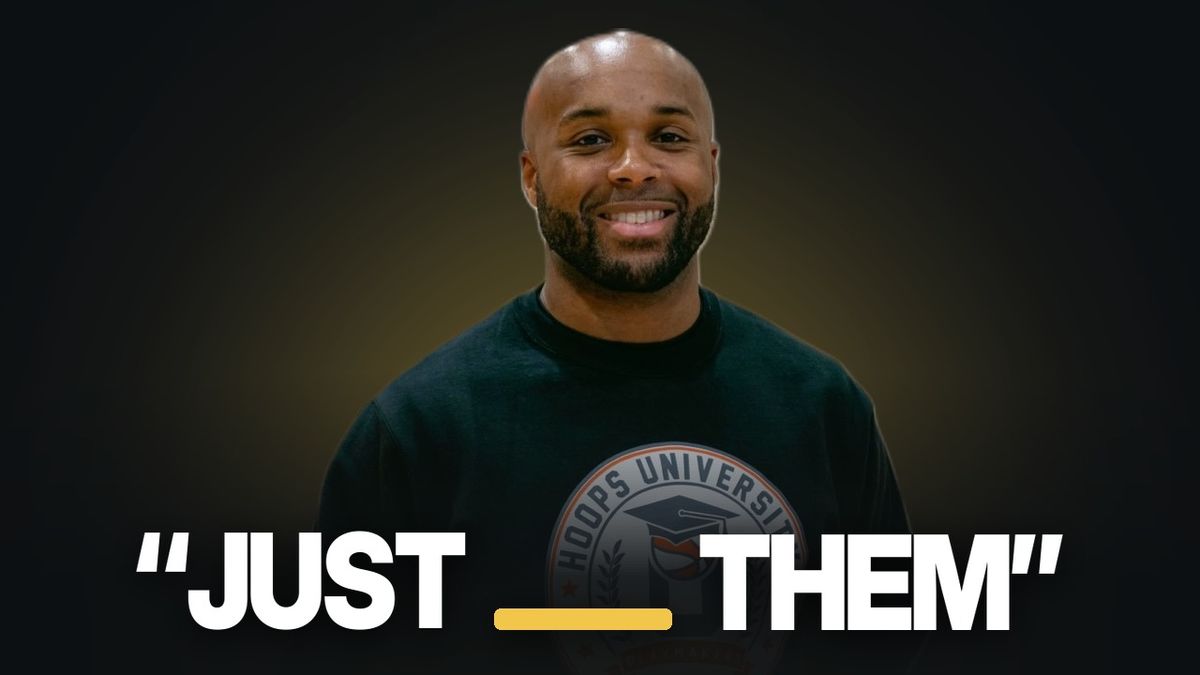
Myson Jones of Hoops University on the intake that turns a new family into a monthly member: a paid assessment, a feedback video and a phone call he records.
Myson Jones used to send families a link and wait. Sometimes he waited a long time. Today every new athlete at Hoops University in Greenville, South Carolina starts the same way: a $25 assessment, a feedback video, then a phone call. He leases his gym, he has had more than 100 athletes on monthly training, and he says he closes "a little bit under fifty percent" of the families he gets on that call. If your basketball training leads go cold while you wait on a reply, this is the part of his business to copy.
On this episode of the CoachIQ Podcast, host Brandon Evans, who runs his own basketball facility in Fort Wayne, Indiana, talks with Myson about each step of that intake, why he records every sales call, where his best leads come from, and what he plans to do when the gym gets full.
Why call every lead instead of sending a link?
Myson gives the credit to Ben Nabers. On a call one day, Ben asked him a simple question.
"Why aren't you calling people?"
Myson wasn't. "I was just sending the link and then waiting for who knows how long to hear back from them."
Now the phone call is a fixed step in the process, and it comes after the family has already been in the gym. Brandon runs a very similar intake in his own facility. His point: even five minutes on the phone shows a parent you are invested in their kid, and that is hard to get across in a sign-up link.
A link is easy to ignore. A call from the coach who just trained their kid is a lot harder to ignore.
Why charge $25 for the first assessment?
"Everyone does an introductory assessment, so they come in, they pay $25."
Assessments used to run on a set-aside day, usually a Saturday, grouped by grade and skill level. Myson is moving them into sessions he already has on the schedule, so a new kid fills a spot in a session that is running anyway.
Brandon's take on what the $25 buys: by the time the call happens, the parent has watched you coach and "they've gotten something from that initial twenty five dollars." A parent who has paid something, seen their kid train and gotten real feedback walks into the call with a lot less doubt.
What should the parent get before the call?
A feedback video. After the assessment, every family gets a video breakdown of what the coaches saw.
"I love using CoachIQ's annotation features with the feedback. Parents love it too."
He makes sure the session gets filmed, by a coach or on his own phone. "I definitely make sure we get that game film so we can give that feedback afterwards."
In CoachIQ, Video Analysis lets a coach play a clip, draw and add text on it, record their commentary over the top, then send the finished video to the family. Myson doesn't think anyone else in his area does this, and he is fine with that from a business point of view.
Brandon has seen the same thing work for a speed training coach. "That little piece of value, it goes a really long way."
What happens on the call?
"Once they get that feedback, we schedule a phone call and then that's when we present the programs that fit best."
There are two options. The main one is a three-month program. There is also a monthly option, which right now is mostly for hybrid and remote athletes. He has friends who sell six-month terms and do well with them, but he hasn't tried selling six months yet.
"Right now we're closing at a little bit under fifty percent for everyone we get on the phone call with after the intro assessment."
He also says some people would call that number too high, a sign he should raise prices or change his offers. Either way, the call is where the decision gets made, so it is worth getting good at.
Why record every sales call?
"We do record every single phone call."
Myson uses those recordings two ways. The first is getting better on the phone, and he compares it to something every player in your gym knows.
"Actually listening, not just reading the transcript, but listening to our phone calls, our sales calls, and as painful as those can be, I equate that to watching our game film and our lowlights as basketball players."
The lowlights are specific. A parent is ready to sign up and he brings up something nobody asked about. "Like why did I bring up this AAU program?" Or the parent asks about next steps "but I'm sitting here still trying to do discovery right now. Like what am I doing?"
The second use is content and ads. When a parent hesitates for a certain reason, that reason can become the next piece of content or the next ad aimed at families with the same worry.
Brandon reviews his own calls too. He found his most common objection had to do with scheduling, and he changed his schedule to fix it. His other finding is that the calls repeat: "you're gonna have the same three to five conversations over and over and over again." Once you know what they are, you can prepare a better answer for each one.
Which training leads should you call first?
Referrals. "Those are the strongest."
After that, Google. Myson says Google doesn't send him a lot of leads, but the ones it does send are "five to six times more likely to become a customer." Facebook brings him volume. Instagram is harder for him to measure, because he doesn't have tracking set up to connect a click to a sign-up.
He knows all this because he asks. "We track where all of our customers come from." When a parent says they like his content, he asks where they saw it and what they liked about it. "I'm a human intake form." He also points out that Google can get credit it didn't fully earn, when a parent sees you somewhere else first and then searches your name.
If your calendar only has room for a few calls today, start with the referrals and the families who found you by searching. That only works if you know which is which, so ask every family where they heard about you and write it down.
How do you sell training when the gym is 80% full?
"We've had over a hundred active monthly recurring trainees." Myson expects the gym to reach eighty to eighty five percent capacity at some point, and he is planning for it now. There are only so many hours after school and only so much floor.
One answer is the assessment change above: new kids join sessions that are already running instead of taking their own slot.
The bigger one is hybrid training. Myson runs it on CoachIQ through his branded app ("we white label it," he says). One athlete lives two hours away and another lives more than four hours away. They come in to train about once a month. In between, they have a program for daily work, film from their in-person session, and Myson can review their game film too.
That adds athletes without adding court hours. Brandon points out that families who drive that far take the session seriously, and coaches he has talked to say their hybrid athletes are often more locked in, because they have to understand the work to do it alone.
Why lease a gym instead of building one?
Myson has thought about building out his own facility. He gets the appeal. For now he is staying put.
"I really do like the cost structure and being nimble with leasing right now."
Brandon agrees that the building is the biggest bill most owners have, after staff. You can't run basketball training without a court, so the question is how much you pay for it and how locked in you are. Leasing keeps Myson's costs flexible. And his plan for more capacity is hybrid training, which needs no extra floor.
Why skip AAU?
Brandon asked if Hoops University runs AAU or club teams. "Capital N O."
They have run teams before. Greenville has so many teams that, as he puts it, "it dilutes the number of athletes that we can have to really have something quality." There's also the time. "I don't want the extra day away from family and I don't want the drama."
He knows some coaches make AAU work, and he thinks it can bring in more income. He would still "rather learn how to maximize this business model than add and muddy the two together."
Staying out of AAU also gives him something. He can refer players to any AAU coach in town. He has lost a few trainees to programs that offer both, but he says "the net positive of being exclusive has outweighed the trainees we've lost to others who have their own organization AAU and training."
Brandon runs his gym the same way, and he hears the same story from parents on his calls: a season of AAU didn't make their kid better, and now they want to train.
Here's a simple version to try this month. Charge a small fee for the first session. Film it, send the family a short feedback video, and then call them. Record the call and listen back before your next one. Ask every new family where they found you, and call the referrals and the families who searched for you first.
Find Myson at hoopsuniversitytraining.com and on Instagram at @mysonjonesbasketball.
Want to send feedback videos and run your training business from one place? Book a free demo.
Full Episode Transcript
Read the full transcript
The following is a lightly edited transcript of the episode above.
Brandon: Welcome back to another episode of the CoachIQ podcast here. I am your host, Brandon Evans. I am a basketball facility owner out here in Fort Wayne, Indiana, and I'm excited to have Myson Jones on today. He is the founder of Hoops University out in Greenville, South Carolina. I am gonna hand it over to Myson here and let him tell us how he got there. what his business is and give us an overview of who you are and where you're at today.
Myson: Awesome. I'm honored to be here. So I played college basketball D two in Anderson, South Carolina. I thought my senior year I wanted to go in corporate, wear a suit every single day, got to corporate, had three monitors, and gave it about six months and man, it was I was miserable. Couldn't stand just being sedentary and wasn't used to that type of structure. But I was prospecting. I got like fifty cold calls in an hour and I was smiling and dialing and going to doors and realized that skill set could help me with something else. I wanted to do something entrepreneurial to have that time, mobility, and flexibility. And I helped the local trainer on the marketing side and saw that the guy the he made like more in one session than I would make in a week. maybe week and a half and it made me realize, I can do this. I play basketball. I have a business acumen. Let me try this out. The goal frankly was creating something similar to CoachIQ initially before realizing how tough that really is. And just stuck with basketball training, man, that been doing it for seven years now.
Brandon: Nice, nice. And as of now today, where do you train at? you don't have a facility right now, correct? You're out of yeah, where are you at right now?
Myson: Yep, in Greenville, South Carolina. And honestly, man, I've considered a facility building things out and I know there's a lore to that. It's dope. But I really do like the cost structure and being nimble with leasing right now. So we've been leasing a facility.
Brandon: Yeah. No, there's obviously that trade off. Like there's some coaches we have that they don't have a facility and they have a great agreement with, you know, either like a local rec center or a church or a school, whatever. And they don't have to pay for a facility. Like 'cause obviously, you know, when you get into a facility, that's a whole other ball game. Like I've been blessed with my facility to have very low rent. But I know that's not the case for everybody. so keeping those expenses low, especially like, because that's the biggest expense, really, aside from staff, which I want to get into. the biggest expense is having the facility, like, and that's one of those you ha absolutely have to have. Obviously, you can't train basketball without a basketball court. so as far as staff goes, it looks like you have a n pretty nice staff built out. Tell me a little bit more about your staff.
Myson: Yeah, I mean I've got great teammates. Great teammates. So we've got I'm counting right now four we've got about six coaches that are helping us. Now for most people you hear that they're part time. There's one that is going to be full time at some point, but they have part time jobs. They have full time jobs. So they're there between the four to eight PM time frame whenever they can be. and we've got some admin teammates who honestly are lifesavers for me, two admin teammates that help me not have to focus on those things.
Brandon: Now a question for you when it comes to staffing, this is a big question from a ton of coaches, whether they have a facility or not. How did you find these people that you can rely on? So like six people that you can rely on in the space is a lot. Like that's blessed to have six people. I'm lucky to have I think five. Yeah, I have five total, which is amazing. how did you find your people?
Myson: Short answer is a lot of Facebook and and no matter the channel, it seems like whether it's Facebook, whether it's Indeed, it's somebody who sees it and refers someone else. That seems like it happens often. But Facebook primarily is the number one source how we find the most of our teammates.
Brandon: Yeah. Yeah. A hundred percent. I actually I've had luck with like just players I've trained. like I have a pro guy. he doesn't play pro anymore, but he's been one of our go to guys. like I said, I have a high school kid who he's a senior now, super mature. He told me he wants to get into coaching. I was like, All right, work with our younger kids. he's killed it. my manager is just a mutual friend. It's that's it's interesting. The like they see it and then they refer somebody. now when it comes to like what is your week to week look like? How do you structure or we're talking about your staff and everything, but how do you structure your week? Like what do what is your offering to people that want to come in? How what is your model right now for your business?
Myson: Now everyone does an introductory assessment, so they come in, they pay $25, and after they train, we usually either have a set-aside day, like a Saturday, that we have mostly introductory assessment trainees, middle school, high school, depending on their skill level or grade. Right now we're moving towards involving them in the sessions that we already have scheduled so that you know we're being efficient with that gym utilization. Once they do the introductory assessment, they get a feedback video. I love using CoachIQ's annotation features with the feedback. Parents love it too. I don't know many people, I don't think anybody in our area is doing it. Hopefully they do to help the athletes out. But competitively I like that they don't from a business perspective. Once they get that feedback, we schedule a phone call and then that's when we present the programs that fit best. And right now we're closing at a little bit under fifty percent for everyone we get on the phone call with after the intro assessment.
Brandon: Yeah, that's a as a as a healthy number. I
Myson: Some would say it's too high and we need to increase prices and offerings and stuff like that.
Brandon: Yeah, I mean it's yeah. but it's not like when I started, I do I do a very similar process. when I started doing that process, we were closing like 90, 95%. And I was like, all right, this is cool. This is cool, but we gotta increase something here. what I like about that intake process is one, you get on call with them and That's very important in my opinion from a parent that's coming into the program. Because like one, just off the bat, even if you just spend five minutes talking to somebody, that shows you like they're you're invested. Like that they're not just getting sent a link and signing up. And there's nothing wrong with that. Like that works for people. but it I'm on the side of give them a call. And what I really like about that, which we had another coach in the in the speed training world that did what you did and gave them like a piece of feedback after the introductory session. like that little piece of value, it goes a really long way. so do you do you record the session and then go into CoachIQ and use the features and everything? So you record the actual session?
Myson: Yeah, I do. First off I gotta give a shout out to Ben Nabers. He's the one that kinda got on to me about not calling people. I was just talking to Ben on a call, honestly, and he just said, Why aren't you calling people? Yeah, so I wasn't at first. I was just sending the link and then waiting for who knows how long to hear back from them. So yeah, wanted to mention that. And as far as the training, yeah, I do sometimes I either have a coach who r who records, sometimes I'll have my phone. Out. Honestly, we watch film during the session at times too, but I definitely make sure we get that game film so we can give that feedback afterwards.
Brandon: Yeah, no, it just having that piece of video or if you give them a packet or something, like you can give them whatever. but just having that is super, super effective, especially from a parent aspect, like, they actually paid attention, they actually are giving me something out of this and laying out a plan pretty much to get my kid better. I think that's so powerful in that initial sales process and allowing the parent to make a confident decision, not sitting there and so when you get on that sales call, like they are like, Okay, yeah, let's sign up a hundred percent. they're not sitting there going back and forth because they've seen your work, they see what you can do and they've gotten something from that initial twenty five dollars. so say you get them to that point and they sign up. what's Does your model look like for that? Like do you do three month commitments, six months, twelve months? In my gym personally, I do six and twelve months. So once they come in and do that initial trial process, that's their options of six and twelve months, unless I'm running a promo at the time. So what are your options if a parent comes to you after that and they say, Yes, I wanna sign up, what's next?
Myson: We have a three month option and we have the monthly which wanna change. The monthly is more for a hybrid or a remote setup, but that's gonna shift as well. I man, I've got some friends who do six month offers and I love hearing when they get record high months and sign so many athletes up. I just know for us, I haven't actually tried to sell the six month yet. And it's something I wanna get to, but right now we're only doing three month, primarily doing three months.
Brandon: Yeah, three months is good. There's times where I run promos and offer that three months. It's three months is like the perfect minimum time, in my opinion at least, in basketball, to where they can get integrated in the program, they can really start to see results and it allows them to feel confident to move forward if you deliver a good product. No, talk a little bit more about your month-to-month hybrid. I'm interested in that. I'm always interested to hear how coaches structure hybrid training. so talk a little bit more about that.
Myson: Yeah, we've because of CoachIQ and the app and we white label it, so it's nice to offer that. And for example, we've got a guy who is two guys. One's two hours away, one is four plus hours away. And they come and train. They have a program that they can use to do daily activities. And they also have film from the session itself. I can watch their game film as well. And we sort training typically about one time per month. So that is something that I really want to grow. We've had over a hundred active monthly recurring trainees and I'm thinking, man, we can be at eighty to eighty five percent capacity at some point in the gym. So how can we increase that capacity? And it's through the hybrid program or the remote training program. So that's been the primary focus as of late.
Brandon: Yeah, yeah. No, once you get to that in there's always going to be an in-person capacity. Like there's only a limited number of times that kids are available after school or on holidays, and there's only a limited number of space in whatever gym you have. So expanding that, cause really what you're offering is like at least what it sounds like to me, is like a h holistic mentorship, essentially. where you can watch their film and give them real feedback. And the value isn't only coming from their time on the court. You're extending it past all of that and becoming a source of you know mentorship for lack of a better word for these kids. And it doesn't matter where they're at. and if they can make it to you once a month and they're two hours away, that's great. and 'cause they live further, you know they're gonna come in and take that session as serious as they possibly can. Their parents aren't driving them two hours for them to mess around. Yeah. cool. Now when in I always like to hear when it comes to you talk about your lead process and how you get them to sign up, but where do these leads actually come from? So where do you get these leads?
Myson: The that's always a fun one. We get a lot of them from referrals. Those are the strongest. And I don't want to sound like an old school business guy like word of mouth is the best, but it really is, man. Like it's whether it's word of mouth like organic conversation like this or it's word of mouth marketing from an actual channel itself, that's where we get the majority of our leads. I will say Facebook has been really good for getting us volume and Google different story. It doesn't give us volume, but it does give us people who are, you know, s five to six times more likely to become a customer. We I don't really know about Instagram as much. You know, I don't have the metadata tracking set up to know that somebody clicked this Instagram link and converted into a customer. But we do get some organic leads as well. And we track where all of our customers come from.
Brandon: Yeah, no, Google is like you said, that's people are actively searching. So if you can be that place in Google where they're actively searching and like 'cause y you're not gonna search something without the intent to buy something. Like or get involved in something. Like if you're searching for AAU team, you're gonna look up AAU teams in my city. Like you're searching for basketball training, basketball training, Greenville or whatever. So Google definitely comes with high intent people. I've noticed in my gym as well, like I've I pulled the stat the other day. Forty two percent of my applications came from Google. and I went to the numbers and a lot of those people did sign up 'cause they're ready. They're immediately ready to buy, or sign up for something. And luckily that they chose us. But yeah, the leads in my opinion can come from a bunch of different places. But you have, like you said, your word of mouth, which as far word of mouth referrals kind of same thing. those people that's the easiest sell ever. Like yeah, because they already have there's likely a friend of theirs and they come in and they have heard nothing but good. They've seen their friend's kid get better and they've seen them transform. So it's like how can I pay? Pretty much. like at the end of the day, that's what it is. Google definitely high likelihood. Very similar to you, I don't have a ton of people that come from Instagram. I have a few, but I view Instagram more as like nurturing like people following you. They get into your they get into your ecosystem and you're posting good content, you're posting stuff about your training and then they're just getting blasted with information from you and they're like, this guy's good. And then maybe that sways them to make a decision.
Myson: Yeah. I've always r heard Google i it's unfair because somebody may see you on Instagram, Facebook, another channel, but then they go Google you and then Google gets that attribution, but they really saw you originally on a different channel.
Brandon: Mm-hmm. Yeah, that's why it's so tough to it's tough. That's why I just I just put a little thing in my forum that says where did you find me from? and then hopefully they put Instagram. Hopefully they do. but you can you can track obviously where people came from. But like you said, like maybe they saw you and then they saw your they saw Hoops University and they're like, let me Google that. And then they decided it came from Google.
Myson: Yeah. I'm a human intake form. When somebody says these days, I like your content, man, it's the wrong thing to tell me because I'm asking them where'd you see it? What you see? What you like about it and it's like, They weren't ready for all the questions afterwards, but it is important.
Brandon: It's funny. No, it's super important 'cause that's what you want to make content about. like the coaches that hit Instagram heavy and Facebook and are making content, you need to know what your client wants to hear. Like that's what I would when I first started, four years ago, like I would just ask every parent, like, what do you like, what do you want know? And just listen. And that's all and that's all your content ideas. Like if you get on calls with parents, record the calls, listen. Like there's all your content. get on a sales call or get on a discovery call or whatever you wanna call it, and the parents will tell you exactly what they want. They will tell you exactly what they want to hear. They and then you can just go make content about it. 'Cause I guarantee you it every other parent's like that.
Myson: It's funny you say that. We w it's funny you say that. We so we do record every single phone call. But when like you're saying, when I have the transcript and I can hear one thing I love doing is figuring out how I can improve my sales calls and my communication. And it has worked very well. The other thing, like you said, is using the information for content and for the advertising to see, okay, this parent blocked because of this. Let's see if we can make this an ad and if that ad can continue to g bring us more people like this with these same challenges.
Brandon: Yeah, I th I think that is just the biggest opportunity in growing any sports facility or program or whatever is just keeping the data of your calls. Like whether you're able to get a transcript or video recording, like however you can get that call, and not to like obviously you're not gonna blast out the call or personal information or anything, but like for your own use. Like I looked at for example, like I looked at all of our calls. And I forget what the number one objection was. It w it was something along the lines of like scheduling being an issue. so I was able to adjust my schedule and fix that. Like it people are gonna tell you why they're not gonna sign up. And obviously, like if people just aren't gonna sign up, they're not gonna sign up. But there's a lot of things you can do along that initial sign-up process that if you didn't record your calls, you would never know about. Like But when you watch it back or you read the transcript back, you see things and you're like, Why did I just say that? Like you're like, Why did I say that right there? Like they were on the they were just about they were just about to buy and I said like something and then they were they just went off the deep end and like it's over with.
Myson: Like why did I bring up this AAU program? Or they asked me the next steps or how can they move forward, but I'm sitting here still trying to do discovery right now. Like what am I doing?
Brandon: Yeah. Yeah, it's that's exactly what it is. Like they'll say they just want training and you start talking about something else and I'm like, my gosh. But no, it's that's the most valuable information in my opinion is can you get the transcript of your cause with parents?
Myson: Brandon, I equate watching or listening to our phone calls. Actually listening, not just reading the transcript, but listening to our phone calls, our sales calls, and as painful as those can be, I equate that to watching our game film and our lowlights as basketball players.
Brandon: Yeah. A hundred percent. That is exactly what it is. And for any sport, like if you're a football trainer or a speed trainer, like it's the exact same thing. Like you don't it's painful, like you said, and that's why a lot of people don't want to do it. Like it hurts to listen to. I hate it. Like I hate it so much 'cause I say stuff and I'm like, that is horrible. But you begin to see patterns in yourself and the way you speak and the things that you miss parents say. Because what you start to see is you're gonna have the same three to five conversations over and over and over again. Like you will have your outlier parents that kind of go off on a whim, but the majority of the conversations are the same thing. Like there's like I said, three to five things that the parents are gonna say that they don't wanna sign up because and how are you gonna respond to that in a way that's gonna shift their belief? that you are the right option. And they're able to make a confident decision that you are the right option. and this it's not about like that's the thing with these conversations. Like in sales, you're not like trying to manipulate people. Like we're trying to help your kid become a better person. Like is you're not trying you're not like manipulating people in like scamming them. And that's I think with that and how painful it is to listen to calls and just like feel feel that like just watching it just hurts. A lot of people don't want do it. and I think if more people did it, they would get much better results and just become a better communicator, which communication is key in literally anything. It's like you can't I try to always like if I tell the kids to do stuff, I have to do that in whatever I'm doing. Like I can't be telling them to watch film and I don't review my work. Like I can't be telling them to go put in extra work and I'm not I don't know, spending an extra hour trying to get people in or whatever. I j I just try to practice what I preach as much as I possibly can. Yeah, it's important. you just you treat because you're running a basketball business, you're an entrepreneur, you have to treat that as same as you did during basketball. And that's why a lot of sports players end up being like good entrepreneurs because they treat it like sports. competition, you get better, you practice, and then try again next game day. now you mentioned you go ahead, what are you gonna say?
Myson: Just fascinated by that too. So I play the keys, I play in church, and you know when I'm learning a new song, I genuinely believe learning a new skill helps us have that same hunger and also communicate better with the athletes when we're trying to teach them something new. And whatever your specialty your forte was in basketball, let's say it's shooting, I always want to equate that what is the equivalent in the business? Is it prospecting? Is it like you're saying improving communication? Like what is that one thing that we can just just obsess over to make it our asset. I that has been on my mind a lot as of late, but you were about to ask something.
Brandon: Yeah, I was gonna ask, you mentioned AAU teams. Is that something that you get into kinda moving along track here? do you do you do AAU teams or any type of club team or anything like that?
Myson: Capital N O. We have in the past. but man, it is draining on me emotionally. And he does really well with AAU and he's grown it and you know I think he's gotten to where he doesn't have to be on the court as much because he has teammates, coaches who are leading those practices and he's cracked it, cracked the code. For me, there are so many teams in our area and it dilutes the number of athletes that we can have to really have something quality. There's one team that does it really well here, I would say, from an economical standpoint. Short answer, definitely no, because I don't want the extra day away from family and I don't want the drama.
Brandon: Yeah, it's that's one thing I've never gotten into. like you said, I know that there's a lot of coaches that do a really, really good job with it. a lot of coaches that's what their entire facility does. but it's it comes with a lot. Like you gotta be prepared for everything that it comes with. Like if you're gonna travel, that's days of travel, that's expenses. Gotta get all the jerseys. You've gotta get all the communication. You gotta deal with players eight, nine, and ten on your rotation being mad that they're not playing. You gotta deal with parents getting mad about this person playing. Like it's i it's a whole other ballgame.
Myson: If you're running tournaments alongside it, I can see it. But if you're not running tournaments and you just have or you have really great relationships with gyms, and you can, like you were saying earlier, have very low cost of service. You're not paying a bunch of gym rentals for these practices, then maybe for me I can see it. But the for the majority of people, man, I just don't care for it.
Brandon: Yeah. Yeah. It I always say like if I was gonna do it, I would have to it would it would almost just be it wouldn't be I wouldn't do it as like travel team. It would be almost just an upsell from my ri my program I have now. Like we will have a team of seven or eight kids and you're gonna do the same thing that you do in my program, but we will have two practices like team practices a week. And then we'll go play on the weekend and a local tournament like ten minutes down the road. So it wouldn't if I were to do it, it would be something like that. Or it'd be something like we practice on the weekends and we have a we pay a different organization in town to come play games on Monday or Monday or Wednesday or like in that would serve as their practice. So kind of flip it. I could just never do the big tournament weekends every single weekend, like in one practice a week and all that. Like it just again, the people that do it, they do ag they But
Myson: Right. A hundred percent. And I've seen more people actually move towards it. And I do think it has potential to from a business standpoint generate more income for sure. Like you said, there are more expenses there and more issues that come with it. But again, it's something where I would rather learn how to maximize this business model than add and muddy the two together.
Brandon: Mm-hmm. A hundred percent. Like it would like I said, it would for me it would only ever be like an add on. Like it wouldn't be the main thing. it just it just wouldn't. And it's funny 'cause like I'm sure you have the same thing. I know if I offered it like as just the most basic AAU possible, like people would buy it. I get kids all the time that they're like, You should make an AU team. No. But I'm sorry. That's been that's been the battle the last four years. I'm like, no, I'm not I'm not gonna do that. I'm sorry.
Myson: Right. I hear you. I also like being agnostic and being able to go to different AAU coaches and say, hey, I refer this player to you or her refer. And even if they offer training, okay, you offer training and we have lost a few trainees toward to that, but the net positive of being exclusive has outweighed the trainees we've lost to others who have their own organization AAU and training.
Brandon: Yeah. No, it's like you s like you said a little bit ago, like it's just muddies the two. Like if you have the reputation you s you seem very similar to how I run my gym, like we have the reputation that we are training only. We're not getting into games. Like if you want to improve your individual skills, you know where to come. Like I've been starting to tell people just 'cause I've seen it so much. I'm like, where are the place that you come to after you're disappointed with AAU. Like that's what I'm starting to because that's I mean I'm sure you hear the same thing on your calls. Like that's one of the most common things. Like, we went with this AAU program last fall, it was really bad, didn't get better, and now I want to come work out. Like that is just a repeating journey. Yep. All right. Yep.
Myson: Yep. Did you s It is. Like I'll we'll wait for you. We'll see you. Once you get frustrated, you don't get much playing time. And if you ask if we play games, be small sided games.
Brandon: Yeah. I was like, we opened up a like a three on three like pickup night in our gym. I'm like, you can come to that. There's some kids we only see on that night. I'm like, okay. so funny. Or the other one you get is they work out with you when they're like younger, they get better, and then they're like, it's time to go play AU. They don't get better and then they come back. Those are those are the typical two journeys that we get. That's so funny. So, wrapping up synopsis on all of this, where are you trying to go this next one, two, three years? What is your goal? or what path are you trying to go in? Obviously it's really hard to predict the future. So do you ha are you somebody that has that North Star that you're trying to get to, or are you just pushing along every day and whatever happens, happens?
Myson: So our mission we want to help athletes graduate to a higher degree of fulfillment in life through the game of basketball. From a numbers perspective, we want to help develop three hundred student athletes to be successful on and off the court. And for me, my main focus has been finding out how we can increase or keep the quality of our service no matter who the coach actually is. So finding a system, systemizing the process, but keeping the experience personalized as well. So that's what I've been focusing on primarily. And also making sure like you said earlier that we have a holistic approach where we're using film feedback and remote communication for those who can't attend in person sessions. I'm fighting limiting beliefs that we can not help somebody who's remote as much as we can help them in person. I genuinely believe there are athletes out there who work so much on their own and solo that I can help if just as much, if not more, than somebody who's in person with me, depending on their diligence and their work ethic. So the goal is to find that system, find that process while also expanding our reach and helping out as many athletes as possible.
Brandon: That's great. A hundred percent. That point of the remote side of things. I we've seen some coaches do well, do really well with it. And it's really just like a mentorship. like they can come to you for whatever. I they may not be as like in the gym all the time, but honestly like Some of the coaches that I've talked to, they say their hybrid athletes are way more locked in than in person athletes because they take that time to go on their computer or whatever and look at what you're talking about. They're actually invested in the program. They understand what they're doing because they have to understand it to go do whatever you're working on, or they have to watch they have to understand it and watch the film and get on a call with you or however you structure it. so it can absolutely be done. Like It just depends on one, are we as coaches able to hold that person accountable and how? And then two, is the athlete gonna actually do it? and they are gonna actually buy in. If those two things are there, like you can absolutely get somebody better. Like you can absolutely take somebody from like whatever their goal is. Like you can take them from here to here. but a hundred percent. Well, this w this was very, very fun. is fun to talk about. We seem like we have very similar process in our gym and a lot of similar beliefs. Where can everybody find you? your Instagram, website, everything. We're gonna put it all on the screen here, as you say it.
Myson: Instagram at @mysonjonesbasketball and website hoopsuniversitytraining.com.
Brandon: Awesome. Awesome. We will we're gonna get this pushed out. I'm super excited about it. It was awesome to have you. Awesome to get to talk to you and learn about your business.
Myson: Same Brandon. I appreciate the invite, man, and hopefully we can do it again soon.
