Last updated: September 15, 2026
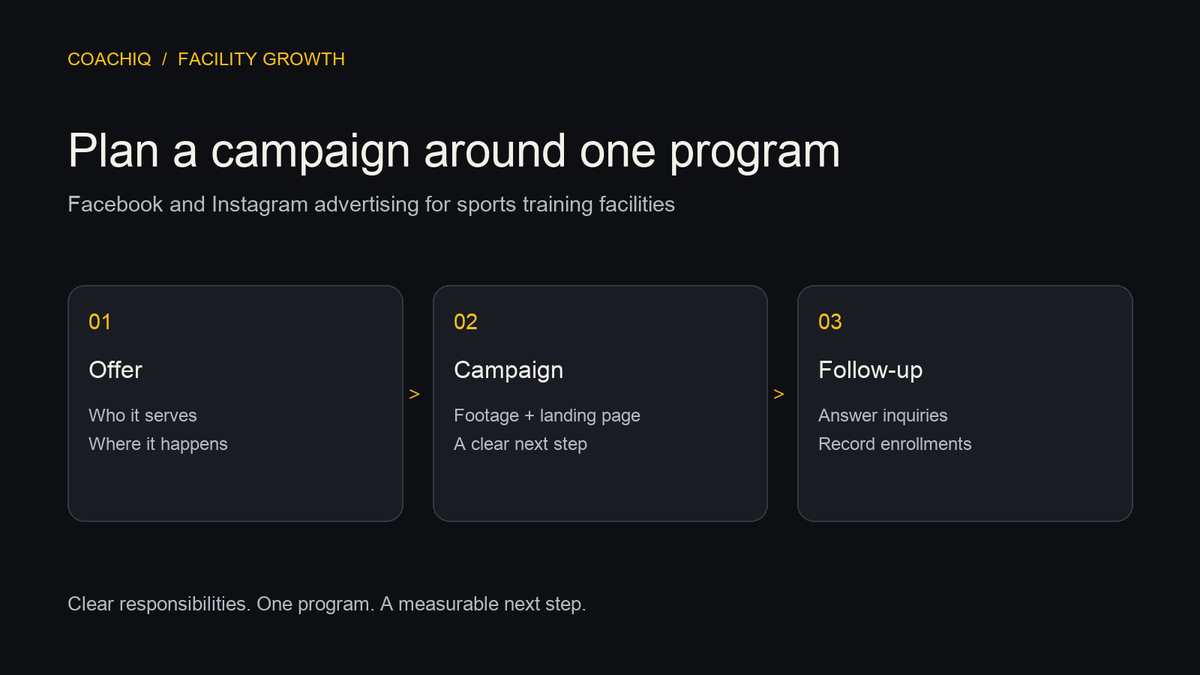
A Facebook ad campaign for a sports facility needs a specific program, a clear message for local families, a place to inquire, and someone responsible for follow-up. Start with those decisions before you decide how much to spend.
If your Tuesday and Thursday groups have open spots, the useful question is which athletes fit those groups and what their families need to know. That gives you something concrete to advertise.
Choose one program with room to grow
Write down the sport, age range, experience level, location, schedule, and available capacity. Then describe the next step a family should take.
For example, a basketball facility might promote an after-school small-group program for middle school athletes. The campaign can explain the skills covered, show the training environment, and invite a parent or guardian to ask about fit. That is an illustrative offer, not a reported CoachIQ campaign result.
Avoid promising access to sessions that are already full. If the only openings are during school hours, more inquiries may not solve the underlying schedule problem.
Give families enough information to decide
Your message should answer three questions:
- Who is this training for?
- What will the athlete work on?
- What should the family do next?
Show the coach explaining the program and footage that represents the actual training experience. A parent should be able to connect the ad to the facility they would visit.
Use footage you have permission to use in advertising. Keep the message tied to the program rather than implying every athlete will achieve the same result.
Keep the landing page focused on the offer
An interested family needs the details behind the ad. Put the program, location, schedule, and next step together on a focused landing page.
A useful inquiry form asks for enough information to have a relevant conversation. That might include the adult's contact details, the athlete's age range, and the program of interest. Review the form on a phone and submit a test inquiry before launch.
Make sure someone knows where that inquiry arrives. A working form is only part of the process; the person answering needs the offer details too.
Assign follow-up before launching
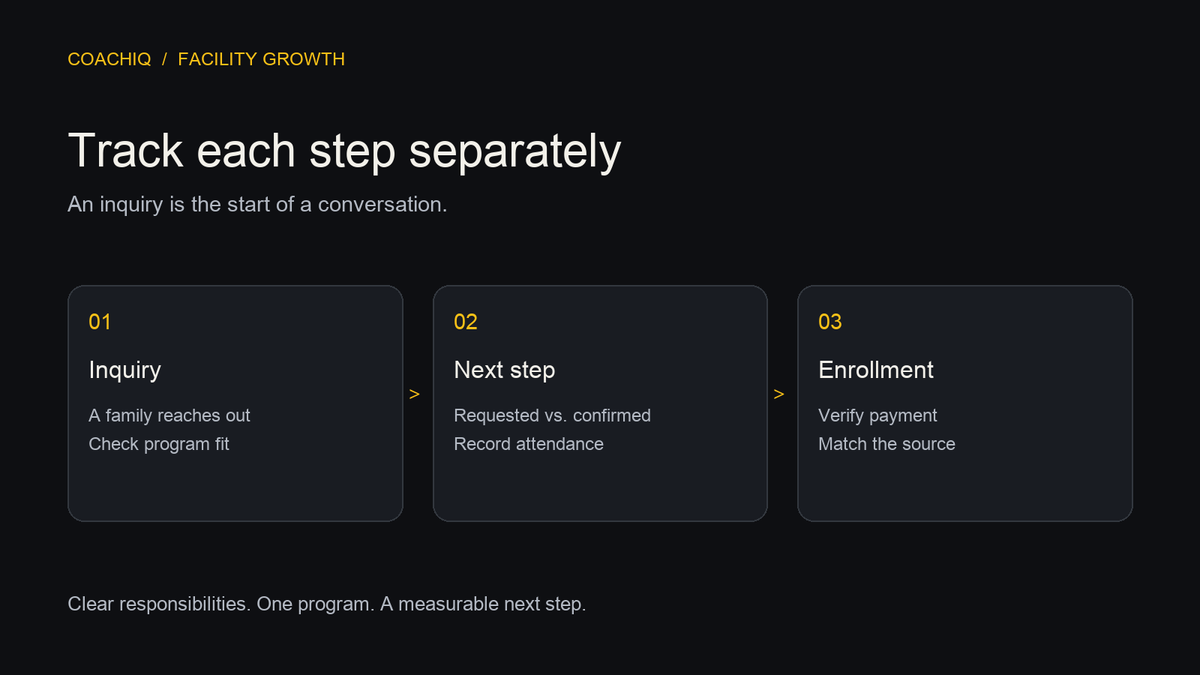
Choose a primary responder and a backup for coaching hours. Agree on when they will check inquiries and how they will record the outcome.
A helpful first conversation establishes the athlete's goals, experience, and availability. Then explain the appropriate next step, whether that is a program discussion, assessment, or session booking.
Record why a family does not move forward. Repeated questions about location, age range, or schedule can reveal information the campaign should make clearer.