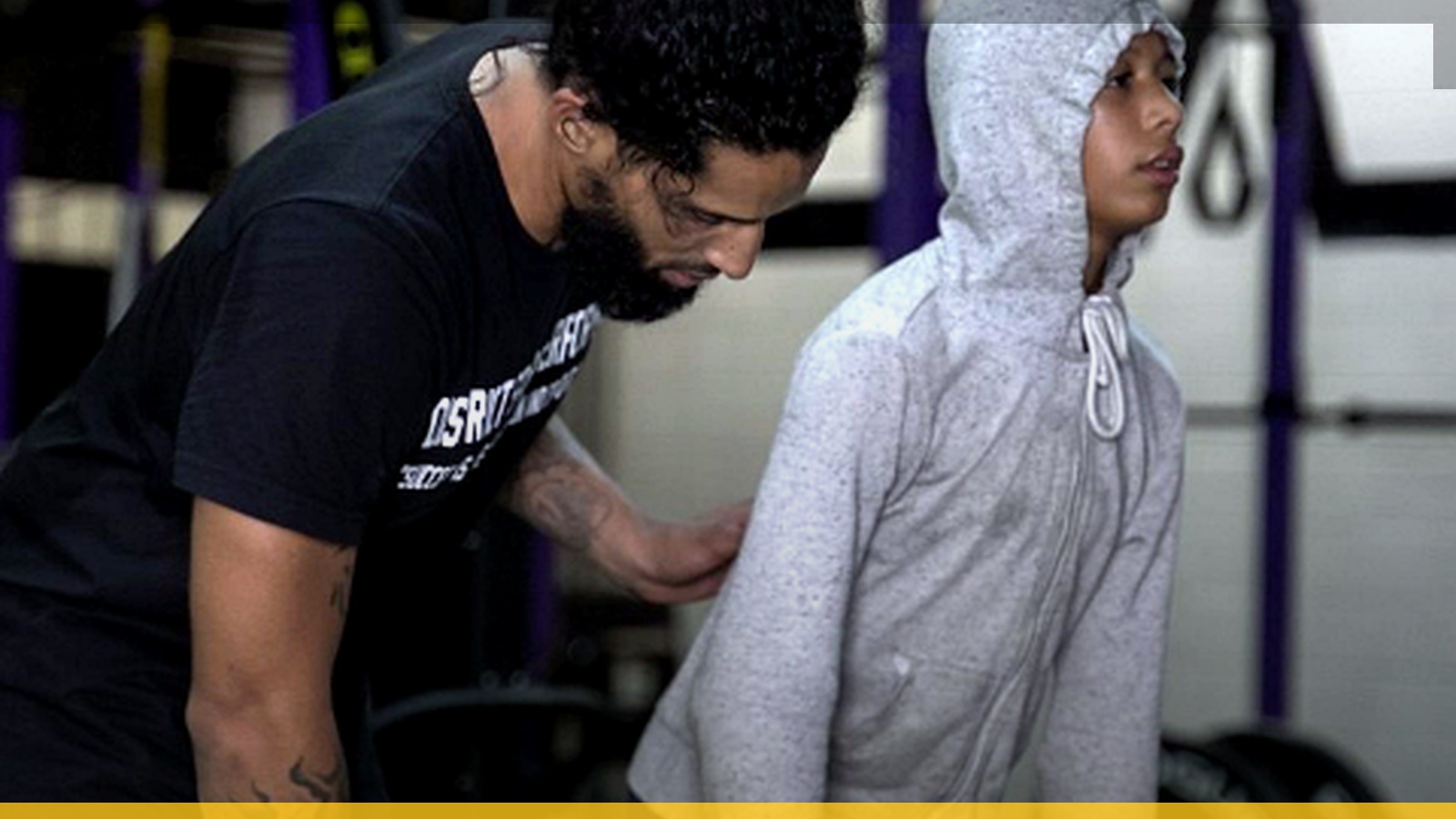
Football training business: lessons from Chris Aguado
Guide

Football training business: lessons from Chris Aguado

Chris Aguado didn't start playing organized football until ninth grade. No Pop Warner. No youth leagues. Ninth grade, from scratch. By senior year he was an all-city athlete. By junior college he had 11 Division I scholarship offers. He spent four years pursuing the NFL, trained alongside Terrell Owens and Antonio Cromartie, made it to […]

By CoachIQ July 7, 2026

Chris Aguado didn’t start playing organized football until ninth grade. No Pop Warner. No youth leagues. Ninth grade, from scratch.

By senior year he was an all-city athlete. By junior college he had 11 Division I scholarship offers. He spent four years pursuing the NFL, trained alongside Terrell Owens and Antonio Cromartie, made it to CFL rookie minicamp, and played in the indoor football league. When he retired in 2015, he started a nonprofit called No Handouts: free training for kids who kept their grades up. That nonprofit turned into Standard DB Academy, a seven-year football training business in Glendale, California.

Now he runs semi-private sessions, consults with high schools across LA, works NFL Combine prep at Sports Academy, and is launching a full football academy at Elite Performance Clinic in Sherman Oaks this August.

On a recent episode of the CoachIQ Podcast, Chris sat down with host Brandon Evans to talk about how he built his football training business from the ground up, why he deliberately cut his group sizes, and what it actually takes to break into sports consulting at the college level.

Who is Chris Aguado?

Chris Aguado is a football trainer and the founder of Standard DB Academy, a Los Angeles-based program specializing in defensive back development and speed training. He started playing organized football in ninth grade, worked his way to 11 Division I scholarship offers at the junior college level, and spent four years chasing the league before retiring in 2015 with no regrets.

For four years, his wife supported him financially while he chased the NFL with no income, raising their daughter together. He doesn’t gloss over that part. When he finally retired, he knew immediately what he wanted to do: help the younger version of himself.

He started the No Handouts nonprofit, opened a facility in Glendale that ran for seven years, and has spent the last two-plus years since closing it in 2023 rebuilding what his football training business is actually about. Today that means semi-private training, high school consulting, NFL Combine prep at Sports Academy, and the full football academy launching this fall at Elite Performance Clinic in Sherman Oaks.

What T.O. told him on a warm-up lap

During his pursuit of the NFL, Chris trained in a group that included Terrell Owens. On a warm-up lap before a session, he leaned over and told T.O. he’d read his book.

T.O. stopped.

> “Hey bro, first of all, we don’t like that. Don’t do that. Just be in the moment, be in the space. Don’t be a fan. Let’s just get better.”

Chris has coached by that principle ever since. Whether it’s the weight room, the track, a film session, or a PT appointment, be dialed in or don’t come.

> “We have to be present in what we’re doing. Whether it be the weight room, whether it be the field, the track, a PT session - whatever you’re doing, you need to be dialed in 100 percent.”

That standard became the filter for his entire football training business. It shaped why he scaled back from groups, why he charges a premium, and why his results speak louder than any flyer he could post.

How the No Handouts nonprofit became a football training business

When Chris retired from playing in 2015, his first move wasn’t a gym.

He started a nonprofit called No Handouts. Free training for kids who kept their grades up. The first tryout drew 75 kids, ran two full days, and had sponsors show up. He posted the video on YouTube.

> “That’s when I realized like, man, I think this training thing is kind of the route.”

He went back to school for anatomy and biomechanics, expanded from football-specific work to full sports performance, and started collaborating with physical therapists. The football training business that grew out of No Handouts wasn’t built on marketing. It was built on proof: a program that had to earn its reputation before it could charge for itself.

Why he scaled back to semi-private sessions

After the Glendale facility closed in 2023, Chris spent two-plus years figuring out what his business is actually about. Groups of 8 to 12 became one or two athletes at a time. Occasional seminars replaced weekly open sessions. Word of mouth replaced social media marketing.

The decision was practical and philosophical.

> “I’ve started to realize that it’s so much training nowadays to where I don’t really think that the kids or the families are taken as serious. Not every kid really wants to do this.”

One of his mentors gave him direct advice: charge a premium and the uncommitted ones won’t come back. It sounds harsh. It works.

He sees the same filter at work through his athlete management setup in CoachIQ: athletes who show up, engage in film breakdowns through the app, and communicate consistently are the ones who develop. The ones who ghost the platform self-select out.

Brandon Evans echoed the same logic from his own gym: “I changed my gym to six-month minimum commitments. On my sign-up form it says in all caps: do not fill this out if you’re not committed.”

One athlete proved Chris’s point. A kid who started on the freshman B-team and asked Chris what it would take to start on varsity. Chris gave him a routine, trained with him twice a week, and they broke down film together through the CoachIQ app between sessions. Nine months later, the kid started 11 games as a varsity sophomore.

“There’s no coincidence as to why this kid went from fighting for time on the freshman team to starting varsity. The kid just put his head down and worked.”

What does a premium football training model actually look like?

Chris is building a model where athletes pay around $1,000 a month for access to everything: two in-person sessions per week, a weekly check-in call, and content built out in the CoachIQ mobile app - hip mobility routines, ankle warmup protocols, MFR work, and film review they can access between sessions.

The math is simple: athletes who use the content between sessions develop faster. Coaches stop being the only delivery mechanism. Athletes who don’t engage self-select out without any awkward conversations.

> “There’s a lot of times the kids are asking me, ‘Hey coach, what should I do for this?’ I want to have that in the app so they can go in and access it between sessions.”

This kind of model runs cleaner with the right infrastructure underneath it. An automated scheduling systemhandles the booking logistics so the focus stays on coaching. Content delivery through the app means the value extends beyond the session itself.

How to break into sports consulting as a football coach

The next chapter for Chris is consulting at the college level: being on payroll or stipend for programs that want access to his evaluation and pipeline.

Video

The model already exists. A friend of his currently consults for Alabama, Ole Miss, Oregon, and Arkansas simultaneously. The job is simple: keep training your athletes, evaluate talent, flag the right people for the right programs. The NIL collective system has made it easier for schools to pay for exactly this kind of relationship.

His advice for coaches who want to get into consulting:

> “Consulting is giving advice. What value are you bringing? What advice are you trying to give? Go straight to your network and see who needs that advice.”

Chris didn’t cold-pitch anyone. Three high schools called him. Sports Academy brought him in for NFL Combine prep. The consulting work came from a decade of building real results: a nonprofit, a seven-year facility, and athletes who developed and went on to play college ball.

Brandon added one important caveat: you can’t consult on something you haven’t lived. The resume matters. Build it first. For a look at how that long game plays out, see how Lee Taft built his sports performance business over 35 years - the same principle, different sport.

The bottom line


POWERED BY

CoachIQ Logo