How do you grow a sports training business from Miami training sessions to seven locations worldwide? Coleman Ayers figured it out-and the answer isn’t what most trainers expect.
What started as court rentals and one-on-one sessions has become By Any Means Basketball, a global brand reshaping how young athletes experience the sport. Coleman has over 400,000 YouTube subscribers, a network of facilities, and a business model that lets his coaches take weeks off without everything falling apart.
In this episode of the CoachIQ Podcast, Coleman breaks down the systems, pricing strategies, and content approach that made it possible to grow his sports training business at scale-and why chasing viral content might be the wrong move for your local operation.
In this episode
- Why combining training with AAU creates a better athlete experience (and stronger business model)
- The systems that let Coleman’s coaches step away from daily operations-and how to grow your sports training business without burning out
- How to price your services based on value, not what competitors charge
- Why 500 local followers beats 1 million random views
- The “binge bank” content strategy for coaches who hate creating content

From Miami facility to seven locations worldwide
Coleman’s journey started like many trainers-passionate about basketball, eager to make an impact. But around 2021, something shifted. Opening a facility in Miami marked his transition from basketball trainer to business operator-a shift that required thinking differently about scheduling, payments, and client relationships.
“That kind of marked the transition at least personally from like a basketball trainer to also somebody who is very interested in the business side,” Coleman explains. “And then from there, just through some lucky breaks, started traveling internationally.”
Those international trips changed everything. Seeing how European clubs operated-the holistic approach, the federation oversight, the emphasis on development over tournament results-gave Coleman a blueprint for something different.
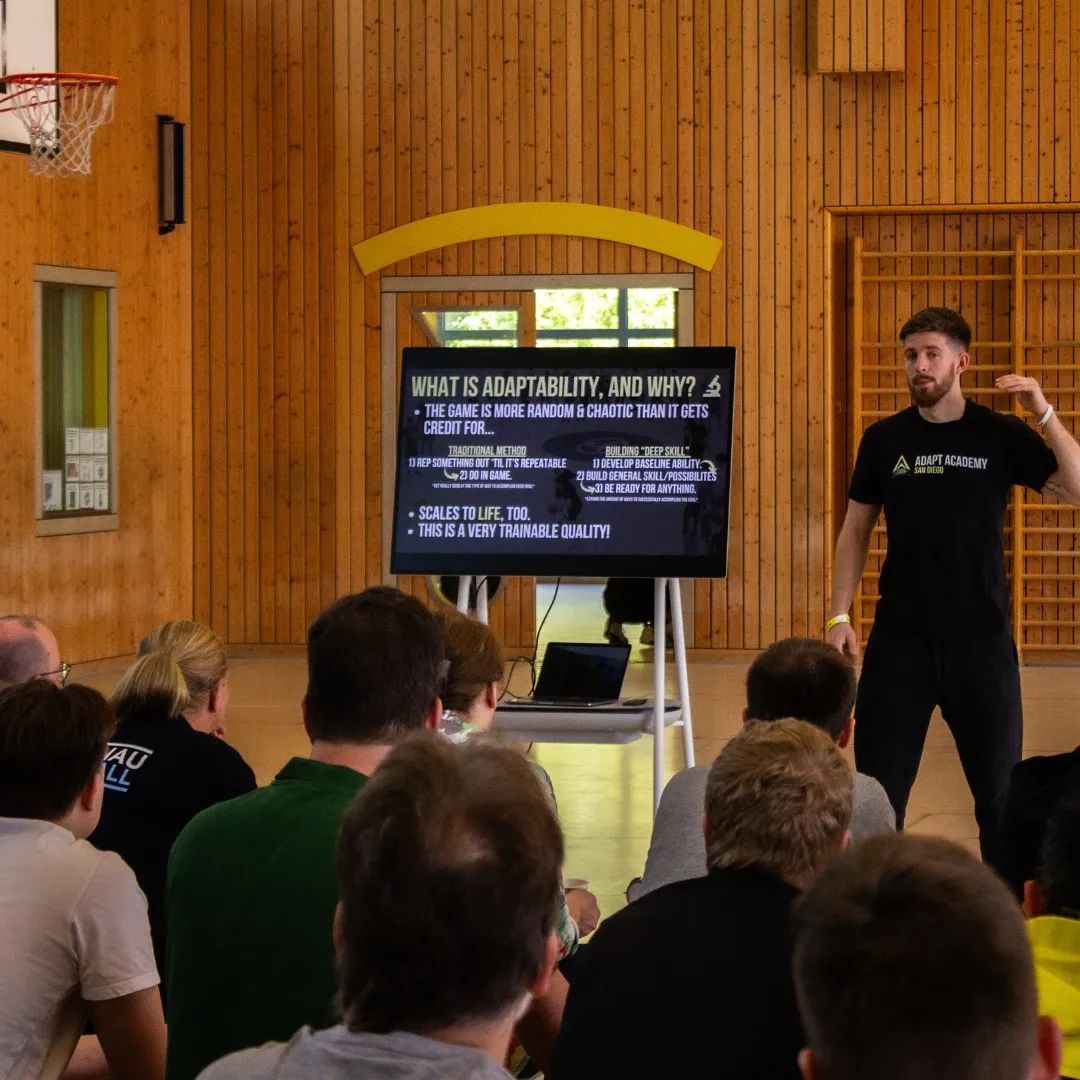
The result? Adapt Academy, a program that combines training and club basketball under one roof. It’s the “anti-AAU” approach, designed to address the pain points parents kept bringing to his Miami facility: too many games, too much money, too much pressure on 12-year-olds.
The holistic model: why training-only has limits
Not every market needs the all-in-one approach. Coleman is clear about that. Some cities have thriving training cultures where parents prioritize skill development and pay premium rates for it.
But in markets like Miami and San Diego, Coleman noticed a ceiling. Parents would invest in training, but club basketball always came first. The priority was always AAU-even when parents complained about the experience.
“There was only so much that we could provide to them when we knew that the priority was always going to be club basketball,” Coleman says. “So we go, ‘Hey, why don’t we combine these things where we take the positives of Europe and beyond and the positives of American basketball and put them all together in one?'”
The key insight: it’s not about choosing between training revenue and club revenue. It’s about recognizing which model serves athletes best in your specific market-and building systems to deliver that experience at scale.