Podcast
How Jae Taft sells six and twelve month memberships at Vision Basketball Academy
Jae Taft opened her facility, dropped month to month, and sold three of five membership spots before the announcement email ever went out.
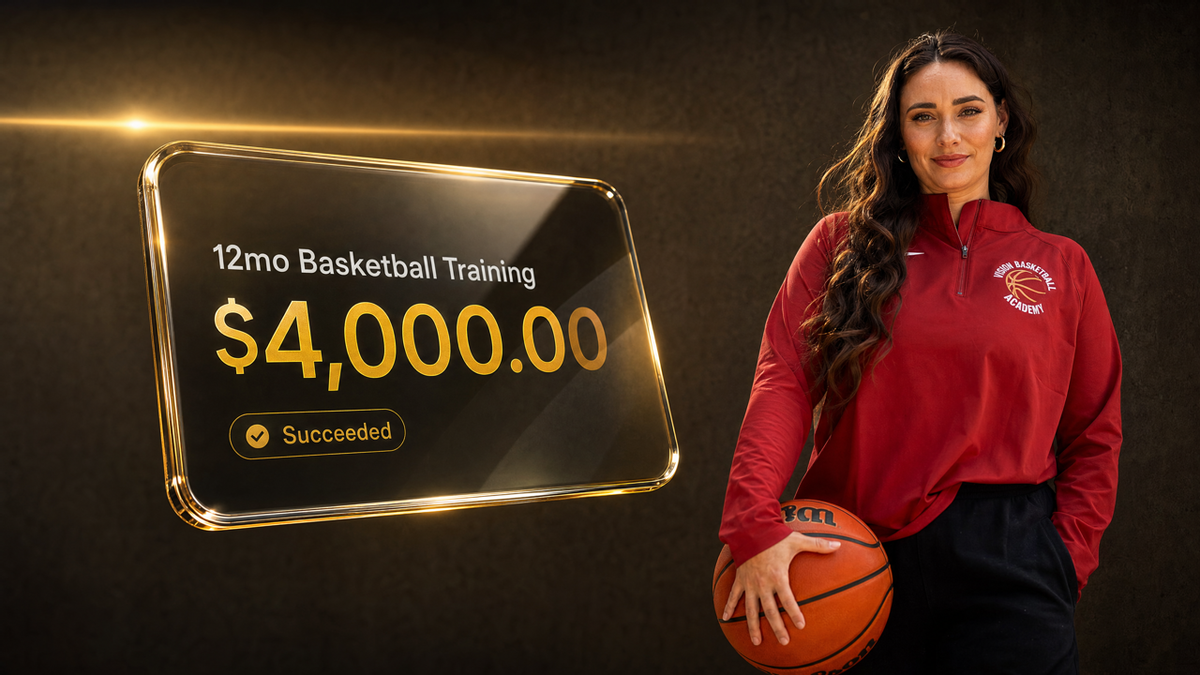
Most coaches treat a price increase as a pricing decision. High ticket sports training is really a sales decision, and Jae Taft found that out the hard way when she moved Vision Basketball Academy from month to month memberships onto six and twelve month commitments.
Jae was last on The CoachIQ Podcast in February, when she was still running out of a rented gym and the facility was a plan on a spreadsheet. Since then the facility opened, her business partner left, and the whole offer changed shape. She came back on to walk through what the build out actually cost, how she moved existing families onto a higher price without losing them, and why she now sells fewer memberships for more money.
What does high ticket sports training actually mean for a small gym?
For Jae it is not a single premium package bolted onto the old menu. It is the whole model.
"We've moved into having only a six or twelve month commitment to our training," she says. Drop ins still exist, but the price went up deliberately so the membership is the obvious choice. Private training got scarcer on purpose too. "I'm only taking like five people within a three month span. But if you're training with that, you're paying a pretty penny for that."
That is the part coaches miss. High ticket sports training only works when everything around it supports the decision. If the drop in is cheap and always available, the commitment has to compete with it. Our guide to pricing private training sessions covers how to set that ladder.
What did the facility build out really cost versus the plan?
Before Jae talked to a single realtor, she opened a spreadsheet.
"I just put every number and anything I possibly needed for the facility on a spreadsheet. And I was like, what am I realistically looking at?"
The point was to avoid the trap most first time owners fall into. "I didn't want to go in thinking I needed 30,000 and then, no, I actually need a hundred K."
It worked. When the real invoices landed, her estimate was off by about five thousand dollars, mostly the court and the first and last month of rent. That is an unusually tight forecast for a first facility, and the reason is simply that she did the arithmetic before she got emotionally committed to a building.
If you are at that stage, our breakdown of basketball training facility costs and the fuller financial breakdown of opening a facility are the two numbers-first places to start.
How did she actually find the space?
Through a broken rim.
The gym she was renting had a rim that kept breaking. Fixing it put her in touch with someone, who knew a realtor who handled commercial space, who knew a contractor. "Literally it was just through conversation with people and networking and being with people who have done it before."
No listing site. No broker retainer. A maintenance problem she had to solve anyway turned into the chain of introductions that got her a building.
Why is the flooring almost always the biggest line item?
Because most coaches price hardwood first and stop there.
Jae went with a sport court instead, and she is direct about why it fits what she actually does. "What we do is we train. We're not planning on really running games." The saving was significant, and the maintenance burden is lower.
The wider lesson is to price the floor against the work the floor has to do. A training facility and a game facility are different buildings with different economics.
How do you move existing families onto a higher price without losing them?
Carefully, and not all at once.
Existing members stayed on whatever they were locked into. The six and twelve month commitment rolled out to new families first, and to existing ones as their current terms ran out. Nobody got an ultimatum.
Then she did the thing most coaches skip. She looked at who was already behaving like a long term member.
"When I did month to month or three month commitments, by the time I switched, parents were already entering into their sixth month of being committed or longer."
The commitment was not new. Only the paperwork was.
How did she sell three of five spots before the announcement email?
She offered five spots. Three were gone before anything went out.
"I just knew the parents. That's the thing. You have to know your clientele from the business side."
One family schedules their life six to eight months ahead because of a parent's job. For them, paying once and being locked in was easier than a monthly decision, so Jae went to them directly rather than waiting for a broadcast to do the work.
That is the whole argument for a small roster. When you have fewer families and you actually know them, a launch is a series of conversations you already know the answer to.
Does high ticket sports training take more work to sell?
Host Brandon Evans, who runs his own facility, pushed on this, and the answer surprised both of them.
The effort to acquire a high ticket client sits very close to the effort of acquiring a month to month one. The ad spend is comparable. The call is comparable. What changes is what happens afterwards.
A two hundred dollar monthly member can buy, never speak to you, and cancel without friction. A family six or twelve months in has to end a relationship, not a subscription. Jae puts the trade plainly: "You're gonna have probably less athletes in the gym, but it's gonna be the higher quality, the more relationship building."
If you want the unit economics behind that, we broke them down in how to run a basketball training academy on memberships.
What does an application form filter out before a call?
Vision's website does not have a Book Now button. It has Apply to Train.
"I think that word immediately, apply to train, just kind of sets up a standard where it's like, I have to apply to this."
The form runs around fifteen questions and asks the parent about themselves, not just the athlete. How committed are you. Most of her athletes cannot drive, so the parent is the one signing up for the logistics whether they realise it or not.
Jae reads the answers for detail rather than content. "How committed are you as a parent? And they're like, very. And then I'm like, are you coachable? Yes."
She is honest that the filter is imperfect. A rushed parent has turned out great more than once. But the pattern holds often enough to be worth the friction. More on structuring that first conversation in our guide to the basketball trainer sales process.
What actually scared her about the switch?
The obvious thing.
"Right off the bat, my brain's like, no one's gonna sign up like this. Oh my god, I just tanked my business."
Then she did the maths on what families were already spending. Between two hundred and four hundred dollars a month, most of them were paying more over a year than the commitment would cost. The commitment was the cheaper option and it read as the expensive one.
Her advice to anyone in that window is unglamorous. "Anytime you switch something or you do something new, you literally just have to trust it. And then you finally get that one person that signs up for the membership, and then it helps you get through the next one."
What changes when your coaches run the sessions?
The standard has to survive without you in the gym.
Jae is explicit that a facility owner cannot run every session, so the model only holds if the coaches can deliver it. That means giving them room to coach rather than a script to read, and trusting them to stop a drill and teach when the moment calls for it.
It also means the offer and the standard have to match. "If you want to train high level kids and you're not offering a high level program or a certain standard, you're not gonna attract that. You just gotta let that standard be attractive to people."
Where to follow Jae
Jae Taft runs Vision Basketball Academy in Denver, Colorado, an all girls basketball training facility.
Instagram: @coachjaetaft
Vision Basketball Academy: @visionbasketballacademy
Her first appearance on the podcast, from when the facility was still a plan, is here: how Jae Taft built Vision Basketball Academy.
If you are moving to longer commitments and want the memberships, applications and payments running in one place instead of three, book a free demo with CoachIQ. CoachIQ is trusted by 750+ sports coaches and training facilities.
Full Episode Transcript
Read the full transcript
The following is a lightly edited transcript of the episode above.
Brandon Evans: All right. We have a returning guest here, Jae Taft out in Denver, owner of the Vision Basketball Academy. Last time you were here. You had not had that yet, correct? Or it was was it even like a thing? I know you talked about it a little bit.
Jae Taft: Yeah. Yeah. We it was it was a thing. I just the ownership or my business partner left, so big changes.
Brandon Evans: Yeah, big changes. so I know we we we talk a lot obviously outside the podcast, so I wanted to talk about obviously the build out of your gym. you've had it for how long now?
Jae Taft: It we started training in May. So four yeah.
Brandon Evans: Okay, so you you're in it. Yeah, you're in it. I wanna talk about again as outside knowledge, the your membership model you're moving towards, your longer term memberships, how you're doing that, what that all includes, and obviously just the day to day running the facility because that's that's a d very, very big undertaking. So let's start with I wanna I wanna start about On the build out. what was the build out of your facility? What was that process like? I know for me it happened kind of way faster than I wanted it to, and I had to spend much more money than I wanted to just because I needed to get in a place. what what was your process like as far as finding that supplier, getting everything in? Like, did you do everything yourself? Talk about that a little bit.
Jae Taft: Yeah, absolutely. I mean, same with you, it happened way faster than I thought it was gonna happen. Cause it was like one of those things, right, where you dream for years of having the spot and then once it's almost like the green light, it's just like nonstop. So that's yeah, that's literally exactly what happened. the biggest thing was before sorry, my dog's count. Before before
Brandon Evans: You're good. Featured guest.
Jae Taft: I know. It's get go. Okay. But before we before like I even had chats with people, I just put every number and anything I possibly that could have I needed for the facility on a spreadsheet. And I was like, what am I realistically looking at? Because I think the biggest thing was, okay, month to month I have the income to run this thing. Month to month I have it. But it's that initial investment, do I have it or do I not have it? Like so that was like the biggest thing. Like you said, you're spending a lot more money than you originally think. So it's like, is this doable to actually get into the building. So for me, I just didn't want to go in with thinking, I needed 30,000, you know, and then no, I actually need a hundred K, you know? So like I didn't want to go in there thinking that. So yeah, that was the biggest thing. Taking spread Excel spreadsheet, putting down, getting all the numbers. And then I afterwards I was like, okay, we can do it. We have the funds. month to month and that initial investment to get into the building. Now I like just use my yapping skills and I started talking to people. And I just was like, hey, I just started to slowly kind of peop like how the conversation got started actually was the gym I was in previously had a really bad rim. on one of the baskets. It would break at the bottom for some reason. Like the way the basket was put in, it would break. So anytime somebody would shoot, it was like the rim would just make a lot of noise and it would go really fast. And so it was one of those. So that was the ongoing joke of our training. And then a parent brought it up and I was like, Yep, I'm like, hey though, maybe soon we're gonna be in a facility, you know? And then it just started from there. And then that guy actually opened up CrossFit gyms before
Brandon Evans: Great.
Jae Taft: So I started kind of talking to him and he knew a realtor that did the commercial space. So then I got in touch with that realtor and then that contractor. So literally it was just through just conversation with people and networking and being with people who have done it before was like a really big, a really big thing. So that was kind of the initial conversation, getting started, networking networking with people, all that kind of that kind of stuff. So
Brandon Evans: Yeah. cost wise, what's I know this is usually the same answer for everybody, what was your biggest cost? Like what was the single big biggest expense? I have a interesting point on this. I think a lot of coaches are would be interested to hear.
Jae Taft: Yeah, sleepy similar. To the cost, it was only off by like five thousand was the court and the the rent like me actually putting a like a the first and last month's rent to my place. It was very similar, in cost. I think actually the hoop was in I have to look back, but I think like the hoop was included in my court cost, like all in one. And I think without the hoop it would have even been closer, you know, in in the cost. So those were my two big, big ones.
Brandon Evans: Yeah. Hm. Yeah. Mm. Yeah, it's always like it's always the floor and like I think I'd I'm not sure if I told you about my whole floor debacle experience, but though I wanted to bring that up because I think a lot of people that currently own facilities, they if they're not happy with their floor, I actually looked on where was it? I had a a friend out in California that's friend we follow each other on Instagram, whatever you want to call that. he I was complaining about my floor on my story and he swiped up and said, like, hey, I got this floor from China. And just for context, I have thirty six hundred square feet of flooring. And I got like your classic sport court, like, you know, that you see in like all the all the places, like the little tiles. And like my my facility doesn't have air conditioning or like we have heat, but that's about it. sucks, but it's hot and it's very cold. anyways
Jae Taft: Mm. Yeah, that's us too.
Brandon Evans: Like so like in the summer i I'm in Indiana, so it gets humid and it would absorb all the humidity, kids it would literally be like a slip inside around the court. So like I'd have to do stationary workouts. It challenged me as a trainer. but it's not ideal, obviously. So I spent like forty grand or so on the flooring between like thirty-five and forty. And this new flooring I got from China, it cost me like ten grand. So like I d I think back at that now, like I could've opened this up like a many, many months before I did. like ten grand and it's been an amazing flooring too. Like it's now like it's cheap flooring. So I think the name of the company was like Z S floor for any trainers out there that want a new floor. it it they the company was really really communicative.
Jae Taft: Mm. Ha ha.
Brandon Evans: I think communicative is a word. but like it was great. They got our logos in there, it's be a different color, like it was cool. so yeah, I don't know if you have any cheaper flooring alternatives, but I know flooring is the absolute big biggest expense. And if I was gonna do it over again, like say I built a second facility, I would a hundred percent get more flooring from that place. A hundred percent.
Jae Taft: Yeah. Absolutely. Yeah, I mean it was crazy just to see the difference in what a hardwood floor is versus the sport court. It's it's unreal and and it's like again, like what we do is we we train, we're not planning on really running games or like being like that. So it's like you don't in the court I'm happy with it. It's Versa Court and I'm really happy with it. same thing, different colors of my court, the logo was on there, like I could have added different lines if I wanted to. So, like, I'm very happy with it as well. But yeah, it's just like, man, like the amount of money I saved going with like more of a sport court type of option than hardwood. And too, it's like hardwoods, like you gotta take care of it. I'm not saying you don't have to take care of your floor with you know with a sport court, but it's just a lot yeah, there's a lot more maintenance, and actually, I put the court in fully myself. I did it like a hundred percent myself. So the fact that I like could do
Brandon Evans: It's pl it's plastic though, like Yeah, I people that have like like my mentor Ryan Razucki in California, he has hard f hardwood for in his his second and third gym, his San Marcos gym and his Marietta gym in San Diego. I respect him for that. It's amazing. Like his gyms are amazing. but I I respect him for that. Like the he's built an awesome gym, awesome facility. I just I would never I can't I can't. I can't. Hardwood is like obviously hardwood is like the ideal.
Jae Taft: No, I'm good. Yeah.
Brandon Evans: But like you know, I'm a I was a smaller program and I have an old industrial warehouse that leaks water everywhere. So not ideal. yeah, it's just it's tough. So now that you had the facility for a few months, what's are some things that have changed about about your program, how you run things, specifically want to get into
Jae Taft: Mm-hmm. Yeah. Exactly.
Brandon Evans: you moving into the longer term memberships. That's something that I obviously we've we've talked about a bunch. I can relate to a lot. so talk about what specifically your memberships are moving into or if they've already moved there, I'm not sure exactly where you're at, but touch base on that.
Jae Taft: Yeah, so we've moved into having only a six or twelve month commitment to our training. it has been great. Like we're rolling it out now, so we're just now starting to get people, new people committed to it. and for me, like as a trainer, I know I'm probably speaking for yourself too, it's like Like development is our thing. Like that's what we want, you know, we want to develop. So for me as a trainer, it's really sometimes hard when kids are just like here and there training. You know, they come in for a drop in once every other week. They train, they get a good workout in, but like I like to build. I like to take an athlete and like build off of the skills that we've already done. Even if they just come in once a week or we have a once-a-week package and we have an unlimited package, because we do have kids who do like to come in twice a week or or stack a workout. And it's just like you see it, you know. I'm starting to see the girls that have been with us for two, three years train, and then we have a new like girl come in who's newer to training, and you just see the difference. But it's because of the consumption. Consistency because they've been with us for longer, you know? And and I think also too, at least I hope this is the message that comes across is that like to parents when I'm on these sales calls or these introduction calls, is like I care about your child over money. And I know that that's I love business and we're running a business and I gotta pay rent. Like I have to care about money at some point. But it's like, hey, like I want you to know like this is something that like we care about your child. Daughter's development, not just a quick cash grab type of situation. So, like within that, it's been a lot of experimenting on like, okay, if I want people in my memberships, okay, now I have to like make drop-ins. I gotta jack that price up because then it only makes sense. to be in a membership, you know, or or like even like private training, like dwindling that down or I've done stuff where I'm only taking like five people within a three month span. But like if you're training with that, like you're paying a pretty penny for that, but it's more of a higher ticket item. It's not just you're coming in with me for an hour. It's like we're really like building a personalized plan. There's homework, there's all these kinds of things. So really just elevating your training experience other than like Okay, pay whatever for either a drop in or just a month to month thing and then maybe I see you next month, maybe I don't. So that's been so that's been like a big a big change.
Brandon Evans: No, the the it's high ticket. so like you said to that original point, parents they look at it immediately, like you go through the sales call and they're like, I have to pay three grand for this. Like they immediately immediately like it it comes off as, you know, a money grab. At least I think it comes off to that if you don't set it up properly. because it's like why am I paying three grand for this? Like everybody else charges twenty dollars a workout, like blah, blah, blah. So it's scary, like I know for me it was scary to switch to that 'cause like I got bills to pay, I got trainers to pay, like so I think if it's something that that I was able to fall back on was I had all of my monthly members from previous and I just kept them on that because they were loyal. So like I told them like, Hey, you guys are all we're changing to this. These are the new the new way we're doing things. You guys are all gonna stay on what you're on as long as you stay on it because you know, I value your Your loyalty 'cause that's the whole point, it's whole purpose. I'm not gonna go to my existing customer base and be like, Hey, you need to pay me three grand right now. or you can't come. but the the reason I had that or the thing I liked about having that is I felt very comfortable to switch to only selling that long term high ticket deal now because I had that monthly recurring, like my bills are pretty much paid, like for the most part.
Jae Taft: Yeah. Hundred per hundred percent. Yeah. Yeah.
Brandon Evans: and and I felt safe to to do so. And there's just so many there's not like a right or wrong way. Like high ticket's not the only way, monthly membership isn't the only way, but switching to the high ticket has I can't even like tell you how much better it has been. Like like I'm I'm going into like month nine ish, eight or nine doing that. And like the quality this is gonna not it's gonna sound bad. Like the quality the quality of families that come in are unbelievably better. Not not that like when I say quality, I don't mean like one family is better than another, but like one family may not come in here for that like long term development and then some will, which means they will, you know, they will care more. So just for me
Jae Taft: Hundred percent. Mm-hmm. Mm-hmm. Mm-hmm.
Brandon Evans: And my my gym manager Chase, like the admin side of things, dealing with the parents, like we don't have to do that anymore. Like it's literally just like check ins, like, how's everything going? Do I great? Like, cool. Like it's it's pretty much eliminated the admin side of things. So I I wanna dive in on the the sales process of that because like I just referred to, that's the most important part of the entire thing.
Jae Taft: Mm.
Brandon Evans: and a a lot of coaches and facility owners, like I myself, I didn't really know like how to manage a proper sales process to get somebody to buy, especially to buy like if you're gonna get somebody to buy something that's two grand to six K or whatever you wanna charge, it's gotta be good. So talk about your sales process. Like I I want you to go through the somebody comes to your website, how do they get into the gym with you? How do they go from viewing website or your social media to
Jae Taft: Mm-hmm. Mm-hmm. Yeah.
Brandon Evans: Purchasing a six or twelve month membership.
Jae Taft: Yeah, absolutely. So, on my website there's a button that's just like apply to train essentially. And I think that word immediately apply to train just kind of sets up a standard where it's like, I have to apply to this. Like and it starts to kind of put like, yeah, like a standard to it. Like you don't just apply to like anything. You know what I mean? So I think that right off the bat. And then I mean you helped me a lot with this 'cause like you showed me your form because some of the questions I was like, what's some good question to ask? And I just have like a form that's about I think it's by the end of it about fifteenish questions, but it really dives into like, okay, like even the parent, like parent, how committed are you? Because again, majority of The kids that train with me don't have licenses, you know? So they have to get brought there. so it's like, parent, how are you committed? Like, right? And then there's even things like cultural stuff. So, hey, is your kid coachable? Like, how do they respond? How are they with other teammates? And of course, every parent's gonna be like, they're great. You know what I mean? But it's like, but it's just it's a kind of a standard of like we're diving a little bit deeper into just like Like we have a standard here at Vision and we're not just gonna take anyone, you know, and so they fill out that form, they end up getting a automatic text a or automatic and or automatic email to say, Hey, we'd love to set up a call with you, would love to chat and then They respond to that and then we set up a time to call. Typically it's the next day, but if not, like within that week, we're scheduled for a call. And then yeah, I get on a call with them. And I pretty much just like right off the bat want to hear the parent talk. So I always tell them, like, hey, I got a chance to look at your form, but I would love to hear more about like you and your child. What are you guys looking for for development, you know, as a basketball trainer or being a part of a gym, what are you looking for? And then I let them talk. And then I just kind of hear their needs, like where Where they're lacking in where they want, like whatever. And then I honestly it's crazy. At first I didn't believe it until I like did it, but I was like, you really do, once the parent talks, you really do find out very quick if they're gonna sign up or not. Like it's kind of one of those, like, okay, yep, they're gonna, or like you know, you're kinda like, okay, I might need to do a little bit more here, but yeah, you once you just like kind of shut up and like listen to the parent and what they need, like, then you just you just tell.
Brandon Evans: yeah. Yeah.
Jae Taft: Them that you can fill that need. And so a lot of parents, for me specifically, because our model is that our gym is built for girls, a lot of the parents come in wanting that specifically. So they're like, we really want to be in an atmosphere where my daughter feels safe competing with other daughters. I love that you're all girls staff, like that kind of thing. So I'm like, yeah, perfect. And then I start diving into our philosophy. And I think that's what really gets parents where I kind of walk them through a very quick version of what what our workout might look like, or the lot of them are like, hey, you know, we we're not playing club this year. Okay, perfect. Because our game, our training is very game-based. You're gonna play, you know, but we're gonna teach through it. You're gonna make a mistake. We're gonna, yeah, guys just said teach through it. It's a safe place to not have much pressure. You know, so I'm just telling them all the things like of our philosophy. So then once that happens, they're excited. I book them for a trial session. I run promos where some people can get the trial session for free, but I I make people pay for the trial session. I've never had anyone push back on it. It's nice because if they decide not to train I still made some money off of it. and it I've never had pushback from it, which is Great. It's almost just like they're coming in for a workout because they join a group class. and then afterwards I talk them through like the pricing. Sometimes on an initial call I talk through the pricing because they're just genuinely curious if that's like something they could commit to. I've not seen like a honestly a problem with saying the price right off the bat because again, it's like kind of doesn't waste both of our times if we just kind of get to it. So yeah, that's kind of the sales process and then and then I always obviously make sure I follow up after they they do the trial session. You know, make sure to follow up with them, like, hey, great meeting you, have any questions, blah blah blah blah. So that's kind of the process.
Brandon Evans: Yeah. Yeah, that's you made a lot of good points there that I want to touch on. back to your initial initial point in that was you said you have a standard for who you train and that was that was my biggest thing when I moved to this is like I market all this stuff, I'm like, we're we're this, we we only focus on development, we only do this. But like my my the business model wasn't that, like it wasn't that. So how am I gonna how am I gonna be telling people that when people can just come in here at random and just leave whenever they feel like it. So like that was my biggest thing. Like obviously it had to make sense business wise, which it does. Like we're actually making more money, which is great. like we have a standard of people we want. And like I look back at it and this is gonna sound like the most obvious thing in the world, but the like our our best kids, when I say best kids, the ones that have been the most consistent and have gotten them but gotten the gotten better the most and the parents that are the best. Like they've been with us for like a year plus. Like it's again that sounds so obvious, but like when you're focused on like number of memberships and like just selling more people, you're like you you forget about all those kids, but like I want more of those kids that come for a year. Like I want more of them. Give me 50 kids that come for a year and I'm good. Like I mean you got a
Jae Taft: Hundred percent.
Brandon Evans: You got a good, healthy business, like everything is cool. so that right there w was a big thing. and like I said, it's a scary thing to move into, but like if you're gonna market yourself as that, you gotta do it.
Jae Taft: Yeah. Yeah. I think I think what's changed my mindset on it because it is, it is that process of like when I first switched over to memberships, like right off the bat, like the first initial thing, like again my brain's like, No one's gonna sign up like this. You're like, my god, I just tanked my business, like whatever and you're like, dude, people have been training with you for two years before even switching. You think them paying
Brandon Evans: I know, you're like, I'm gonna be poor.
Jae Taft: I anywhere from what $200 to $400 a month is gonna they're they're actually saving money. Like you just like you're like, okay, whatever. So once I got over that and then I loved the idea. I know you like you and I talked about it a lot. I love the idea of a six to twelve month commitment, but I was like
Brandon Evans: Literally.
Jae Taft: Dude, these parents, like, sometimes they feel like they can't commit. How are they gonna commit to a six-month? And then I'm looking back and I'm like, when I did month-to-month or three-month commitments, by the time I switched, parents were already entering into their sixth month of being committed or longer. So it's like it's it's just reframing it. And again, like reframing how you sell it, or reframing like, you're gonna actually save money if you do this. You know what I mean? Or like finding options for parents to have payment plans. Through different things, you know, like those kinds of things. but it's like, yeah, like when you really, and then I think I'm in, like, you're probably like four, five months ahead of me on this right now. So it's like encouraging to have you to like kind of lean on it, not to be like, okay. But it is like you said, it's like you just kind of gotta like let the ball roll, and then it's like like the snowball, right? It just keeps going, and then it's like, okay, like you're gonna get kids in, kids are gonna. commit to it. If you keep staying like to your guns and like really sticking to it, you are gonna continue to build the atmosphere. And again, if you want to train high-level kids and you're not offering a high-level program or a certain standard, you're not gonna attract that. You just gotta let that standard be attractive to people, you know.
Brandon Evans: Yeah, it's it it's just it's it's in the offer. Like every the but the norm around is you can do your monthly memberships, you can do like a credit pack, like you can do that stuff. And again, there's nothing wrong with that. Like I don't wanna I don't wanna make it seem like that's the the less optimal way to go. like we ha we have like small, like tight knit gyms. Some coaches run massive facilities and it it would in my opinion, it would almost be too much to handle all of the inbound sales, like all of the inbound sales calls, like unless you have a man a massive team for these coaches who run massive facilities. So like I'm not it's really either or and it kind of depends on your market and your business, how you structure it. But the way that that we do it, like it it's the offer you put out is gonna attract those people, like the people that are like, you have to apply to this place and it's a long commitment, like they must be serious about what they do. Like it tells your offer tells the customer everything about what to expect, you know? and that's the biggest thing is it's just made such a difference. Like and you mentioned mentioning the price. There's a couple other things that I wanna wanna touch on. One was the price and then two, so I'm saying it out loud, was The sales call. So mentioning the price early on, obviously it's most parents are getting on a call and expecting like, it's 200 a month, it's 150 a month, it's whatever a month. And then you hit them with, it's actually gonna be four grand. so they're gonna be like, whoa. So I actually I don't know if you've done this yet, I just started this. I put the price on my application form. And because our we So Chase, at my gym, he r does all the sales calls. And like he kept running into people would get on the call, they'd love it, it'd be a great fit, like all that stuff, and then he would get to the price at the end and then they he'd just get ghosted. Like or they would come to the trial and he would just get ghosted. So he's like, All right, like I was like, Alright, I'll add I'll add it to it. And like he said, the the energy on the call is just it's so much better. Like 'Cause I give him a couple options on it. Like it's just a checkbox. It says like, yes, if it's the right fit, we're good. I'll s it says, potentially, but I want to learn more. And then it'd be a stretch, but I want to talk about it. So like and then the they're obviously a no. It says no, keep me updated on camps and stuff, which those people we still obviously reach out to reach out to 'cause like if you still submit and you give good answers, like you're a good person you want to be in contact with. but saying the price on the application, we have definitely gotten less applications. which is a little sad sometimes, but you know, it is what it is. We we got less applications, but the more more qualified applications. and the other point you talked about on the on the sales call, which I thought was great, was like you just let them talk. Like, especially something like this, like if you just ask one question and let the parent talk for as long as humanly possible, like literally just like even if they stop talking. will be like, tell me tell me more. Like, can you dive deeper can you dive deeper on that? that's interesting. W what what else on that topic? Like that stuff, and then they just spill their entire feelings out to you. It you'll be able to pick out pick out what you need to dive in on on the call. Like for you, like they wanna train around girls. That you will spend the rest of the call talking about how you train around girls. Like you don't talk about anything else other than just
Jae Taft: Yeah. Yeah. Yeah. Hundred percent. Hundred. Yeah. Yeah.
Brandon Evans: Yeah, we have only girls here. you just appeal to whatever their pain is. Every every sport, every customer has, you know, the same like five pains. Like every coach has had the same conversation five hundred times with all these different parents. it's just about it's it's just about it's just about how you manipulate it. which again, manipulate it sounds bad, but like manipulate with good and t
Jae Taft: Yeah. No clearly.
Brandon Evans: Manipulate with good intention. You're doing you're doing good for people. You're you're a good you're a great coach and you need them to believe that you can help their kid. Because you can. That's what it is. so funny. Have have any of your your current members said anything about you know what you're switching to?
Jae Taft: No but There it is. There it is. That's so good. No not in a negative way. A lot of don't know yet 'cause we're rolling it out, like, for them. The only thing that they do know I I guess actually re let me reframe that. They do know we're going to longer memberships, but they're obviously locked in to the month to month or three months, whatever they're locked into. But I have done promos before and some of my like a athletes that are already in our training program have kind they've bought it. So I would do like a promo where it's like if you pay for six months up front, you get eight months of training. So you get two months free. So I have had people in the gym, especially too, I timed it really well where I knew some of those those parents, their the membership was like running out. Like it was hitting the end of the month or they had to like cancel for a second, you know, so like I would talk to them. Like I remember one time I think I sold I was only offering five spots and I think I sold three of them before I even sent the email out. Cause I just knew, like I was like, perfect. I just knew the parents. That's the thing. You have to know your clientele, like from the business side. So I knew this parent, they legit, because of their job, schedule things out six to eight months in advance. So if I know, which is nuts, but they do, but I was like, so I know that this would be perfect for them because she, the mom, paid one time, doesn't have to pay again. Till the eight months is up, and then she's locked in on that plan if she wants it. That was kind of the thing where it's like, hey, if you're locked in. on it until you cancel, you know, or after that, like eight months. So for her, I was that was like really easy for them. No brainer, right? So you just kinda and that's again, that dives into like having relationships with the parents that come in and talking to them and actually communicating with your parents and your athletes and and knowing them. So that's how I sold three out of the five before I even blasted the email out to everybody. You know, and so that's that was like a big thing for sure within that.
Brandon Evans: Yeah. Yeah. Just and that's why I've I'm just becoming an increasingly big fan of selling the high ticket in in in a a business like like we have, again, smaller gems, is because like the effort to customer acquisition cost, like the effort to acquire a customer in my opinion is very close to when I was selling month to month. Like people would come in for we we didn't do the original like fifteen to twenty minute call, but like like it's not like it's not like I've cut down members from like five hundred to like fifty. Like it we have less members, but the time we're spending on those customers, like we're spending a little bit more time and cost, like obviously with the our ads and stuff, but it's not like a massive difference and selling stuff like this and individually knowing each person is a massive benefit. 'Cause like people are gonna buy into obviously you and and what you have going. Like it's very easy for a parent to just buy a $200 membership and call it a day and then not talk to you the whole month and then cancel it 'cause they don't have any type of relationship with you. but like if somebody comes in if they spend three grand or one grand, fifteen hundred, whatever, like, and they're there for six to eight months You have six to eight months to build a great relationship with them. Even if they don't come in, even if you're just sending a text once a month, like whatever you do, now at the end of that, people have to cancel a relationship versus just a a membership or a gym gym access or whatever, which is much
Jae Taft: Yeah. yeah, like there's So many people recently that that's happened with where it's like just life came up and they were on the month to month and they're Hey, we need to pause this for a second. And they're like, Please know it's not because of you or the business or anything. And then but then that's the relationship building where it's like, Hey, how can I help this? You know what I mean? Like, I care about your daughter, I care about you guys. What can we do to still make sure she's in the gym? You know, and and again That's a very relationship based offer, you know? But you don't just do that for anyone. But I think it just shows when you When you take the dollar sign out sometimes, like it really shows like you're loyal to the people and that helps your business in return. Like I'm not doing that because I want your money. I'm doing that because I have worked with your daughter for a while and I care about her development. And I want you guys in the gym. You guys are great family. I want you in the gym. How do I do that? And then like I start like now we're starting referral stuff. So then to them, I'm like, hey, this dad has actually done a lot of things for Vision. Like he's brought me into like Like when he does their feeder program and like that kind of thing, he's he's put me in front of a lot of people. How can I reward that? How can I say, you know, hey, you know, if you bring this person in, I have s Something for ya, you know, essentially. So it's kinda like that. So I think, yeah, you just like the relationship thing is probably the biggest, especially like we keep saying with the high ticket things. Like you're gonna have probably less athletes in the gym, but it's gonna be the higher quality, the more relationship building, and a better product.
Brandon Evans: Yeah. Yeah. Yeah. Yeah. And like you're like we've said it with attracting people with your offer. Like you're gonna attract a certain person with the offer that you put out. And when people come into the gym, they're gonna see ten families that are exactly like them and their kids gonna like all the kids around them, like there's not gonna be any kids doing backflips and line and stuff, like stuff like that. Like it's it's just gonna fit right away. and to your point, like although you are selling the high ticket, like Like I'll use a a story for example that we had in my gym. we had a family come in, like they were honest on their application form. They were like, That price is a stretch for us, but like we wanna talk and try it out. Chase had an awesome talk with them, like I talked to the mom. She was great, like the kid was a perfect fit. And like after the trial, she was like we looked at the numbers, like like she told us like her financial information, which I like, Whoa. but she was super honest about everything and up front and we like we really wanted them to come. we wanted her and her daughter to to be a part of the gym. So like we pretty much just gave her like one of our old membership deals. So it was like I forget what the price was, but it was a monthly one. we were like, is that going to be something that you can do? and she was like, Yeah, and we were just said, okay, in exchange, like can you refer us people? And like she gave us numbers to call. so like little stuff like that, which I the we got a couple members from that too. So like by us by us allowing her in the gym, we got ourselves an extra two members, which is great. And they're friends. So like, there it is. so you don't there there's a line between being strict with your offer and still like making things work for people. There's there's ways to to do that to where it it benefits both.
Jae Taft: One hundred percent.
Brandon Evans: But but yeah. That that's just it's it's not it's not black and white. It is black and white, but it isn't. But what was I gonna talk about? The the application form, back to that and you talked about people's answers on that. Have you so what I I try to look I leave the answers open ended. do you do like what do you look for when somebody fills out an application on your on your form?
Jae Taft: Yeah, I mean I look for details 'cause I've had some people who fill it out and it's like like again, how committed are you as a parent? And they're like, very. And then I'm like, Are you coachable? Yes. You know what I mean? I'm like, okay. Well
Brandon Evans:
Jae Taft: Okay. And I've had a few calls that have surprised me where I'm like, okay, maybe this was a busy parent that was filling it out really quick and just didn't go into detail and they have turned out great. But then like the other calls that I could tell that were like that, I was like, they're not they're not coming. You know what I mean? Like that that kind of thing. Like, okay, whatever. Yeah, I'm like, honestly, no offense, but why'd you even fill the form out? Like I'm so confused.
Brandon Evans: Yeah, you're you're just not gonna you're not showing up. Yeah. And that th that's the thing, like it's such a different process. Like most most every other sport place i I don't know about in Denver, there's a lot of places, but a lot of sports places around here, like you put your age, name, phone number, and email in, and then you get thrown in a group or on a team or whatever. Like that's all it is. So they see an application and they're like, Whoa. I don't know about that. but like on ours, like you said it's
Jae Taft: Yeah. Yeah. Yeah.
Brandon Evans: So just like for context, if somebody wants to come into my gym, they have to watch an eight-minute video of me talking and just that. I don't make it exciting at all. I didn't I just literally just talking. No captions, nothing. And input all their information. answer 31 questions. I think was the final number. It was 31, including like their name and number and all that stuff. and then at the very end, we drop the price. And I put a code word in the video to make sure they actually watched it. So and then we'll get on a call with you. But like I know it seems like a lot, but if up front you as a parent can't just take it takes fifteen minutes, ten to fifteen minutes. Like if you type fast, you can do it in ten minutes after the video. Like if I put the code word five minutes in, you can cut it off then if you really want. Like if you can't take ten minutes up front to just fill out a form, like it's not it's not going to be a good fit. Like you can already tell. Like I'm sure I'm sure you get forms right now, 'cause we do too. Open it and the first text box, I'm like, All right 'cause it'll be something like that that it just says like, How coachable is your kid? He is coachable. Okay. Like that's
Jae Taft: Great. I'm sure you think that.
Brandon Evans: Yeah, like that's that's fantastic. Thank you. And especially when I put on there, please answer thoroughly. Like and then you just give a three word or like like you said, they put like very or something like that. I'm like
Jae Taft: Yeah. Yeah. Yeah. It's tough. And it it's that process again of like anytime you switch something or you do something new, you it like literally just have to trust it, you know? And then it's just like then you finally get that one person that like signs up for the membership or a great call or whatever and then it just helps you get through the next ones, you know, and then and then then you're like ten fifteen calls in and you got it down the process, you're getting better at it, whatever. So yeah, you just gotta trust it. But yeah, I mean with the form and stuff it's like I'm just looking for for a higher standard answer. You know, and like Yeah, even two people with like I think the biggest thing 'cause I ask their background, like if they've played club before, if they've trained before, like that's a big one. So I know like I can tell the difference between people who have trained before and who haven't, you know? It depending on the age, right? If they're like nine, then I'm like, Okay, yeah, of course you probably didn't train before. But if you're like a middle schooler or high schooler, then I'm like, Okay, like you've trained, you've committed to something before, like you most likely are we're probably unhappy with that or looking for something new, you know, so that might be a good pain point to hit. but then honestly it's just like it The biggest thing with the form is is like because I know you can so easily lie on the forms and just put whatever you want. So it's like it's really just to get to the sales call. Cause at the end of the day, like we were talking about, I right off the bat ask them to explain to me the form, essentially, like in their own words. And then I can start to feel out emotion or how they're talking or kind of pull some stuff out of them that they didn't put on the form. And so that's where the true test comes in. But yeah, I mean, if you're only answering like one words and I'm like great, this phone call's probably not gonna be great.
Brandon Evans: Yeah, this is not gonna be a good call. Like well I'll I'll take it, but usually those people honestly though after we reach out, like they don't even schedule the call. Like i at least in my in my experience, like they don't even get to the call, even if I offer. it's just funny. People people are so funny now now just people are just funny. She was gonna say the now that you
Jae Taft: Yeah. Yeah. Yeah, it's fine.
Brandon Evans: Now that you have a facility, are there are is there anything kind of shifting gears here, anything that has been a shock to you, been a surprise, things that you weren't expect obviously there's things that you weren't expecting, but like things that you've had like a change of heart over? is there anything that has just been different than you expected, or than you pictured?
Jae Taft: I think from more of a personal stance is in the past I was very like These are my clients, I'm training them. Like my other trainers, the new people will come in and they'll train them type of thing. But now that I have so much to manage, it is like I love delegating. I love it. It's like my favorite my god, it's my favorite hobby ever. Like how can I I'm like, how can I give this task away but really but really what it comes down to it's more so the training and more I think it's because I have been around my and this is not Hogus does not come off like conceited but I have been around high level training my whole life. Like not just like people training me, just like the world I've lived in since I've grown up. I've been around some of the top coaches in the world since I was little. So I think for me, because I was so protective over my training process And how I train and what we do, I noticed I was like, I'm very which you should be very picky with who you hire, but it's like I'm a little extra picky on things that maybe someone isn't. So I think for me, I was like, to run a successful business, I have to delegate. And also too, part of what I need to do is I need to train my coaches better. And I need to equip them better and those kinds of things. So I would say that was like a big thing of like I actually l kinda like taking a step back from training sometimes and not just going crazy during the week, you know, training 20 hours. Like I kinda like now having, okay, I only have if you want to work with me one on one, I have five spots for this next three months. And being like okay with it. In the past I would have been like freaking out. Like, my God. You know, like that. But it's like now I'm like, nope, that's what I have. If you want it, take it.
Brandon Evans: huh. Yeah. No, there's there's an element as as a facility owner, the element of protecting your time is it's so important. Like
Jae Taft: That that was definitely it for sure.
Brandon Evans: It's so so important because like you said, like running a facility, you're not gonna be able to run every session. Like you're just not. I mean some people I'm sure there's plenty of coaches out there that like probably do and respect to them. but it is tough. Like even if you have the whole the back end and everything dialed in, like it's tough to run every session. and also pay rent and and do all that stuff. So like
Jae Taft: Yeah, all the things.
Brandon Evans: E even if you have like one or two other trainers, like that it takes such a massive lift off your shoulders. but but the training side of it, I'm curious how you train your trainers. Do you have a specific process for that? Because I know for me, we don't really have like a like like a SLP or like a specific process for that.
Jae Taft: Hundred percent.
Brandon Evans: Really what we do is just h have them come in and shadow for like a month or two or three if it takes them that it shouldn't take that long, but it's never taken anybody that long. And just kinda we'll ease them into workouts, they'll help, and then they'll lead the warm up, and then they'll lead half of it, and then they'll leave the whole thing, like and they'll give feedback. do you have a specific way that you train your trainers or certain things you like look for or anything like that?
Jae Taft: Yeah, That's definitely in the works right now of actually putting it to like paper. I will say like when they first join, like I have like some Google Docs with things, you know, with I think the biggest thing is the biggest question a lot of the trainers will ask me is like, how do I write a workout? Like how do I progress a workout? How do I how does it not seem like so all over the place? So I think once and what was cool is that both of the girls women that are in my program, they played college basketball. So they kinda have like a higher standard. They know how to work hard. They know like certain things. But teaching is a completely different thing than knowing how to play. So for me, I would walk through things, like even progression of like Teaching us through the legs. Like I remember breaking down if like from a little baller to I mean, if you're higher level you should know how to go through your legs. But like it's like you should. But it's like if you don't we have a problem.
Brandon Evans: You should. It's tough. Yeah. Probably shouldn't be here.
Jae Taft: But like teaching like how do I progress it. So I'm seeing an athlete hitting the bottom of their leg, right, when they're going through the legs. Okay, well and now what am I evaluating? So I'm trying to get them to like use their eyes and be like, okay, you know, their shoulders are too high or they're not following through with the ball. Whatever. Like I'm trying to help them like diagnose the issue. Like how do we break down? And like making them aware of as something as simple as a through the legs, there's layers to it. You know, so kind of teaching them that instead of just and again I think we've talked about this, but like when I hone in on the process of we're teaching skills, not drills. N Now that got my coaches to think a little bit more of like, okay, we're not just doing an hour of cone drills. You know, we're we're playing, we're making decisions. You have freedom. I know this sounds funny, but you have freedom as a coach to play and like stop the play and really break it down. Or you have freedom if you're noticing something within a drill or playing that we need to break down, you're allowed to stop it, break the skill down, and then go back to it.
Brandon Evans: Yeah, like yeah.
Jae Taft: So like giving them the freedom to like do that again, like you said, shadowing. So like coming to training and watching how I go through a workout, and then giving them 15 minutes, like or like doing the warm-up or giving them 15 minutes or doing a station where like I'm working something, they're working something, or them helping out with the The drill, like the very specific drill. So all of those things. And then sometimes it would turn into like, hey, they now have the session by themselves, but they don't know how to write the workout. So then, okay, I'll write the workout for you, but then I want you to teach through it. And then eventually, okay, now I want you to write it, and then you write it and tell me what you're doing and then if you have any questions on it, let's talk about it. So I am phasing into very re soon doing an internship program where like a lot of that stuff's gonna get like, you know, we're gonna dive into it a lot more where it's actually we're gonna be sitting and talking about it. But for the ones I have now, that's kind of the process we went through.
Brandon Evans: Yeah. Yeah, it's such like a like you can have or you should as a trainer, regardless of whatever sport you do, like you should have your principles that you you focus on. Like again, like we're basketball, so in my gym I try to focus on making sure that the kids know how to use their body, use both hands, like do all the s be able to ha do the basic handles, like all the touch stuff, like there's specific things that we focus on, like and we work out of game situations as well. But like within that, every trainer's gonna have their own style. And it's such like I have all of my stuff documented on paper, like in a in files and everything. But this like we have a high school kid. he started training and he's he's gotten really good. But like when he first started, like the most effective thing was just literally just like h like make him do something and then correct him not correct him, but like show where yeah.
Jae Taft: Yeah, coach him through it.
Brandon Evans: Liter the exact same way that you would train a kid. Like it's the it's the exact it's the exact same thing, but like it's up to me as a facility owner and then Chase, like we're kinda hand in hand same thing, but it's up to us to make sure that they continue to uphold that. Like you can't no matter how much I wanna document stuff, like I can't document a kid tripping and falling and hurting his left hand and crying.
Jae Taft: Yeah, yeah.
Brandon Evans: And now you have to adjust and make him use his right hand the whole workout. Like I can't document that, but like situations like that that come up, like they probably might fail during that situation and they might do something that they shouldn't, like as a trainer, like not saying anything bad, but like could have handled it a different way. so just seeing situations come up and watching how how your coaches handle that, is is really the biggest, most important thing. Like when I was
Jae Taft: Mm-hmm. yeah.
Brandon Evans: mentoring in in San Diego with Ryan, like Ryan would watch my workouts and he would like after a certain segment he would like when the kid got water, he'd be like, That was good, this isn't this was good, but focus on this isn't this. and for me like that was the that was the biggest thing that got me better and now that's what's getting my guys better.
Jae Taft: 100%. 100%. Yeah, it's like you said, it's relaying now it's relaying information. Like I can show you what I want all day. But our profession is teaching, right? So it's can you in communication, can I communicate this skill? Or like you say, can I adjust right off the bat? Like this is the cue I normally give when a kid is really struggling with going through the legs, but for some reason that cue is not clicking. Can I adjust? Is there a way that I can like fix connect and that's it goes back to the relationship building. Like if I know a kid plays another sport or has an activity or they like certain things, now I can connect those two and be like, hey, you know how you do this or you play soccer and like you have to cut this way? Well that's kinda what I want you to think about. You know, okay, I got it. That makes sense. And then they get it. So I think that's the part when it comes to teaching coaches and coaching coaches is all of that. Coach coaches how to coach. That's literally what it is.
Brandon Evans: Yeah. Yeah, no for real. Like that's the the Q the Q thing is so funny. There's so many like you know, cues and everything. Like my coaches will my coaches they don't laugh at me, but like they I see them laughing over there when I say something and they're like what was that? Like I'll say like imagine you're doing this crossover and you're like you're just snapping a rubber band or like they're or like bowling or something like that. I'll The one kid said he bowled and I was like, All right, shoot this lay up like you're bowling underhand. Like yeah. I I I bring out I bring out some wild cues. Like i sometimes sometimes you gotta cycle through like four or five before a kid gets it. Yep. Yep.
Jae Taft: Yeah. I use bowling all the time for things. All the time. yeah. yeah. But it works. And the parents love it. So I think too, like that's a big thing for any coach that's watching this. Like I think if you can show that, no matter what you did that whole workout, if you can show that you fixed that child like right then and there with a key where you the parent could see, they got it. Like you're it's hooked. Like I've seen that so many times where I was like, dang it, this is such a bad workout. Like you know, and then and then like one and I'm like, This parent is not gonna And then you just do one thing and you just see like the light bulb and you're like, okay, thank God. It just cuts.
Brandon Evans: Literally. I as long as as long as one thing and you see the kid like figure it out and be happy and the parent laughs and all that stuff, like especially if the kid looks over to the parent, you're like, yeah, we're good. We're good. well cool. That that that covers pretty much everything. I wanted to really dive in on your membership, how that's going and just the first month a few months in your facility.
Jae Taft: Got
Brandon Evans: We will obviously we'll put up all your socials and all that fun stuff up on the screen. link it in the description. But Jae, that was that was fun. Second second time on. Yep, absolutely.
Jae Taft: Awesome. Thanks, Brandon. Love it.
