Podcast
From 1 gym to 4: When to open your next basketball training facility
Pat Freeman of Midwest Basketball Training on the waitlist, the 30-minute drives and the empty hours that told him when to open his next gym.
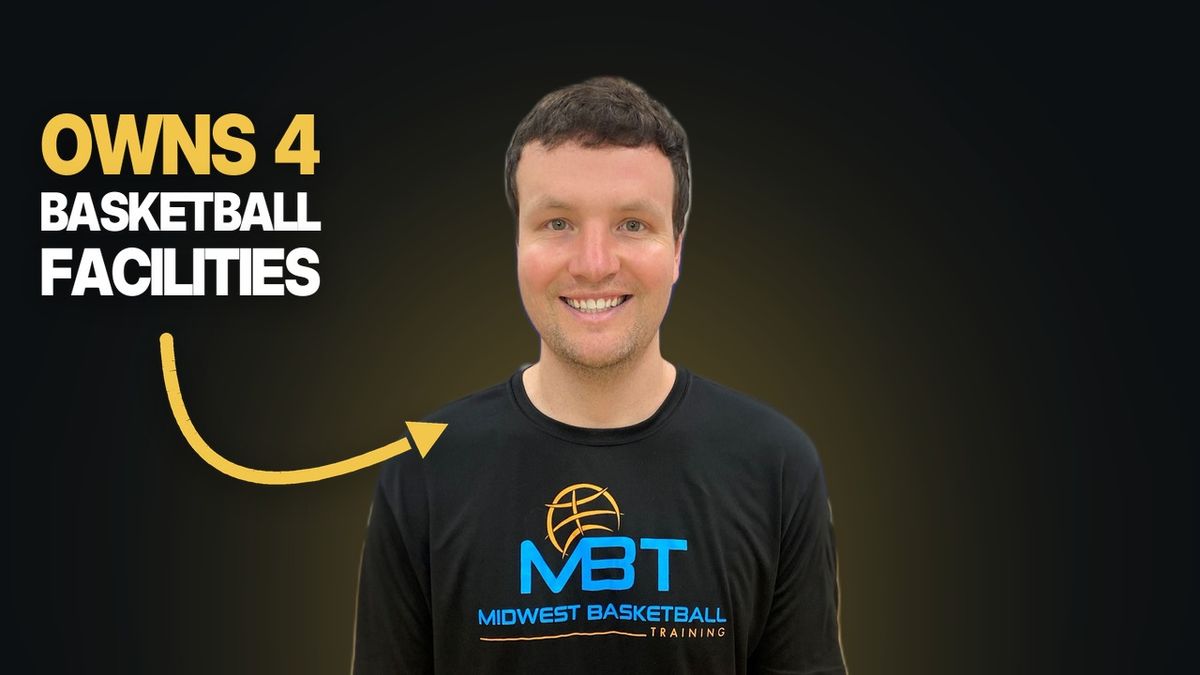
Pat Freeman opened his first basketball training facility about six years ago, in a 2,000 square foot space in Brooklyn Park, Minnesota. Today Midwest Basketball Training runs four locations around Minneapolis. On this episode of the CoachIQ Podcast, Pat explains how a waitlist told him when to open the next gym, why he stopped coaching every session himself, and why he fills the gaps in the gyms he has before he opens another one.
Who is Pat Freeman and how did Midwest Basketball Training start?
Pat owns and operates Midwest Basketball Training. It has four locations outside Minneapolis, a full-time staff of seven and about 50 part-time staff.
He started training about 20 years ago in his parents' backyard. For years he rented churches and whatever other gym time he could find. About six years ago he opened his first location in Brooklyn Park.
He also has four kids, and he coaches his son's team.
Why start in a 2,000 square foot gym with no business plan?
Pat had mentors who told him to "start small, like just hole in the wall spot." He did, and he's honest that he "didn't really have a business plan."
The space found him. His brother's landscaping crew was moving out, Pat was helping, and he wondered if a hoop would fit. Then came two straight months of 8 a.m. to midnight, building it out themselves with no money.
Looking back, he'd plan the build-out and the scheduling better. "From a scheduling standpoint, it was pretty choppy at the start."
A small room you can fill will teach you more than a big room you can't.
How do you know it's time to open a second location?
After year one, Pat had a great turnout and a waitlist. The waitlist told him he was full. Where families were driving from told him what to do next.
"We have kids coming from 30 minutes away. Like could we replicate this out in other areas?"
That is the signal worth watching in your own gym. Pull your family addresses. If a cluster of them is making a long drive, that part of town is where your next gym goes.
Pat's four locations now cover the northeast, northwest, west and southwest parts of town, and the next step is the areas he doesn't cover yet. Most of his gyms run 4,000 to 6,000 square feet. One is 20,000 square feet at the National Sports Center in Blaine.
Why stop coaching every session yourself and sell small group memberships?
In the first gym, Pat ran the small groups himself.
"I was going like 10, 12 hours a day. I'm like, this isn't going to be sustainable for kind of long term."
So he moved to a membership-based small group model and started hiring staff. From day one he also had someone on the back end handling member communication, which he says made a huge difference.
If every session needs you on the floor, your revenue stops where your hours stop. A membership and a staff let the gym earn while you're somewhere else.
Why fill every gap before you open the next facility?
During the school year, daytime is hard to sell. "It's really hard to fill them during the day. So we really just run like three to nine PM." Summer opens up the rest of the day.
Before he opens anything new, Pat wants every one of those hours working. "I think it's fine tuning and just filling any gaps we have left with our current facilities, which we're very close to." A couple of his locations have waitlists now.
He's also careful about speed. He wants to "not grow too fast because I think it's easy to try to go spend a ton of money and look at a massive facility." He has watched other gyms open and close: "seeing a lot of people pop up and then three years later they're not around."
Before you tour a new building, count the empty hours in the one you have. Brandon Heyen talked about that problem on an earlier episode: how to fill a basketball facility.
How do you show parents their kid is getting better?
Pat keeps it simple: "our focus is just how do we help kids get better faster?"
His gyms use shooting machines for more reps in less time, always with a coach giving instruction. They track stats so parents can see their kid improving. Inside the small groups they add a defender and build in game-like reads so the work feels like a game.
The goal, in his words, is "helping the C kid get to the B level, the B kid turn into A level." More than 100 of his players have gone on to play college basketball.
He also knows what parents are up against, because he is one. "I'm trying to say no more than I say yes." That's why he leans on flexible scheduling and a strong staff at every location.
Give parents a number they can watch move, and fit your schedule around their week.
Should a training facility run AAU teams?
Pat grew up anti-AAU. He coaches one team, his son's, which plays five tournaments over seven weekends. He won't grow it past that, because he figures about half his members would have a bad experience on the wrong team.
Instead his area runs 3-on-3 leagues for sixth grade and up. "You're in and out in an hour."
Staying out of AAU means Midwest never cuts a kid. "We kind of just play Switzerland." When a family asks, his staff points them to a good coach and helps them find a team.
Minnesota runs a lot of youth basketball through local associations, so your market may look different. The idea still travels. If you never cut a kid, every family in town can train with you.
How do you keep training quality high across four locations?
Pat challenges his players to get 1% better every day, and he holds his staff to the same thing. "We're trying to grow and improve our curriculum every single week."
He worked for the Timberwolves and Lynx years back and got to practice with the Minnesota Lynx. Now he flies in pro trainers to work with his kids and, more importantly, with his coaches. Not everything a pro does "translates to a fifth grader, but a lot of it does."
One curriculum, updated every week and taught by every coach, is how four gyms stay one program.
How does Midwest Basketball Training use CoachIQ?
Pat moved Midwest to CoachIQ from another platform. What changed first was the member side: "just like to have one app with videos, easy streamlined place where they can schedule, super efficient for members just to go in, find times."
"We used to get complaints quite often." Now, he says, it's much more streamlined "and we save a ton of time."
In CoachIQ, athletes and parents book from the iOS or Android app, pay or use their membership credits right there, and see which location each session is at. Programs and training videos live in the same app.
For Pat, that time goes back to the court. "It's hard to find a business that's really good on court and really good off court."
Find Pat at midwestbasketballtraining.com and on Instagram at @midwestbasketballtraining. Watch the full conversation on the CoachIQ Podcast.
Want to run memberships, bookings and payments for every location in one place? Book a free demo.
Full Episode Transcript
Read the full transcript
The following is a lightly edited transcript of the episode above.
Russell Reeder: Hey guys, we're here with another episode of the CoachIQ podcast. I have one of my favorite business operators and current clients at CoachIQ here. He's been super generous with his time. Pat runs Midwest Basketball Training out in Minnesota and has scaled to multiple different locations. And I'd say probably thousands and thousands of athletes. And it's a big treat for us to have him here and walk us through how he built everything he did. Pat, welcome to the podcast. Maybe do a little intro on your background and your business and we could dive in.
Pat Freeman: Love it. Yeah, thanks so much for having us, Russell. yes, my name's Pat Freeman. I own and operate Midwest Basketball Training. we currently have four locations in the Midwest outside of the Minneapolis area. we have a full-time staff of seven people now, and our part-time staff's around 50. And just love impacting kids in a lot of different ways, kind of with all ages. So love what we do.
Russell Reeder: Yeah, and correct me if I'm wrong too. You also have kids who are starting to get into the basketball scene now too. I saw some pictures of your sons training, right?
Pat Freeman: For sure. Yep. We have four kids. two, two and a half of them are into hoops and we got a baby. So they love it, just trying to keep it fun and it's a lot of fun.
Russell Reeder: So cool. Really cool. And when I think we first start we connected a very long time ago at CoachIQ with you and I think you were at one location maybe. What was the what was the timeline of opening up all of your locations? And then also too, could you give size to so that our customers can or anybody listening to this podcast understand how large these facilities are?
Pat Freeman: Yeah. So I started training like 20 years ago in my parents' backyard. and would always just kind of rent out some churches and do some outside stuff, do some stuff at like Lifetime. And then as we've grown about six years ago now, we started our first location in Brooklyn Park. So that was just a 2,000 square foot, really small facility. had some good mentors along the way that just say, start small, like just hole in the wall spot, didn't really have a business plan, put some hoops up and press play. And then as we went, we had a great turnout after year one and had a wait list. so that's what sparked like, hey, like we have kids coming from 30 minutes away. Like could we replicate this out in other areas?
Russell Reeder: Yeah, really cool. And maybe take us back to the beginning. So your first facility, what did you learn? what mistakes did you make in your first facility and then what did you learn and take on to your next facilities as you expanded?
Pat Freeman: Sure. So my brother was actually in there with his landscaping crew. They were moving out. So I was actually just helping him move out. And we were hanging out. And I'm like, I wonder if you could put a hoop up here because I knew this space was going to be open. And we just kind of went on the fly, and it was like two straight months from 8 a.m. to midnight of just we built it out ourselves, did everything we had no money at the time. so it just kind of started from scratch, built up like a small group training platform, but I was going like 10, 12 hours a day. I'm like, this isn't going to be sustainable for kind of long term. And then switched to more of kind of a member base, small group. started hiring some staff. And I think just from the build-out to the operations piece to I've had someone, Aaron was with us from day one on the back end from a member communication piece that has been huge. so I think a lot of lessons and mistakes made with the build out process because we had no idea what we were doing. and then from a scheduling standpoint, it was pretty choppy at the start. Obviously we're at CoachIQ now and everything is much more streamlined and we save a ton of time. But I think those are the two maybe things that if we actually had a plan and knowing what I know now, we would do differently.
Russell Reeder: Yeah. I mean, such a cool origin story though. I hear that so much, especially in the basketball space, starting with a small space, not knowing exactly how to scale, working your tail off ten to twelve hours. and then the eventual evolution to small group training, membership, and reliable admin allowing you to scale. So such a cool story.
Pat Freeman: A hundred percent.
Russell Reeder: So you guys are at your four locations now. are you guys looking to continue to expand? You know, what's your dream outcome here with where you guys are at now?
Pat Freeman: For sure. Yep. We're currently kind of the northeast, northwest, west, and southwest parts of town. So looking to expand into the other areas where we're currently not. And then after that, I think we're still trying to capitalize from a like a profitability standpoint, keep our facilities full every time. I think most of our facilities are like that four to six thousand square foot range. We have one that's twenty thousand square feet over in Blaine at the National Sports Center. So there's just, during the school year, it's really hard to fill them during the day. So we really just run like three to nine PM. and then during the summer is obviously able to capitalize on a lot of other stuff as well. So I think it's fine tuning and just filling any gaps we have left with our current facilities, which we're very close to. We got wait lists at a couple of our locations currently right now. And then just making sure we're very methodical and can do this sustainably and not grow too fast because I think it's easy to try to go spend a ton of money and look at a massive facility. But it's just the overall upkeep and seeing a lot of people pop up and then three years later they're not around, like it's not easy to sustain it. So just trying to make sure we're doing things the right way.
Russell Reeder: Definitely 100%. I think too, with what you've built, you're gonna have such an interesting perspective on the youth sports market or the basketball side of it too. I would love to hear from your perspective a little bit on the parent. What is the parent seeing? What does the parent want? What is the parent's experience? and you know, how do you think that this market's evolving? I know every state it seems is different with AAU, with training. so we'd love to hear a little bit about your thoughts there. You have a really great perspective.
Pat Freeman: For sure. Yeah, we're very blessed to have a lot of just great kids and families who get it. we've probably had I don't know 100, 200 or plus kids go on to play college basketball and at a very, very high level. But I think for the most part, we had a just a good group of kids and parents that put their head down. like our focus is just how do we help kids get better faster? So we use shooting machines, which help you kind of get more reps in a short amount of time, but we use those with instruction and we're able to kind of track stat progress so they can see their kid getting better and then trying to gamify a lot of the things we're doing within our small group training of adding a defender, making game like reads. And then ultimately it's for us helping the C kid get to the B level, the B kid turn in the A level, the A kid want to play college basketball and just get one percent better every day. So I think parents are torn like they're pulled in so many different directions. And now as a parent myself, like I'm trying to say no more than I say yes. So I think having flexible scheduling, having an elite staff like at every location, like making sure every location we hit it out of the park from a training aspect and the customer experience. And then really getting to know these kids and attack weaknesses of, hey, what are you struggling with? How do we help them build confidence? A lot of our kids come in after tough games or tough seasons or working with college kids right now who are going through it. And I think that's something that I didn't have growing up is where just somebody a close mentorship outside of mom and dad can kind of pour into the kids and kind of help them get like the seasons of you're gonna have highs, you're gonna have lows. And just how do we help them get through, especially the lows, I enjoy probably more than the highs at this point. So
Russell Reeder: Really cool. So walk us through your experience with AAU. Your guys' organization is staying away from it, or you're gonna get into it, or how do you navigate that with the parent with the games in the training?
Pat Freeman: For sure. So my person like I've kind of been an anti-AAU person growing up. now there's pros and cons both ways. I actually coach my son's team. We do like five tournaments and seven weekends so we do have kind of one team. But in terms of growing it and scaling it, I just feel like 50% of our members will go and have a not great experience. So if you have the right coach who believes in you, and there's a ton of people who do it the right way. I think it's a great fit. We also have three on three leagues around here. So for like the sixth grade and upper kid, I think reps, touches, fun. You're in and out in an hour, you're not wasting all weekend, you're not getting charged 30 bucks at the door to go watch your kid play one game. So we do have some great alternatives in our area, which I think are very, very popular. and then ultimately it's a personal choice. I believe in playing multiple sports. I think you can do some AAU in spring, but for us from a training perspective, it does help, I believe, kind of staying out of it where we're not cutting kids. we kind of just play Switzerland and like, hey, go over there. They have a great coach play for that team. So we'll help kids try to find teams or recommend programs. But other than that, we stay out of it for the most part.
Russell Reeder: Yeah. Yeah. What a cool place to be. So Switzerland. So I'm sure you have a bunch of competing, maybe even AAU teams. You stay out of the cutting kids, you stay out of all of that world, and then all the families view you as like, Hey, this is where we go for development, essentially.
Pat Freeman: For sure. And it is a little different in Minnesota with like youth associations versus a lot of other places or just for profit clubs year round. So it is a little bit different here, but that's kind of our model and how we work.
Russell Reeder: Got it, got it. Really cool, really cool. So another thing that I've seen you do that's a little different is you're very proactive with learning. Be it seems like you're very proactive with trying to always become a better coach and meet with influential people in the basketball space. could you talk a little bit about that? Who, you know, how have you learned to become a better coach, a better business operator? and yeah, dive into that a little bit.
Pat Freeman: Sure. So yeah, our model with our kids is to challenge them to get 1% better every day. So if we're not doing that ourselves, like just not gonna work out very well. And I think maybe when I was like 17, 18, I thought I knew quite a bit. And now it's like I talk to these other coaches, or I mean the power of social media now to pick up drills and make them your own. there's so much great stuff out there, I think. Just if you're closed-minded and once you think you know it all. We're trying to grow and improve our curriculum every single week of hey, what can we do better? How can we help kids improve faster? So I got a cool experience to practice with the Minnesota Lynx when I worked for the Timberwolves and Lynx years back. So that was great to learn from like the best coach in the WNBA. And then a couple of the pro trainers, we've had a lot of trainers fly in. And it's us reaching out to them. And number one, it's really cool for our kids. but even more importantly for us as trainers and our staff to go pick their brains on like their attention to detail is second to none. And just continue to find one or two things that we can learn that they do at a high level with their pro athletes, and not everything translates to a fifth grader, but a lot of it does. So how do we find ways to keep challenging kids and just that extra level of detail can really make or break, just one little advantage you see on the court can help our elite athletes get to that next level. So that's been a lot of fun.
Russell Reeder: Really cool. I love how you're always learning, trying to get better. you've been great to work with as well on CoachIQ side. So much of our audience is always trying to learn how to run a better business and run effectively. So would love to ask you some questions on the CoachIQ side. we switched you from another platform. I kinda honestly even forget which platform it was, but could you talk a little bit about how you guys are using CoachIQ and how it helps you guys run your facilities?
Pat Freeman: For sure. So we were on another platform before and would run into issues and it's a little choppy for members and even for other stuff from our end. And we'd always like send in a request, like, hey, is there any chance you could get this done? And it was always like, Hey, we'll put it on the list. And then six months later we'd ask again, and then it would just kind of never get done. So I think working with you guys, it's been great to have just even to pick up the phone with your office hours that the access that we have to you to bounce questions off of and just like to have one app with videos, easy streamlined place where they can schedule, super efficient for members just to go in, find times. So that user experience, we used to get complaints quite often. And now it's streamlined so much. And I feel like you guys are doing an incredible job of just improving every couple months. It's hey, here's something new that you can add, here's something new that you can add. and then we've had some specific requests that have been super, super helpful and game changers for us as well. So all of that has been just a game changer from our end using CoachIQ.
Russell Reeder: Awesome. Well, no, I really appreciate that. Yeah, we've been working hard, you know, to learn as much as possible. Like you've been learning too, rather than just trying to deliver software, you know, how are other people innovating in their business and collectively helping everyone? And then also we've been fortunate enough to bring on more resources and hopefully deliver more customer support and then more features, more quickly too.
Pat Freeman: And that's huge because I think a lot of basketball trainers like myself, like when I first started, especially like I just want to be on court. Like all the extra stuff, the emails, the like a lot of times those can slip through the cracks. And I think it's hard to find a business that's really good on court and really good off court. But I think with all your tools to be able to streamline a lot of those processes to save us a ton of time so we can focus on the kids has been a game changer.
Russell Reeder: Awesome. Well, no, I really appreciate the kind words and you know, I'm excited to continue to work together and help you scale to your next location. and again, I really appreciate your time today. so yeah, with that, yeah, no, I'm excited to keep working together and I think we can close out. Hopefully we can get you on the podcast again. maybe when you're opening up your next location, keep hearing what you're up to.
Pat Freeman: Let's go. Yeah. Thanks so much for your time, Russell.
