Podcast
How to convert evaluations into training clients
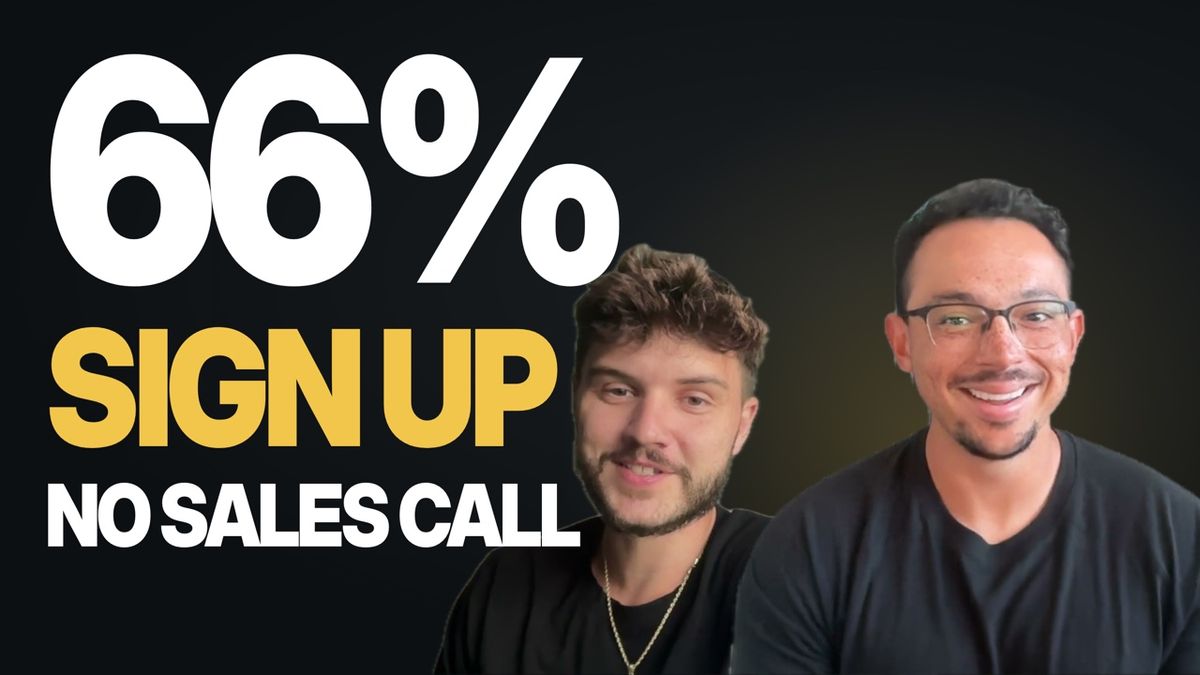
Jacob Cabezudo of CAB Training in Gilbert, Arizona, on the application, free evaluation and speed report that sign up 2 of every 3 families, without a sales call.
Jacob Cabezudo turns about two out of every three free evaluations into paying clients, and he never gets on a sales call. In Episode 37 of the CoachIQ Podcast he walks through how he converts evaluations into training clients at CAB Training: an application, a free evaluation with two timed sprints, a speed report, and a signup link sent the same night. He also shares how he got to 150+ five-star Google reviews and how he uses Claude with CoachIQ to run his admin.
Who is Jacob Cabezudo and how did CAB Training start?
Jacob runs CAB Training in Gilbert, Arizona, about 25 minutes from Phoenix. He coaches football speed, agility and skills. He played high school football, didn't play in college and didn't get an exercise science degree. He started training himself at 14 off YouTube drills and backyard equipment.
The business started while he was refereeing a flag football league. At 18 he was running speed and agility camps for that league, and parents started asking for private sessions. He trained his first kid in October 2019 for $25 a session. He went full time in early 2021, right after finishing college.
The first clients came the hard way. Business cards on cars outside flag football games, and a text to 90 parents every weekend asking them to come out to a session.
How do you run 200 athletes without paying rent?
He trains at a public park. CAB Training holds between 100 and 200 athletes at any time, and Jacob hasn't paid rent in six years.
"I haven't paid a dime of rent at this park for six years."
He has looked at facilities more than once. Every time he thinks about one, he thinks about $10,000 a month in rent. And when his athletes trained in a facility, it felt tight. They couldn't sprint as far as they can on a field. Parents told him they liked the park better. So over the past year the park has turned into more of a strength lab: motorized resistance for upper and lower body strength and resisted sprints, mixed with field work and plyometrics.
A coach once gave him the line he runs the business on:
"You'd rather worry about helping your athletes than worry about keeping the lights on."
If you're still deciding whether you need a building at all, read how to start a sports training business without a facility.
Why does a schedule that never changes sell itself to parents?
Jacob trains three to four hours a day, all in groups, split by age. High school goes first, then 11 and under, then 12 and up. Monday through Thursday is the same every week. Saturday morning is a couple of hours, and Sunday is quarterback and receiver work.
He has kept that structure for three years.
"It's an easy selling point for parents when they know what the schedule is going to be three months in advance."
Club teams move practices on parents all the time. A schedule that never moves is something a busy family notices. Brandon runs his basketball gym the same way: start at 5, end at 6, every time.
Why make parents apply instead of sign up?
Every new family starts with an application form on his website: the athlete's name, sport and the basics. Whether a parent finds him through an Instagram DM, his website or Google, he usually sends them to that form.
Brandon pointed out on the episode that the word matters. A parent who applies and then gets evaluated sees the program as valuable from the first impression.
What happens at a free evaluation that converts 66% of families?
The first session is a free evaluation. Each athlete runs two laser-timed sprints, and Jacob films them. Right after the session he talks with the parent and the kid and gives honest feedback. Then the family gets a speed report.
That night, he sends the signup link. That's the whole close.
"I'm not a very let's get on a sales call type of guy."
"We're about 66% conversion rate from evals."
The speed report does the selling. The parent leaves with their kid's actual time and video of the sprint, and they've just heard what it would take to change it. Jacob tracks the conversion rate on purpose so he can keep pushing it higher.
If you're working on your own process, Brandon broke down a full trainer sales process on the blog. For the opposite approach, Ep 36 with Tim Sada makes the case for charging for the first session.
Why sell a three-month program instead of single sessions?
Every package is a three-month commitment at one, two or three sessions a week. Jacob used to let families sign up for a month. Kids would come three times, drop off, and never see results.
"I was selling sessions and now I'm selling a program and I'm selling results."
To make three months workable for families with club schedules, nobody is locked to a set day. Athletes book any session that week through CoachIQ. His most consistent clients are the families who pay for 12 months up front.
"There's such a difference between a trainer providing training sessions and a coach providing results and a program and a structure."
For more on pricing the packages themselves, see how to price private training sessions.
How do you get 150+ five-star Google reviews?
CAB Training has 153 five-star Google reviews, and Jacob says they help him rank and get in front of more families.
"I'm just competitive as hell."
His goal from day one was more reviews than anyone else around him. It started with texting every family one by one. Now he does a push every month, through his email list of about 6,000 people and his Instagram story, and he shares parent testimonials. He says that if he made it systematic, like an automatic text after a family's first month, he'd have double what he has now.
If your Google profile isn't set up yet, start with connecting Google My Business in CoachIQ.
How does he use Claude with CoachIQ to run his admin?
CoachIQ connects to ChatGPT and Claude. Jacob uses Claude for the admin work that used to take him hours:
- Holiday schedule. He gave it his calendar with his days off for November and December. "And it did it in five minutes." Parents now see he's off December 7 to 10 and can't book those days
- Tags. He retagged his 3,000+ contacts as current clients, former clients (for welcome-back offers) and camp signups (to turn campers into members)
- Products. He scheduled the price change for an early-bird discount on an off-season program
- A weekly dashboard. Members, recurring revenue, who hasn't booked in a week or two, and which plans are about to expire
"It reports to me before it makes anything official."
For more ideas, read AI for sports training facilities.
Where is CAB Training going next?
Jacob is staying at the park. He wants higher-level athletes (four- and five-star recruits, college players, NFL hopefuls), two assistant coaches so he can split groups, and better commitments from every family.
"I think the biggest change that I made was treating this like a business, treating this like a full time job, and that's what got me to where I'm at."
Where to find Jacob
Jacob Cabezudo is the founder of CAB Training in Gilbert, Arizona.
- Website: cabspeedtraining.com
- Instagram: @cabtraining
- YouTube: @cabtraining
If you want applications, bookings and payments for your program in one place, book a free demo with CoachIQ. CoachIQ is trusted by 750+ sports coaches and training facilities.
Full Episode Transcript
Read the full transcript
The following is a lightly edited transcript of the episode above.
Brandon Evans: Welcome back to another episode of the CoachIQ podcast here. My name is Brandon Evans, a fellow sports training facility owner. I own a basketball training facility here in Fort Wayne, Indiana, northeast Indiana. If anybody is anywhere around there. Today we have a awesome guest and I'm excited to learn a lot about. I'm gonna hand it over to him, let him introduce himself, tell us your story, how are you at where you're at right now?
Jacob Cabezudo: Sounds good. Awesome. Thanks for having me, Brandon. My name is Jacob Cabezudo. I am a trainer out in Gilbert, Arizona. Gilbert's about 25 minutes south of Phoenix, Arizona. I'm born and raised here. Always been a sports guy. I've held a football since I was a baby. I'm obsessed with football. I kind of have a non-traditional way of coming up as a performance coach or a football trainer. I really don't have a super tight definition on who I am as a coach right now because I kind of do a lot when it comes to football skills, speed and agility, sports performance. But I'll tell you a little bit about my background. I played high school football here, didn't play college football, didn't get a degree in exercise science, didn't play the game at a high level, but started becoming obsessed with training and working out at the age of 14. So I would scour YouTube, look up drills, look up exercises, teach myself things, buy equipment, ladders, cones, hurdles, do stuff in my backyard, come up with things. And then I got a little bit better at football in high school, but then fell short probably because I didn't have a coach. And so really now at CAB Training, that's kind of my focus, provide the training that I didn't get when I was younger. So a little bit about how kind of CAB Training started. When I was in high school and college, I used to referee in a flag football league. And I got along with the kids a lot, made some great connections with the ownership at that league and the coaches in that league. And then I started running speed and agility camps for the league when I was like 18 years old. So I'd be telling these 30, 40-year-old volunteer dads what to do with the ladder, what to do with the parachutes, what drills I would run. And I was just running this camp. And then more and more parents started asking me, We'd love to have your have our son or daughter privately train with you. And then 2019, I trained my first kid for a $25 private session in October. And then 2020 came around and the league actually like one of their seasons got canceled. So I had a couple more kids train with me. And then late 2020, I decided to quit refereeing and jump all into full-time training. And I didn't really have like a large client base. In twenty when I decided to jump in But I knew this is what I wanted to do full time coming out of college. I graduated college in December 2020, started full-time early 2021, and just built a client base from the ground up. I was handing out business cards. I was putting cards on cars parked outside of flag football leagues. I texted 90 parents every single weekend. Hey, can you come out to a session? Hey, can you come out to a session? Venmo, Zelle, payments, chasing money here and there. And then I also made the decision that I didn't want to just be another trainer. I saw other trainers around me. And I was like, I want to be more than that. I want to stand out. And so I was constantly searching for new things to add to my program, how to improve as a coach. And I've kind of transitioned from being just a football skills trainer to a speed coach that provides data, but data-based results for my athletes.
Brandon Evans: Yeah, dude, it's this as you're talking, I relate so heavily to your story. Like I'm in basketball. I like I didn't play college. Like I wasn't even really great in high school. I don't have like a degree, any of that and like my degree is in f finance. Like so it's just but I did the same thing, like in high school, I just became super interested in that. And I was just on YouTube all day. I still am on YouTube all day every day. Like It is like I did the same exact thing. Like when I moved back to Indiana, I didn't grow up here. I texted everybody, I any phone number I could find, text, call. I got a car magnets, business cards, go to weekend tournaments. So it was just it was just funny. Like as you were talking, I'm like, yeah, I was just sort of replaying those years in my head. So it's Where are you at right now? I see you have your logo in the background. Explain your current state of where you're at right now.
Jacob Cabezudo: Yeah, so this is this house has been in my family for thirty years. So this is my office. Most of my day is con comprised of Business administration work for from now until about 2 30. And then I go out and train athletes from three to like six. So I used to train probably six hours a day when I first started. Now I'm three, four hours a day working with athletes in groups. But I've been doing this now full time for six years. And every year I feel like I've learned a little something, improved either my product as a training session. Or program. Each year I've improved my business, streamlined things. I've had some assistant coaches on along the way, but right now it's just me. But the ultimate vision is having a staff around me. But right now in my business, we're we fluctuate between a hundred athletes and two hundred athletes at any one time. And I don't run out of a facility, I run out of A local park. And so this local park, no rent. I don't have to rent it out. I just show up at the field. I've never had a park ranger tell me to get off the field. It's free to use. I haven't paid a dime of rent at this park for six years. And I love it. And everyone
Brandon Evans: So I'm so jealous.
Jacob Cabezudo: It's one of those weird things because almost every other park in my area, you have to rent it out. And it's actually relatively cheap to rent some of these parks out around me. But this park just works so well for the parents and the athletes. And I've even tried to move to a facility a couple times, and the parents were like, yo, we actually like the style of training that you do out at the park. It's different than anybody else. And so we've stayed at this field, and anytime that I think about Going to a facility and I think about the overhead of ten thousand dollars a month of rent and all that stuff, and I think of the experience our kids had at the facility we went to where they felt kind of tight. We couldn't sprint as far as we could, we couldn't really work on the football-specific skills that we could out on the field. And so I've been running my it's turned from just football skills doing footwork on the field to Being almost like a strength and conditioning lab out at the field over the past year. So we use motorized resistance to get the kids working on upper or lower body strength. We do resisted sprints using the T apex. So we're doing a lot of stuff that you would see in a traditional strength and conditioning facility, but on the field, and then we mix it with that field work, the plyometrics, sprint drills, and stuff like that.
Brandon Evans: Well, I'll tell you what, I'm jealous of paying no rent. I would I'll do anything for that.
Jacob Cabezudo: Yeah, no, I had a coach tell me before, you'd rather Worry about helping your athletes than worry about keeping the lights on. And that's kind of my thought process. I like to keep it as lean as possible because I don't want to worry about money, both personally and business-wise. I want to provide the best product possible that my clients want, and not necessarily I want. None of them actually want that. They just want what I've been able to provide over the last five years, six years.
Brandon Evans: Yeah, I mean that's the balance, like yeah, I'm in basketball, so it's a little different. Like you know, it's football just I feel like it just works better in that situation. Like it just you know that's how a football game is played, like it's outside, it's on the field, so and like you guys take up a lot of space. Like more than we do. But it's like you like to your point, which I like what you said, like people don't really want that.
Jacob Cabezudo: Yeah, I don't reach it.
Brandon Evans: So it's like you'd go on this journey of spending five, ten thousand a month on a facility 'cause I can't even imagine like how much space you need for a football facility and it's that's their price per square foot. So like I don't even want to imagine.
Jacob Cabezudo: Yeah, it's crazy. I've been down that path with commercial real estate agents and lenders and stuff. I'm like, man, to run a forty, it's gonna cost that. To have a so that's why there's not a lot of like there's indoor soccer places, there's indoor basketball places around us, but not enough indoor football spaces. And it gets hot during the summer here. It's a hundred and fifteen out on during the summer. And the summer we still had like twenty kids per session show up at a hundred and fifteen degrees, which is
Brandon Evans: Yeah. It is.
Jacob Cabezudo: I don't even know why they came out. I guess they love what I do enough, so
Brandon Evans: Crazy. I was just down there last month. It was like a hundred or so, which you guys say is not too bad. Which it really like it really wasn't too bad. Like I'm from Indiana, so like when it's ninety and humid here, that felt unbelievably worse than the a hundred degrees in Arizona. That humidity just kills. But that's what I don't know how people in like Texas and Florida do it, like or Alabama.
Jacob Cabezudo: Yeah. No, that's tame. That's pretty tame.
Brandon Evans: Insane. So that's besides the point. It's almost like for like a football facility, I would almost picture like just a plot of land. Like if you were gonna own something, like it'd just be a plot of land and like maybe you could build like a little like I don't know, like a little like office type of building in there for like parents to hang out and be cool. That's almost what I would imagine for like a football especially in like obviously that wouldn't work in Indiana 'cause it's like snowy and everything, but for like Arizona, you have that luxury of it's, you know, nice all the time. Not all the time, but that's this is a it's a cool thought. Just as you were talking, this what came to mind. So you say you train three to four hours a day. What does your weekly schedule look like? Like how does how do you structure your training? Is it all groups, individual? Like how do you do your training?
Jacob Cabezudo: It's nice. Yeah, exactly. Yeah. Yeah. I do all groups now. I used to do it where I'd spend six hours outside, private session, private session, private session, group, group, group. But now anytime somebody asks for private training, I implore them: look, this is not a one-on-one type of game. This is a team game, right? So right now we separate our groups into age groups. So we have a high school age group earlier in the afternoon, usually between 3 and 4 p.m. We have a 12 or 11 and under group. So those are my younger youth athletes that need more fundamentals right after, and then we go 12 and up right after that. And so Sometimes I'm able to build another group if we have too big of groups, but I usually keep my schedule airtight, structured. Monday through Thursday, same schedule. Friday is like my programmed off day. I take completely off, or at least try to. Some days I just am like antsy and I need to schedule somebody on that day. Right. Like I don't I can't sit in here for too long because then my brain starts spiraling. And so I need to go out there and train somebody.
Brandon Evans: Yeah, you don't do that.
Jacob Cabezudo: Or train myself. And then Saturday mornings I do a couple hours. And then Sunday mornings I do more football-specific skills. So we do quarterback and wide receiver training. And it's been, it's been fun. I've kept that same structure for three years now. And the parents really, really like the fact that our schedule stays the same. Cause a lot of their club teams and their leagues switch up schedules on them all the time. And it's an easy selling point for parents when they know what the schedule is going to be three months in advance. Thank you.
Brandon Evans: Yeah, no, that's one of the biggest things that like we've seen from some of the best, you know, the facilities and programs that are on CoachIQ is that their schedule is as consistent. Like parents are busy and I don't have kids, but I can imagine if you do have kids, especially multiple kids, that you got a lot of stuff going on. So like when you hear from your training program, like, training's gonna be at seven tonight instead of six, like that can mess up everything. But just the consistency And like that's something that I pride myself on a lot in my gym is like we start and end exactly on time. Like we of course every now and then we'll go over like a minute. But like five PM we start, six PM we end, pick your kids up. Like it's strict schedule. So they know exactly what's gonna happen. There's no fifteen, twenty, thirty minutes after practice. Like it's just strict, same day, same time, and parents respect that a lot and they love it because Lot programs just aren't like that. They get that, you know, thirty minutes out of practice, they're mad in the car. Like Yeah. Yeah. So do you sell what do you how do you sell? So like if I'm a parent and I want to come work with you, what does that process look like? Take me through, I find you either, you know, I find a business card or somebody refers you. I go to your website.
Jacob Cabezudo: Yeah, I ch yeah, that's the last thing I want, for sure.
Brandon Evans: What do you take that parent through from website to buying whatever you sell?
Jacob Cabezudo: Yeah. There's a couple different avenues that people take to me. So sometimes I get an Instagram DM, sometimes I get someone through the website. Google reviews have been huge for us. That allows us to rank really high. We have 153 five star reviews, so that helps us kind of get in front of a lot more people. But Yeah, if a parent inquires about our training, I mostly most often have them fill out a website form, so our application form. So they give me their kids' name, what sport they play, all of that. And then we schedule their first session, which is a free evaluation. At the free evaluation, they get two laser time sprints. And then I take a couple videos of their sprint and I provide them with a speed report. Because our main I guess our main objective is to get their athlete faster. That's kind of our main measurable. So I give them a speed report. And then after that speed report, I honestly just send them the link to sign up if they wanna sign up. I'm not a very let's get on a sales call type of guy. I'm not someone who's gonna twist someone's arm and chase. I'm not in that position anymore to have to like chase someone for a sale because our we have a lot of athletes. It's really after you experience one of my training sessions. You get the speed report, you get some honest feedback from me after the session with me, the parent, and the kid right there. Then right after I get home, I'm sending that message with the link to sign up. And we convert at a pretty good clip right now. We're about 66% conversion rate from evals. It obviously could always be higher. I always strive to be higher than that, but that's why we track those numbers. But that's kind of how it works. And then after that evaluation, like the ball is in their court. If they want to commit to one session a week, two sessions per week, or three sessions per week, that's those are our packages. I usually have a three-month commitment level for each parent. I've had kids sign up for a month and then dip out after three sessions and they don't get the results and they don't come away as satisfied as they could have been. And so everything that we do is a three-month commitment. And a lot of parents don't vibe with that just because of their busy club schedule. And things get crazy, schedules change. But that gives I give them flexibility on my end. So they're not stuck on a particular day. They're they can come anytime during the week. They just have to book through CoachIQ to do it. So that's kind of what we do. We do year long paid in fulls, and those are kind of my most consistent. Clients, the ones who pay for 12 months up front. But we have a lot of different packages that we offer.
Brandon Evans: Mm-hmm. Yeah, that's I love a lot of stuff about that process you have. I'm very similar in that with the, you know, the monthly, not monthly, sorry, longer than monthly commitments. Like three, six, and twelve month. It like you said, like nobody, if they come in for a month, like you're not gonna be able to do your job. And that's what I always tell parents is like we can't do our job in a month, especially if we only see you once a week. Like If we see you three, four times a week, okay. We can make we can make some movement. But like development and adaptation, especially for speed, like I'm not a guy in that area, but like it takes time. Like you gotta adapt, you gotta recover to everything. Your brain has to process. Like s I teach them something in basketball, they have to go to sleep and process whatever they learned that day. And then come back and try it. So that long term commitment is yes, some parents, like you said, will
Jacob Cabezudo: Yeah, it's fine.
Brandon Evans: They will not like it. Because a few reasons. One, like you said, just busy club schedule, but you counter that with hey, I have this, I have five, six days a week that you come. You can find once or twice a week, or if you have open schedule, three times a week to come. So just that's it's such an important thing to increase the lifetime value. Like you're gonna go through Your process, which I want to touch on some things in there that I think are really good. Is like you give them I like the verbiage you use, which is application and assessment, or you said eval, evaluation. Yeah. Application and evaluation. So like the applic just the verbiage of application is very powerful in my opinion in a parent's mind signing up. Like it's not just a Just a claim free trial. And that works for a lot of people. I'm not saying that doesn't work. This is just my personal preference. Is like it just it's to enter into your program you have to apply and you have to get an evaluation, which is so they're getting something by applying if they get accepted. So it just it makes it feel not exclusive but just valuable off of their first impression. Another thing that I think you did really that I really liked about your process was you give them something and this is something I need to do better at in my facility is they get that evaluation, that's something tangible, like that they can look at. Like they can go home and they see, I had this, this, they look at the video. You said you do a video, right? They do they watch the video, and they immediately see That they need your help probably. 'cause they you I'm sure you put transformations like this kid's forty went from X to X and now they immediately are like, my kid's forty's here, but it could be here. So that it's just that immediate and that's why you said you're not like a sales guy, but you do all your selling to the point where it's like, are you gonna come or not? Like you do everything, you give that honest feedback after and you talk to them. So like
Jacob Cabezudo: Yeah, a hundred percent.
Brandon Evans: Like while it's not like selling, like you are a sales guy beforehand, you do a fantastic job of that entire process. So when it's time to buy, it's like this is what we got. Like Yeah.
Jacob Cabezudo: Yeah. Yeah, take it or leave it, right? And that's I like that you touched on the credibility side of having the application and the evaluation because I think early on, first two to three years of you know, running my training, it was a lot of just, hey, come out to my sessions and it's it was I was selling sessions and now I'm selling a program and I'm selling results. And there's such a difference between a trainer providing training sessions and a coach providing results and a program and a structure. So yeah.
Brandon Evans: No, it a hundred percent. And that's what was a big breakthrough for me, just looking at some of these other facilities doing such a good job was like last year's I see people like it they were offering just transformations and like when you first start out, like you say, you're like, Yeah, we can do a lesson here, you can get eight lessons, you can get ten lessons or whatever. But like the parent is not paying for the lesson, they're paying for what their kid comes out on the other side of that. So after They're three months with you, they're paying for this, this, and this, their kid to be a different person or different whatever transformation it is you sell. I think that's so important. And another thing I wanted to ask you about with that was you have 150 Google reviews. I wanna ask your process on those. I am a big Google review person. Like I think that is one of the most powerful things you can have. One for Google, which is massive, in your rankings and two just If somebody finds a hundred and fifty five stars, that immediately you don't have to sell anything. Like immediately, like just tells you like this is a quality program. So I wanted to ask how you get those Google reviews. How did you get to 150?
Jacob Cabezudo: Yeah, so first I'm just competitive as hell. Like I have nothing but respect for the other trainers in my area and the other gyms and stuff, but like my first goal when I started out, I was like, I wanna get more reviews than all these people. Because I want to know, I know I knew that was important. I knew it ranked higher in Google. So I'm a big numbers guy and I want to get that I wanted to get that number up big time. So it started out with just texting everybody individually. Now, really to just keep getting that number up, I'd make a monthly push. And I could be more systematic with it, where hey, after the first month of a client training with me, I can automate a text to a parent, say, Hey, tell us how you feel about CAB Training in Google. Google review and what's great is now the Claude connection between CoachIQ and Claude, I can make that happen. And I mean I can't wait to dive into a little bit of that because I've been using the heck out of that lately. But yeah, no, I just make a monthly push. I have an email list that I send out emails to. I have about six thousand people on an email list that I send out newsletters. I Post on my Instagram story and get a couple reviews off of that and share some of the testimonials from my parents that had it and had an amazing experience. So it's not super systematic, but I'm I have no doubt that if I was systematic about it, I'd have double the Google reviews that I have right now.
Brandon Evans: Yeah, it's Google reviews are they're so massive that I can't like I can't overstate how important those are. So you mentioned the coach IQ connection with, you know, Claude and ChatGPT. How do you use that right now? I use it in certain ways and I've heard other coaches use it. I'm just curious how you use it. Talk about that a little bit.
Jacob Cabezudo: So as of right now, I was able to set my schedule automatically for November and December. Just by connecting CoachIQ and Claude and throwing in a calendar, my calendar for my training sessions that I make with all my the list of my sessions and stuff and which off days are in there. And it did it in five minutes. And so now when parents are looking at November and December and they see, okay, he's off December 7th through the 10th, right? They're gonna be able to see, okay, we don't we can't book there. So schedule. Updates super easy. Then I was able to re-tag basically all the contacts that I have in CoachIQ. We have over I think 3,000 contacts in CoachIQ right now. So I was able to Connect with Stripe, connect with my spreadsheets that I already have built, because I keep a track of all of my clients on a spreadsheet. I properly tag them as current clients so the right people get the messages. I tag former clients so I can target them with welcome back deals. I target camp signups so I can convert them from camps to members. So all this was just tell Claude to do it, and Claude does it and with really good accuracy and it reports to me before it makes anything official, which is great. I was able to edit products, which is amazing, because I had a scheduled early bird discount for one of my off-season programs. And I wanted to schedule that price to change at a certain day, did it for me relatively easily. And then I have kind of a dashboard that repopulates every week. It's basically created a command center that told me how many members do I have, how much monthly recurring revenue I have, who do I need to talk to who hasn't booked in the last week or two, plans that are expiring, if they're paid in fulls that are expiring. And now I have an eye on everything. And so, I mean, I cannot say enough good things, and I know I have barely even scratched the surface on just. How I can use it because it has saved me so much time and it's made things so much easier for me on the admin side. And I love the admin side still too.
Brandon Evans: Yeah, dude, that's so like what you're doing is so powerful and like it's just it's so cool like they just released it, so it's so cool to see, like it's just so powerful because stuff like that would take you like I don't even know how much time. Like it would take you hours to go through and be I was gonna say if you haven't yet connect your stripe to it so that way like it can just read everything. Like it's so powerful to see like this person hasn't booked in fifteen, twenty something days, like Just a quick check in mech quick personal check in message or the people that are coming up like for you have a hundred, two hundred people in at a time. A little easier for me 'cause I have like I only have like fifty or so in my gym. But when you have that many people, just to be able to log on and be like, this person's expiring now. Or I have twenty people expiring. I should run like a little promo to these people. It's there's unlimited, infinite possibilities with it. And like you're doing a good job. I know you said you feel like you haven't scratched the surface with it, but you're far along. Like Trust me. You're that's awesome. You did a lot of what I was gonna suggest if you haven't been doing. But cool. Now last question here. Where are you trying to go next? You know, I said you're super competitive. What is
Jacob Cabezudo: For sure. I appreciate it.
Brandon Evans: Are you can are you continuing on with what you're doing and seeing where it goes? Do you have a specific goal in mind over the next two, three, four years? It's hard to look that far ahead in the future right now, but what is your what is your next step, next goal that you're going towards?
Jacob Cabezudo: I think the setting isn't going to change. I just think that the quality is gonna continue to rise. So quality of client is gonna improve for me. Obviously, yeah, definitely wanna keep boosting revenue and building the business and everything like that, but I think I want to work with Higher level athletes. I love my youth guys. I want to continue working with those youth and developmental kids, but I want to get myself in front of four star, five star football players, college football players, NFL hopeful players. I've been in the game now six years, and I want to get to that point where I'm working with those high level guys. Even if I don't make a lot of money training those high level guys, I just want the experience of it of working with someone who is on that upper echelon who already runs like a four, five, four, six and get them down to a four, four, four, three, four, two, or whatever. So I think realistically, I want to stay at the park that I want to be at. And if the right situation presents itself where I am at a facility or I run my training out of a facility or I get a plot of land, then 100% I'd love to, I'd love to do that. But I think Ultimately, I just want to increase quality of the clients, increase quality of the results I provide my clients, build a team around me, because we're about to get real busy starting in November. And I used to have two assistant coaches, so I'd love to have probably two assistant coaches to help me set up, break down, divide groups up a little bit so I can provide a higher level of service. But yeah, I know it's a long-winded answer, but I think i overall it's not even more clients. It's just better clients, better commitments, higher LTV, better quality results, higher level programming, and then just more attention to detail when it comes to the service that I provide.
Brandon Evans: Yeah, that's a great goal to move towards. Yeah, this was a very fun informative conversation for people listening. Like you do a fantastic job of running like a true business. You know, 'cause when it starts out, like, you know, I mean, I know you know, like it's not like a business yet. So you do you are a perfect, fantastic example of what a real training business looks like and that's what is gonna allow you to continue to grow to continue to move on to wherever you're trying to go whether you do get a spot or whether you just continue at the park, like that's what allows it to be consistent and actually be a full time thing that you do. So yeah this where can everybody find you like what's your Instagram tags we're gonna throw it on screen here. I'm excited to push this one out to everybody.
Jacob Cabezudo: Yeah. Yeah, it's CAB Training, so C-A-B Training. That's my Instagram and my TikTok. I also have a YouTube channel where I post long form content. You can find my training services at cabspeedtraining.com. But yeah, like you said, Brandon, I think the biggest change that I made was treating this like a business, treating this like a full time job, and that's what got me to where I'm at. So I appreciate CoachIQ with helping me provide that as well and having a system behind everything that I do. So Appreciate it.
Brandon Evans: Yeah, absolutely. We are excited to c continue to see you grow, continue to support. Alrighty, that was fun to have you on.
Jacob Cabezudo: Thank you, man.
