Podcast
How to raise money for a sports facility
Sam Garvin, one of CoachIQ's investors, and Russell Reeder on loans, investors and bootstrapping, what to bring when a parent offers to back you, and the hard questions to ask before anyone signs.
Sooner or later most facility owners hit the same wall: the next step needs money they do not have yet. Usually it is the lease or the build out. If you are trying to figure out how to raise money for a sports facility, there are really three paths, and the one owners ask CoachIQ about most is the parent who offers to invest.
Sam Garvin sees that conversation from the other side of the table. He played Division III basketball at Claremont McKenna, spent four or five years in product strategy at Apple, and now builds Bench OS, an AI coaching staff for programs below the pro level. He is also one of CoachIQ's investors. He sat down with Russell Reeder to talk through loans, investors and bootstrapping, what to bring when someone offers to back you, and what an investor is really betting on.
How do you raise money for a sports facility?
Most owners use one of three routes: a bank or SBA loan, an outside investor, or their own money.
Russell laid them out the way he sees them across CoachIQ's community. "A lot of their financing looks like SBA loans or small business loans," he says. "We've come across a lot of facilities who have investors, right? Like a wealthy family has their kids going there, and then that family acts as a bank and they structure some deal that's more advantageous."
Sam's point is that none of the three is free. A loan, an investor taking equity and bootstrapping each come with "a slightly different profile and goals of what you're trying to do." The question is which trade off fits what you are trying to build.
When is a business ready for outside money?
When it is working and there is revenue behind it.
Sam is early with Bench OS and says he is still doing "things that don't scale," a line he borrows from Y Combinator founder Paul Graham. That means taking the calls, doing the sales and fixing the product yourself. The decision to raise usually comes once the concept is proven, "when you wanna raise capital and turn yourself into more of a well-oiled organization."
His test is "realizing when you officially have product market fit and revenue that follows." For a facility owner, that usually looks like a full schedule and a waitlist in the space you already have.
What should you do when a parent offers to invest in your facility?
Treat it like a bank deal, even if you like the family.
This is the one Russell hears most. "I've had a lot of facility owners come and say, hey, I got approached by a wealthy parent." His first rule is not to assume the money comes with no strings. "I wouldn't treat it as a gift at all. I would actually come back to them and impress them with financials."
The biggest hump for most owners, he says, is getting the lease. Once you have the building you can build a great business, and that hump usually takes capital. Whether the money comes from a family or a bank, the process should look the same.
What do you need to know before you take the money?
Exactly what it is for.
Sam puts this ahead of everything else. "If you get that capital, how are you gonna use it? And what are you gonna do with it?" If there is no clear use that hits specific goals right away, he says, "I would question if it's even necessary to raise capital in the first place."
The reason is simple. Whichever route you take, "there is an expectation of return from the investor." With equity you are also giving up a stake in your business. That can be worth it to get the resources you need, but only once you know what the money is going to accomplish. After that you can ask whether this investor, and this deal, is the right fit for those goals.
How simple can your financial projections be?
Very simple, and simpler is better.
Russell's version fits on one line. "Hey, look, if we can get this space and I can get 200 athletes, I can give you a 10% return over this timeline." Your financials "don't need to be crazy complicated," he says, "but you shouldn't not have financial projections."
Sam went further. "Simplicity is fine, and it's actually preferred in many cases." With the tools available now, he says, "a quick 30 minute spreadsheet" can show how you will use the capital, where your numbers are today and how the money helps you grow over the next one to three years. "Simple is fine and simple is better."
If you are still working out what a build out costs, our breakdown of basketball training facility costs is a useful starting point for that spreadsheet.
What return does an investor expect from a sports facility?
At least what they could get without you.
Russell's framing is the one to keep in mind when you set your number. An investor, he says, is thinking "I could put this in S&P 500 and get seven to 10% reliably." So your offer has to compete with that.
A bank loan is more fixed. You get approved and you have a payback period. Someone who is invested in you and is not chasing a big return may give you a better rate than the bank. But Russell is firm on the condition: "If they're going to give you a better rate, you need to be tied up legally." His advice is not to take money without having it all in writing.
How do you pick the right investor for your sports business?
Find someone who agrees with where you are taking it.
"I think it's really important to have investors who kind of see your vision and agree with your vision and your values," Sam says, especially early. An investor is not going to be involved day to day. "That's for the operator and the builder to do." But you want someone who believes in you and in what you are building, because their expectations shape the deal.
What hard questions should you ask before anyone invests?
How you will operate, how much say they get, and what the legal side looks like.
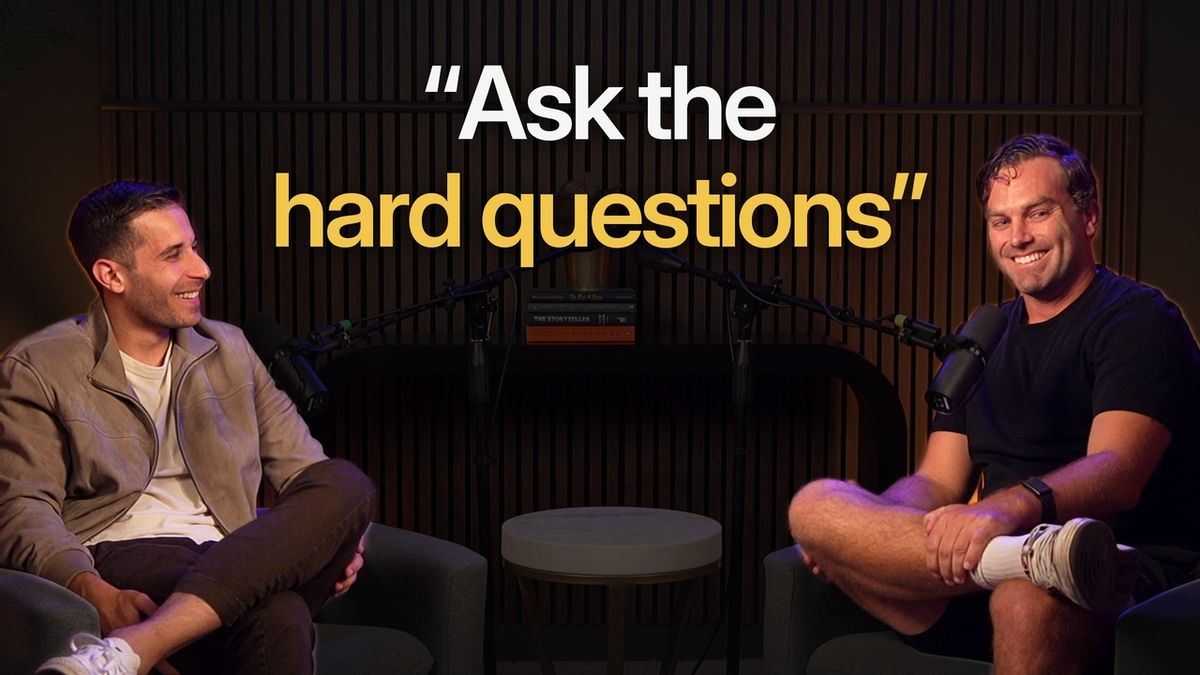
Russell admits this is the part he was not as good at early on. "You have to ask the hard questions before they invest," he says. When someone offers to back you, "you need to make sure you're aligned. You need to make sure, hey, here's how I want to operate. Here's the legal behind it. You know, don't get too wide-eyed by the money."
He has heard a lot of horror stories from owners who skipped that step. The conversation is easier to have before the check clears than after.
What does an investor look for before backing a business?
Two things: the people and the market.
Sam explained it through his own decision to invest in CoachIQ. Early on, he says, you are "betting on two things as an investor." The first is the founders. If that is not a fit, "you don't believe in the founders, you probably shouldn't be investing." The second is the market, and whether there is "a clear path that you can explain" to growing the business.
That is the same test a parent or a lender will run on you. Show them who is running the place and why the demand is there. Sam also liked that CoachIQ only does well when its customers do. "The better your customers do, the better CoachIQ does." For a facility owner pitching a family, the version of that is showing how their money grows the program their own kid trains in.
For the operating side of that pitch, our guides to how to run a sports training facility and Miko Rodriguez's move from lessons to memberships show what investors want to see working.
Is it okay to say not yet to an investor?
Yes, and the offer can come back around.
Sam connected with CoachIQ a couple of years ago and was going to invest in the seed round. It did not work out. They stayed in touch and he invested later. "You don't necessarily always have to take an investment opportunity the minute that it shows up," he says. "It can come back around."
If the timing or the terms are not right, keep the relationship and revisit it when they are.
Where to find Sam
Sam Garvin is the founder of Bench OS, an AI coaching staff that helps coaches build practice plans, game plans and player development plans, and one of CoachIQ's investors.
Website: benchos.coach
If you are getting your numbers ready for a lender or an investor and want your memberships, payments and scheduling running in one place, book a free demo with CoachIQ. CoachIQ is trusted by 750+ sports coaches and training facilities.
Full Episode Transcript
Read the full transcript
The following is a lightly edited transcript of the episode above.
Russell Reeder: I'm here with Sam. I want to bring a little different guest on today. Sam's actually an investor in CoachIQ. He's not a facility owner himself, but I think he can bring some real great value. He's building something in sports space, which we'll talk about, and he's looking to connect with some of our basketball coaches out there. So I'll definitely share his information. Also wanted to talk a little bit how investing works in software companies and how we're able to deliver an amazing product to you guys. And he also comes from an athletic background. So we're going to kind of dive in here. Sam, maybe you could kick it off, talk a little bit about your background, your athletic background.
Sam Garvin: Yeah, for sure. I'm excited to be here and thanks for having me on. Always a great conversation when we connect. So I'm excited to chop it up and discuss all of this stuff. So I guess just to start a little bit about myself, my name's Sam Garvin. I am the founder, as you sort of alluded to, of a different product in the coaching space called Bench OS. It's an AI coaching staff for kind of sub-professional programs. We could talk more about that and get into that. But also, as you mentioned, one of the early investors in CoachIQ, and we'll talk more about that as well. For my background, I grew up in Phoenix, Arizona my whole life, played basketball for as long as I can remember, but mostly in like smaller types of environments and programs. So I went to a private high school my whole life, about 250 kids, which is kind of crazy. Obviously was addicted to basketball and did the whole club circuit and everything like that, which was interesting. I'm sure we could have conversations and you have conversations on the podcast about that with some of your facility owners. And then ultimately, worked my butt off to be able to play at the D3 level at Claremont McKenna, which is here in Southern California. So that's just a bit about my athletic background. After that, kind of more in the career job world, ended up at Apple after school, worked there for about four or five years in product strategy, kind of product development, and then moved to more of the startup world, where I currently work for a company called Luxor Technology, and sort of as my side passion project, starting up Bench OS.
Russell Reeder: Yeah. Well, let's dive right into Bench OS. I think it's a really cool product. Give us a little rundown on how it works and why you built it.
Sam Garvin: Yeah, so as I mentioned, really the idea for Bench OS came from what I experienced as a player. And also somewhat what I, coaching is not my full-time job, never has been, but I've been in situations where I've been an assistant coach for a youth team or helping out here and there, doing different coaching in somewhat more unorganized sub-professional environments. And I've also been lucky enough just in my past experience with my family's ventures to be exposed to really high level programs as well. So my family has been involved in the professional basketball investing space for a long time now, still are. So I've seen sort of firsthand how it looks at that level and what kind of support these coaches have and these players have, and then also kind of have lived it, what it looks like at the levels that I played at, which was very small environments. I'm sure a lot of, even your facility owners or people listening to the podcast can relate to. At the youth, high school, even D3 level, oftentimes it's maybe one or two coaches. It may not be their full-time job. They may be volunteering. They may have sort of another job on the side. Many high school coaches are also teachers or athletic directors, things like that. So coaching for them is something they're really passionate about. And as a player, I idolized and still do appreciate all my coaches growing up. And they really just do it for the love of the game. It's not like these people are paid very much usually or have the types of resources that more organized and professional programs have. So I want to sort of, I've seen both sides of it and I want to sort of bridge that gap and change that. That's why I built Bench OS. The short kind of one liner of the product is it's an AI coaching staff that knows your program, your philosophy, your roster, your playbook, and helps you write practice plans, game plans, individualized player development plans, kind of all the things that a staff of 10 people at more professional levels just do as sort of a daily job. And it's not that the coaches at the lower levels necessarily don't want to do that. It's that they literally don't have time and resources to do so. So I sort of built Bench OS to bridge that gap. I've gotten some great feedback so far. And really just, I think there's a gap in the market for this type of product and I'm excited to sort of roll it out and help all the coaches that I grew up with and I sort of look up to and idolize as my mentors, sort of give back to them and help them do what they love and do it better.
Russell Reeder: Yeah, I loved, when I first took a look at it, a lot of coaches aren't in the day-to-day of all the innovation with AI right now because they're with their players, they're with their teams. And what I loved right away is a lot of the power of AI right now is context organization, and I think that your platform does a phenomenal job to bridge that gap, right? You own a team, okay, well, what is your strategy? What are your plays? How do you like to coach? And your system can organize all of that to where these really powerful models can now take advantage of that organized context and deliver that staff of 10, right? So really cool product there, so definitely going to be contacting some more of our basketball coaches to work with you. And you're still in your beta phase, right? You're working with a couple people?
Sam Garvin: Yeah, I actually built it over the summer and had it open for a beta with, you know, four or five of close users, the coaches that I kind of mentioned before, that I put in front of them and be like, hey, I wanna build this thing for you, would this be interesting? They're all very enthusiastic about trying it out. I actually just this past week opened it up for public signup. So anybody can now go and sign up. We have a free tier where essentially you can sign up, you know, tell Coach Prime, who's kind of the main assistant coach agent, about your team, and you can try out, you know, five player development programs, five practice plans, just to see the platform and see what it delivers. And then I think going forward, obviously, if you like it, I think I've priced it at a level where it's palatable to pretty much anybody. It's 50 bucks a month, 300 bucks for the year. If you think about what hiring even one kind of part-time assistant coach takes, it's really a drop in the bucket. And I think there's a ton of value that really anybody below, let's say kind of the D1 level, can get if they don't have the resources for a full staff.
Russell Reeder: Definitely, 100%. I think this is a cool segue into kind of talking about investing too, so like how's it work? So you started this platform, are you thinking about raising money for it or is this just a passion project? Talk about a little bit of that and then we can go into, you know, how the investing world works in software.
Sam Garvin: Yeah, it's a great question. And I think you guys will have a unique perspective on this too, actually sort of starting a business yourself, and your facility owners as well. It's like at what point does something become a transition from a hobby or a passion project into a real business that requires capital and that you really wanna try to scale? And I think the answer will be, there's no right answer. It'll be a little bit different for everybody. I think right now, someone that I really follow and look up to a lot is Paul Graham. He's the founder of Y Combinator. As you mentioned, kind of very interested in the startup space. In general, Y Combinator, for those that aren't familiar, is one of the biggest, if not the most prominent, incubator in the world for startups.
Russell Reeder: Airbnb came out of there, Stripe came out of there.
Sam Garvin: So something that he says is kind of like the first thing that he tells founders is, especially when you're early, you have to do things that don't scale. And I've never felt that more, just trying to get Bench OS going. I'm sure you guys feel that as well or have felt it in the past. But you have to do things to get it off the ground that aren't necessarily indicative of what a fully functioning, kind of well-capitalized organization looks like. So it's taking demo calls yourself. It's obviously working on the product yourself. It's doing sales yourself and all the GTM strategy, advertising, you know, accounting, everything sort of under the sun you have to figure out how to do. And at first it's usually only yourself and maybe a couple co-founders, if you're lucky to find the right people. So usually I think that decision comes when you wanna raise capital and turn yourself into more of a well-oiled organization, kind of scale up what you yourself are able to do. It's kind of when you get product market fit and start getting some revenue. I think we're early days in Bench OS for that for me. I mean, I just started building it back in March essentially. We haven't even gone through a full basketball season yet. Most high school and obviously the college season starts in about a month here, mid October, early November. So for me right now, I'm doing the stuff that doesn't scale. And it's a bit more, I'd say, of like a passion project. I'm reaching out to coaches every single day, talking to coaches every single day, trying to explain the product, get the word out there. Obviously it's not super battle tested. The beta program was super helpful, but find bugs every day, find things to fix in the product every day, get great feedback on the product every day. So for just one person, some of this stuff and how I'm sort of running it is probably not the most scalable way to run an organization. But I think once the concept is proven out and you get a critical mass of users and revenue, that's the decision to say, all right, now I'm gonna go raise capital. And instead of just being myself, obviously hire more people, get more resources to really scale the business. So there's no right answer, but I think that's sort of a big part of it, is realizing when you officially have product market fit and revenue that follows.
Russell Reeder: Definitely, 100%. And I think a good stage here for our community of facility owners, a lot of their financing looks like SBA loans or small business loans. They can get, we've come across a lot of facilities who have investors, right? Like a wealthy family has their kids going there, and then that family acts as a bank and they structure some deal that's more advantageous. So with what Sam's working on, with what CoachIQ is working on, there's two traditional paths in software, right? You have bootstrapped, which is you don't raise capital. You know, that's not as common, it's getting a little bit more common, I would say. And it just depends what your goals are. There's a ton of very successful bootstrapped software companies. And then there's raising venture capital, which there's two different tracks on venture capital, right? You're absolutely going for the moon and you're trying to be the next Airbnb. And then there's another trench of venture capital, which is looking for a different type of return, you know, where it doesn't need to be the next Uber, the next Airbnb. But that's like a super high level overview. You think I missed anything in there, like, to a facility owner?
Sam Garvin: Yeah, I mean, I think for your facility owners, one thing you hit on is also taking a loan or debt, and that has its own sort of risk reward profile and trade off. I think all these things do, and we can get into that, how investors think about this. That includes people looking for equity, which is like venture, and even bootstrapping in some cases, like you mentioned, or debt, which is going to a bank and getting a loan. Just a slightly different profile and goals of what you're trying to do in each.
Russell Reeder: Yeah, definitely. Probably what would be valuable for them, just thinking out loud here, would be what should they look out for when they're thinking about getting a loan, right? Like understanding what is the process? What should you think about? Very interesting is I've had a lot of facility owners come and say, hey, I got approached by a wealthy parent. You know, I think we should talk a little bit about what should you be thinking about there? How would you think about that? And then I'll say what I think.
Sam Garvin: Yeah, I think it's a tough question. Hopefully you sort of have a plan of, I think that's necessary. The very first thing that's necessary that you should think about if you get approached, and maybe hopefully you've already thought about this already, is if you get that capital, how are you gonna use it? And what are you gonna do with it? If there's no productive use of the capital that you can go deploy it to achieve, you know, this one, two, three goals right off the bat, I would question if it's even necessary to raise capital in the first place. Because whether it's debt or whether it's equity, any of the routes that you talked about, there is an expectation of return from the investor, right? So I think you're also giving up a stake in your business in some case. So, and that can be a very worthwhile thing to do, obviously, to get the resources you need to scale the company. But I think the first thing you need to do is think about what are you gonna use the capital for, and what exactly is that going to accomplish? What is that capital going to accomplish for you? I think that's the first, most important thing. And then from there, you can start thinking about, okay, is this exact investor or this exact investment opportunity the right fit for achieving those goals, and are their expectations aligned as well?
Russell Reeder: Exactly, yeah. I would say the biggest thing I see is if you get approached like that as a facility owner, one of the mistakes is, don't assume anything like, oh, they're coming to just like out of their goodwill, right? And there's no expectation of return. I think you said it really well. The biggest hump for facility owners is getting the lease in the facility. When you get that, you can really develop a great business. And that hump a lot of times requires capital. And if there's a wealthy family that approaches you or if you're going to a bank, it really should be the same process. I would say your financials don't need to be crazy. They don't need to be crazy complicated, right? But you shouldn't not have financial projections. If a wealthy family came to you, which I've seen this a ton, and says, hey, I want to invest to help you really professionalize this, the first thing I would do is I wouldn't just think it's like a gift. I wouldn't treat it as a gift at all. I would actually come back to them and impress them with financials. Be like, hey, look, if we can get this space and I can get 200 athletes, I can give you a 10% return over this timeline. Which is another great way to think about it too, is, you know, wealth, a bank is, an SBA loan is going to have, it's more fixed and you're going to be approved and you're going to have a payback period. But if you have an investor, the way that they're thinking of it in their head is, I could put this in S&P 500 and get seven to 10% reliably. So you should be thinking about that same thing to them as like, oh, can I give them a good return? And then normally debt is more expensive because they're taking more of a risk. And then the last point there that I would say is, the benefit of going to an investor rather than a bank is if you can undercut the bank, I would say, right? A bank will give you these terms on payback time, but someone who's actually invested in you and isn't looking for a crazy return, you know, they'll give you a better rate. And then the last thing on that, though, is if they're going to give you a better rate, you need to be tied up legally. You're not just... Don't take money without having this all tied up, would be my thought process through the whole thing.
Sam Garvin: Yeah, and I think an important thing you hit on there, just going back to the very first thing you said, is simplicity is fine, and it's actually preferred in many cases. The simpler you can make it, actually, the better. And if you think that, especially with all the tools we have these days, obviously with AI, like a quick 30 minute spreadsheet that really simplifies your business and shows exactly how you're going to use the capital, and what your financials are today, and how that capital is going to help you scale to one, two, three years down the line and provide that return. It doesn't need to be super complex. Simple is fine and simple is better. So I think that's a really important point to hit on. I think CoachIQ, you guys see a lot of these facilities as well. So I'm sure you guys are a great resource, you know, for the people that use your platform. You guys can like help, you know, work through that as well, which I think is a really great value add that you guys have, is you can sort of be the central point. You see how all these facilities are doing, which ones are doing it this way, which ones are doing it that way. You've probably, you know, from your facility owners, seen every scenario under the sun. And I think that's a really great value add for CoachIQ, by the way. So, you know, I would say for all the facility owners out there, like, another great reason to use CoachIQ. Obviously your guys' goal is to help them run their business better. And this includes that. So I think that's important.
Russell Reeder: One feature we're actually pretty excited about is we launched Sheets, or you can think of it as a database, but like, you can think about it, we launched Google Sheets within CoachIQ. Similar to Bench OS, right? Sam's organizing context on how to be an amazing coach. At CoachIQ, one of the key things of our platform is organizing your context as a business. And then how can we automatically give you what you need throughout multiple different features?
Sam Garvin: Awesome feature for all your guys' clients and any potential clients out there that sort of need the help. I mean, I think that's a fantastic tool.
Russell Reeder: Yeah. And, you know, it's kind of funny. You think like, oh, well, they could just use Google Sheets. But we actually decided to add it. One of the big reasons was with all the AI stuff going on.
Sam Garvin: Yeah. And I've seen the same, you know, I can apply that to Bench OS as well. I've seen the same thing. If you think about, you know, a high school coach or even my D3 coach, who, again, absolutely love these people, look up to them, talk to them, they're some of my favorite people in the world. But you might say the same thing about sort of what I'm building, right? Which is, you know, why not just use ChatGPT and ask them to make me a player development plan for this player? And I think if you really knew what you were doing and you could engineer a system to do that, it's possible. And that's, I did it, right? So it's certainly possible for any other coach out there to do, I think. But do you have the time and sort of resources for that, to learn and figure that out? Not necessarily. And that's where the productization layer comes in, of CoachIQ, of something like Bench OS, you know, have done the work to engineer that. So it's super simple, right? You don't have to go manually type things in your Google Sheet or write up reports every single day, or write down what all your players say about whether they liked a player drill and then enter that into, you know, a database of some type. It's just all intuitive and there for you. And I think that's a really important product layer on top of all these really cool AI tools, because very powerful stuff. You just kind of have to know how to engineer it in the right way. So I think that's a, you know, huge value add for your customers and for, you know, my target customers as well.
Russell Reeder: Yeah. And I would think of it, like, if I was a facility owner or a business owner looking at this, the most important thing is organizing your context. And if you can find a platform that organizes your context really well, which is like a huge thing that we're trying to do, that compounds so much rather than trying to organize it all in a chat session in ChatGPT. So, yeah, that's where I think both of our products, like the underlying foundation, is what we're focusing a ton on right there.
Sam Garvin: No, absolutely. I think that's a big overlap. There's a lot of interesting overlaps between our businesses, actually, which I'm sure we could get into. But that's honestly like one of the reasons, going back to sort of some of the investing stuff. You know, if you are seeking outside capital from an investor, personally, it depends what you're looking for. But I think it's really important to have investors who kind of see your vision and agree with your vision and your values and what your company believes in and wants to build, and is sort of on the same page as that. And I think that's a really important thing to consider, especially early when you're taking on early investors. You want someone, I think, who believes in you and believes in what you're doing and sort of agrees in the vision of what you're doing. And obviously they're not going to be involved day to day in executing that vision. That's for the operator and the builder to do. But I think that's vitally important and something to consider when someone approaches you to invest in your business.
Russell Reeder: I would say one thing that I wasn't as good at was you have to ask the hard questions before they invest. When someone comes out, you know, like, hey, you know, I want to back you, I want to give you half a million dollars. Whether you're a facility owner or you're raising venture, you need to make sure you're aligned. You need to make sure, hey, here's how I want to operate. Here's the legal behind it. You know, don't get too wide-eyed by the money. And I've just heard so many horror stories. We've been super fortunate to have people like you. Our VCs that backed us have just been absolutely amazing. So founder friendly. It's been really, really important for us. So I think good segue, I'd love to ask too, that we could start to talk about now, is maybe why did you choose to invest in CoachIQ, or where did you see opportunity? And yeah.
Sam Garvin: Yeah, I think it starts with the values, right? And I think you can, as we just talked about, could sort of see that in what I built in Bench OS as well. So I think, you know, just on a personal level, when I met you and Ryan, and haven't fully met Corey, but obviously know about him and his background as well. I think coming from similar backgrounds of playing sports, growing up, really admiring the coaches that we played for, and wanting to build something for them was something that sort of resonated immediately. We have a lot of the same views, like you said, on context building and how to build products in this new day and age of AI, which I think we also really connect on and trade ideas on a lot. And that, but I think what this is really getting at as an underlying theme is, especially early on when you're taking on early investors, your idea or your product isn't fully scaled yet, right? And so you're really, I think, at the end of the day, betting on two things as an investor. The founders, the person actually doing the work and executing. You know, if that's not a fit, you don't believe in the founders, you probably shouldn't be investing, like, at this stage or even in later stages. So I think that's really important, is to have that alignment, believing in the founders, the founders believing in the investors in the ways that they're going to add value. The second thing is the market. So this goes back to what you were saying about, like, financials and building a business case. You have to believe in the market. And even though the product is still early and maybe not fully penetrated, there's a clear path that you can explain or you can see to getting that kind of penetration and really growing and scaling the business. So when I saw CoachIQ, I just loved your guys' thesis of the way youth sports are kind of going, and how training is going, sort of as a sector. I experienced growing up, you guys experienced it growing up. I think it's a very underappreciated sort of part of the market. All the trainers that I grew up working with was kind of the stories that you guys tell. It's texting you, your mom, the night before that it's going to be at this gym in this location. And then an hour before, it's like, hey, we're actually running late and we need to go to this other gym. You're paying in cash. You know, it's a bit disorganized. And, you know, that is not scalable. And to get started, of course, like I said, you need to do things that are not scalable, right? But building a tool that actually helps someone transition from doing the things that aren't scalable into building a real business and doing the things that are scalable is something that really resonated with me. I love that you guys are building that. And also, I love the business model. I think it's really important. Like Shopify has this, too. And I think a lot of great companies out there have this. You guys have a stake in the game of your customers, right? The better your customers do, the better CoachIQ does. And I think that is a really important wedge and product thesis and sort of company thesis to have overall. I think all the great companies truly do have that. So I saw that it was, you know, we sort of aligned on all those different things. Mainly the founders, also, you know, I think a big kind of underappreciated market. And that was the main decision. We could get into, you know, the numbers and valuation and all that kind of stuff, but I think that's secondary to kind of the two things that I talked about.
Russell Reeder: Definitely. And I think great for our audience, like really cool as a facility owner, to see what you're looking at as an investor and how it works kind of on the ground level. Yeah, I mean, you invested six months ago, was it?
Sam Garvin: Yeah. Well, we were, I had connected with you guys a couple years ago. We were gonna get in your guys' seed round. It just didn't end up working, but obviously we stayed in touch, and sort of did a little bit of a follow on. So that was...
Russell Reeder: Yeah, that worked out great too.
Sam Garvin: It also kind of goes to show, I think, for your facility owners out there, you don't necessarily, the timing might not be right all the time. You don't necessarily always have to take an investment opportunity the minute that it shows up, right? It can come back around. And if people, you know, sort of are ultimately aligned on those two things, like, there could be a time to come back around and raise from that person at a later time.
Russell Reeder: Yeah, for sure. I'd say just growth and relationships too. That's really good advice, actually. Cool, man. Well, this has been great. We're definitely gonna have to do some more episodes of this. And then I'm gonna reach out to our basketball coaches and put them in touch to learn more about Bench OS.
Sam Garvin: Yeah, absolutely. If there's any basketball facility owners out there or basketball coaches that would like to try the product, you know, please go check us out, benchos.coach. You can email me personally, sam@benchos.coach. I would love to talk to you. Even for those people that don't necessarily even have an organized team, I think our product can still bring a lot of value. Just even if you just use the player development piece of it. You know, you're kind of storing all the context about the player more on the basketball side, you're doing it on the business side. But Bench OS is really built for more the basketball side. So you can create a player development plan for a player. Workouts, they follow it, they give feedback about it. You can send them questions and sort of like surveys, and make sure they're keeping up on their plans and things like that. And then that context builds and it compounds. And then the next time, your next plan is even better. So I think it's, you know, could be very valuable for all the trainers and facility owners out there as well.
Russell Reeder: Yeah, totally. No, I'll definitely put you in touch. And I think a lot of people would love to do that. So, yeah, I really appreciate you coming on, and CoachIQ needs to get back to work. Let's go get to it, get some more facilities. Yeah, yeah.
